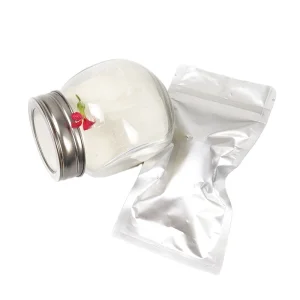
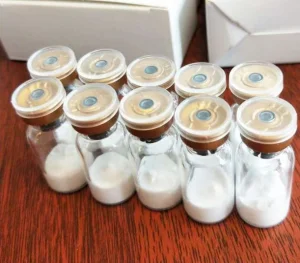
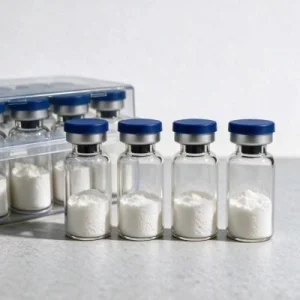
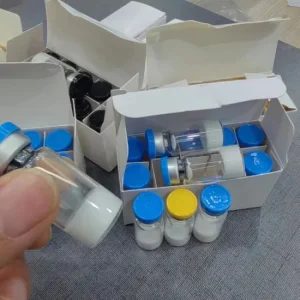
Direct factory supply of analytical-grade peptides and recombinant research ligands. Each lot is authenticated via HPLC/MS and supplied with lot-traceable documentation.
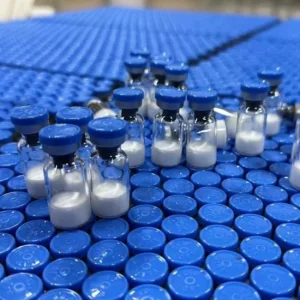
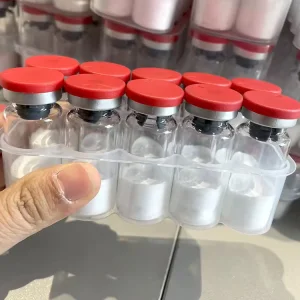
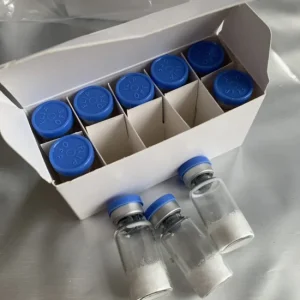
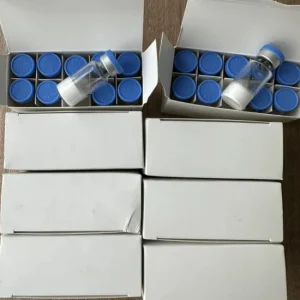
How recombinant DNA biotechnology transformed somatropin from a scarce pituitary-derived extract to a cornerstone biopharmaceutical sustaining pediatric endocrinology, adult metabolic balance, and cellular regeneration.
Prior to 1985, growth hormone was isolated directly from cadaveric pituitary glands, carrying substantial risks of Creutzfeldt-Jakob Disease (CJD) and profound supply deficits. The emergence of recombinant human growth hormone (rhGH, Somatropin, CAS 12629-01-5) via transformed bacterial expression systems revolutionized molecular endocrinology. Today's high-efficiency bio-reactors enable the biosimilar synthesis of the exact 22,124 Dalton protein with zero native animal contaminants.
The global somatropin market is driven by expanding clinical therapeutic frameworks: pediatric Growth Hormone Deficiency (GHD), Turner syndrome, Prader-Willi syndrome, Short Stature Homeobox (SHOX) gene deficiency, chronic kidney disease growth impairment, and Adult Growth Hormone Deficiency (AGHD). Moreover, clinical cachexia in oncology and catabolic wasting recovery are fueling double-digit compound annual growth rates globally.
Western procurement faces acute cost inflations and supply chain fragility due to consolidated pharmaceutical patents and localized manufacturing closures. Global pharmaceutical wholesalers, compounders, and diagnostic facilities increasingly build strategic procurement bridges with certified cGMP Asian synthesis facilities capable of delivering metric-ton raw peptide equivalents with verified pharmacopeial monograph compliance.
An in-depth analysis of recombinant production routes, differentiating 191-amino-acid Somatropin from 192-amino-acid Somatrem, and establishing optimal thermodynamic stability protocols.
Early biomanufacturing methods added an extra N-terminal methionine residue, yielding Somatrem (192 amino acids). Somatrem triggers significant immunogenic neutralizing antibody formation in up to 60% of patients, reducing long-term bioefficacy. Our modern process employs proprietary bacterial signal peptides directing periplasmic secretion, enzymatically cleaving the signal peptide to release authentic, 100% human-identical 191aa Somatropin with near-zero immunogenicity.
Post-fermentation cell harvesting utilizes continuous disc-stack centrifugation and tangential flow filtration (TFF). Downstream chromatographic clearance integrates Hydrophobic Interaction Chromatography (HIC) for aggregate separation, followed by strong Anion Exchange (Q-Sepharose HP) and high-resolution Size-Exclusion Chromatography (SEC) to ensure high-molecular-weight polymers and dimers remain strictly below 0.8%.
Somatropin is susceptible to deamidation at Asn-149/152 and methionine oxidation at Met-14/125. Our lyophilization matrix uses pharmaceutical-grade Mannitol, Glycine, and Trehalose with surfactant trace buffering (Polysorbate-20). The freeze-drying cycle is tuned using sub-ambient differential scanning calorimetry (DSC) to maintain an intact amorphous matrix, extending reconstituted stability.
| Analytical Parameter | USP / EP Monograph Requirement | Miaoou Enterprise Batch Spec | Analytical Instrumentation | Batch Status |
|---|---|---|---|---|
| Identity / Molecular Mass | 22,124 ± 2 Da | 22,124.8 Da Conforming | ESI-Q-TOF Mass Spectrometry | Pass / Certified |
| Monomer Purity | ≥ 96.0% | ≥ 99.2% (Mean 99.4%) | Analytical SEC-HPLC (TSKgel G2000SWxl) | Pass / Certified |
| High-MW Proteins / Dimers | ≤ 2.0% | ≤ 0.5% (Typical < 0.3%) | High Performance Gel Permeation | Pass / Certified |
| Related Peptides (Deamidated) | ≤ 5.0% | ≤ 1.5% | Reverse-Phase HPLC (C18 / C4 Core) | Pass / Certified |
| Bacterial Endotoxins | ≤ 5.0 EU/mg | ≤ 0.15 EU/mg (< 0.05 EU/IU) | Turbidimetric Kinetic LAL Assay | Pass / Certified |
| Host Cell Protein (HCP) | ≤ 100 ppm | ≤ 10 ppm Residual | Custom 4-Generation E. coli ELISA | Pass / Certified |
Evaluating how domestic raw material availability, state-of-the-art sterile manufacturing, and vertical supply integration safeguard international B2B buyers against drug shortages and cost inflation.
Our production facilities benefit from direct integration with domestic fermentation feedstocks, specialized amino acids, chromatographic resins, and high-specification depyrogenated borosilicate glass packaging. By avoiding multi-tiered international middleman dependencies, raw synthesis cycles maintain uninterrupted continuity even during global shipping and geopolitical disruptions.
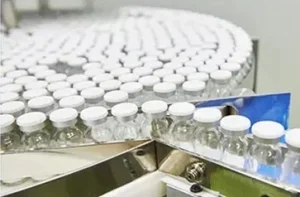
Human handling represents the primary vector for sterile batch contamination. Our cleanrooms employ European-engineered, fully automated aseptic isolator systems. Continuous environmental monitoring (particulate counts, active air sampling, surface touch swabs) guarantees Class 100 (ISO 5) processing during sterile filtration, filling, stoppering, and crimping.
By streamlining large-scale fermentation across multiple 2,000-liter bioreactor trains, per-IU manufacturing expenditures decrease by 45–60% compared to Western facilities. These efficiency gains allow commercial distributors, research labs, and private label partners to capture robust operating margins while supplying verified, high-purity somatropin.
Biological macromolecule integrity requires rigorous temperature protection. Every commercial parcel is shipped under validated thermal packaging (2–8°C phase-change cool packs or −20°C dry ice configurations) with embedded USB/Bluetooth continuous data loggers to ensure zero thermal degradation during transit.
From university biochemistry laboratories to private-label wellness organizations, our manufacturing workflows provide custom-tailored dosages, fill formats, and stability profiles.
Prescription hospital formularies and compounding pharmacies require strict adherence to pharmacopeial monographs. Our somatropin delivers less than 1.0% deamidated forms, providing the physiological efficacy required for pediatric short stature and adult hormone replacement protocols.
Medical spas and functional anti-aging clinics use GH therapy to stimulate IGF-1 production, accelerate nitrogen retention, optimize lean body composition, and enhance cellular repair. Formulations can be packaged in multi-dose 10IU, 12IU, or custom-calibrated cartridges.
Orthopedic sports medicine studies investigate somatropin's role in stimulating Type I and Type III collagen synthesis. Researchers evaluate how human growth hormone accelerates micro-tear recovery in tendons, ligaments, and osteochondral junctions post-injury.
Contract Research Organizations (CROs) and analytical labs rely on our lyophilized somatropin as an authenticated reference standard. Highly documented structural profiles make it ideal for LC-MS assay validation, bioassays, and ELISA cross-reactivity testing.
Our Quality Control operations reflect the core E-E-A-T principles: verifiable expertise, rigorous process validation, and documented transparency across every batch.
Expression integrity begins with deep-sequenced, validated E. coli Master and Working Cell Banks (MCB/WCB). Plasmids undergo periodic sequencing to confirm zero genetic drift, and each cryovial is systematically tested for bacteriophage contamination and phenotype expression stability before bioreactor inoculation.
Every lot undergoes dual analytical chromatography: Size-Exclusion HPLC to quantify monomer and dimer ratios, alongside Reverse-Phase HPLC to measure cleaved, oxidized, or deamidated related proteins. Batches with less than 99.0% chromatographic purity are routed for re-chromatography rather than release.
In addition to our internal Quality Assurance teams, randomized finished vials from each monthly campaign are sent to ISO/IEC 17025 accredited independent analytical testing centers. These third-party blind assays confirm structural identity, sterility, and endotoxin levels, with reports directly accessible to enterprise buyers.
Direct, technical answers addressing the critical parameters, quality specifications, and procurement policies evaluating B2B Somatropin suppliers.
Somatropin has the identical 191-amino-acid sequence produced naturally by the human anterior pituitary. Somatrem contains an extra N-terminal methionine (192aa), a byproduct of older E. coli intracellular expression systems. That extra residue triggers anti-hGH neutralizing antibody formation in up to 60% of recipients, neutralizing long-term bioactivity. Our bacterial periplasmic secretion process cleaves this methionine, guaranteeing authentic 191aa Somatropin.
Protein aggregation is prevented by optimizing the formulation matrix before freeze-drying. We use a protective blend of D-mannitol, glycine, and trehalose, along with trace non-ionic surfactants (polysorbate-20) buffered with sodium phosphate. Our lyophilization cycle maintains the product below its collapse temperature (Tc), resulting in an amorphous cake that dissolves quickly into clear monomeric protein.
Each commercial shipment includes a comprehensive Certificate of Analysis (COA) containing: 1) Analytical SEC-HPLC chromatograms showing monomer purity; 2) RP-HPLC graphs quantifying related proteins; 3) Intact molecular weight verification via Electrospray Ionization Mass Spectrometry (ESI-MS); 4) Kinetic LAL endotoxin testing values; 5) Water content analysis via Karl Fischer titration; and 6) Residual bioburden sterility verification.
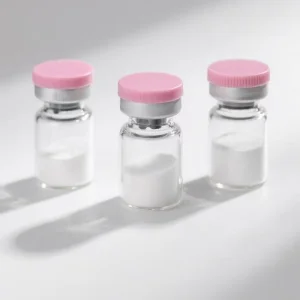
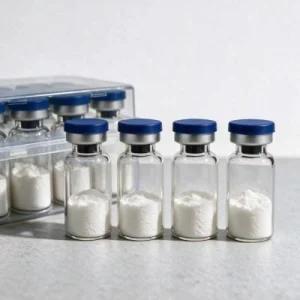
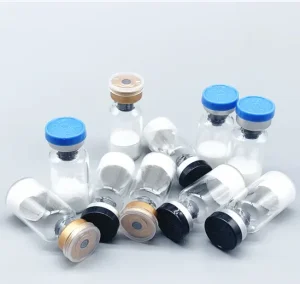
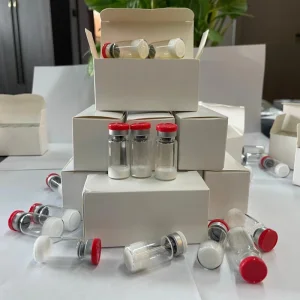
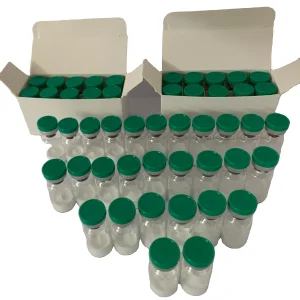
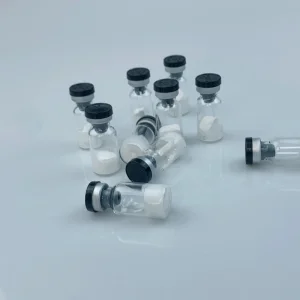
Yes. We offer end-to-end OEM/ODM contract manufacturing. This includes custom lyophilization concentrations (ranging from 4IU, 8IU, 10IU, 12IU, 16IU to 24IU per vial), distinct flip-off aluminum cap colors, custom glass vial dimensions (2ml/3ml USP Type I borosilicate), multi-dose liquid cartridge filling, and private-label box packaging complete with anti-counterfeit security seals.
Lyophilized cakes should be stored refrigerated at 2–8°C (stable up to 24 months) or protected at −20°C for long-term storage. For reconstitution, use Bacteriostatic Water (0.9% benzyl alcohol) or Sterile Water for Injection (USP). Slowly inject the diluent along the glass wall without shaking to prevent denaturing the tertiary protein structure. Reconstituted bacteriostatic solutions remain stable for 21–28 days at 2–8°C.
Our global logistics department handles complete customs export documentation, commercial invoices, material safety data sheets (MSDS/SDS), and non-regulated laboratory technical declarations. Parcels are routed via tested air freight logistics with real-time temperature tracking, helping shipments clear customs promptly and safely worldwide.
Review the second tier of our high-purity enterprise product catalog, including active raw powders, antimicrobial intermediates, and specialized somatropin preparations.