Explore high-priority catalog compounds manufactured under validated ISO/GMP quality guidelines with complete analytical chromatography profiles.
An authoritative analysis of molecular characteristics, international pharmacopoeial standards, and macro supply-demand dynamics.
Levamisole Hydrochloride (molecular formula: C11H12N2S · HCl, molecular weight: 240.75 g/mol, IUPAC: (S)-6-phenyl-2,3,5,6-tetrahydroimidazo[2,1-b][1,3]thiazole hydrochloride) is the active levorotatory enantiomer of tetramisole. Discovered as an imidazothiazole derivative, its clinical and veterinary prominence stems from stereospecific biological activity: the levo-rotatory (S)-enantiomer possesses almost all anthelmintic and immunomodulatory potency, exhibiting several-fold lower toxicity than the dextro-rotatory (R)-enantiomer or the racemic mixture.
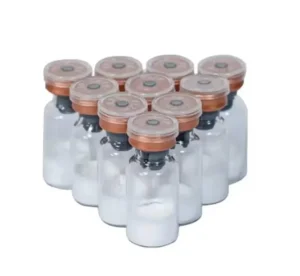
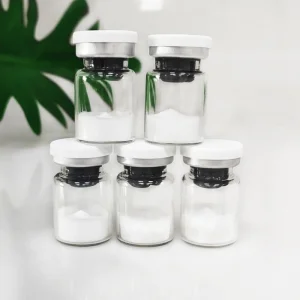
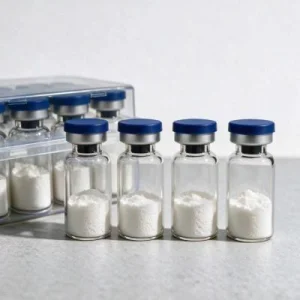
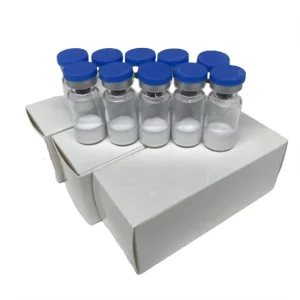
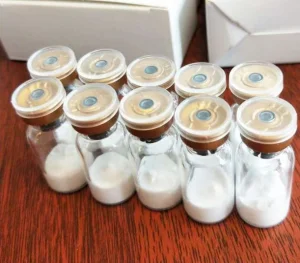
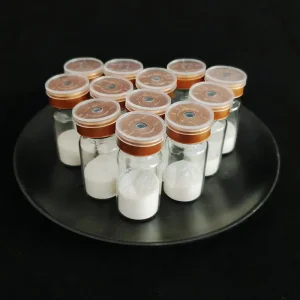
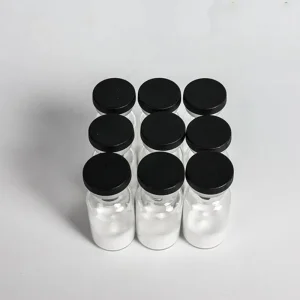
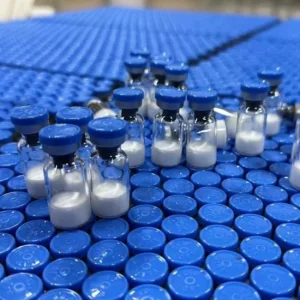
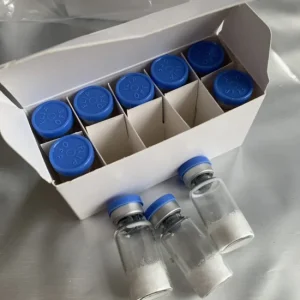
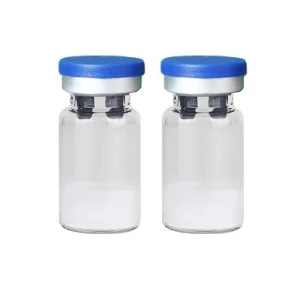
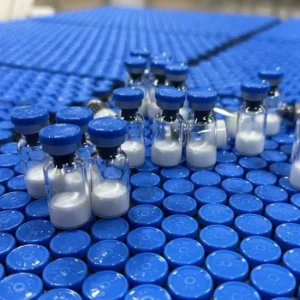
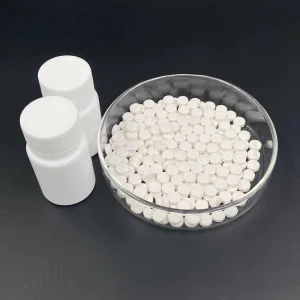
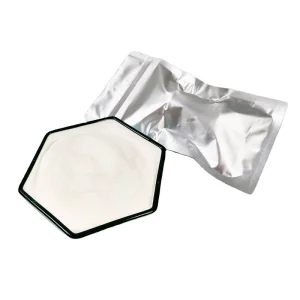
In modern industrial synthesis and global commerce, Levamisole Hydrochloride exists predominantly as an ultra-pure white to almost white crystalline powder, freely soluble in water (approx. 1:2), soluble in ethanol, and slightly soluble in methylene chloride. Global consumption patterns are anchored by large-scale livestock agriculture, modern veterinary formulation manufacturing, specialized aquaculture, and emerging applications in enantioselective organic synthesis. Across the Americas, Europe, Asia-Pacific, and emerging agrarian territories, the demand for Levamisole HCl continues to expand, driven by intensified production systems for ruminants and swine requiring parasite control regimens that balance broad-spectrum efficacy with rapid clearance and manageable withdrawal periods.
| Analytical Parameter | USP / BP / EP Reference Standards | Typical High-Efficiency Factory Batch Result | Analytical Methodology |
|---|---|---|---|
| Appearance & State | White to pale cream crystalline powder | Conforms (Fine white crystalline powder) | Visual / Colorimetric inspection |
| Identification | IR absorption matches reference standard; Chloride positive | Conforms to Reference Standard IR spectra | FT-IR Spectroscopy & AgCl precipitation |
| Assay (Dry Basis) | 98.5% – 101.5% | 99.6% – 100.2% | Potentiometric non-aqueous titration (HClO4) |
| Specific Optical Rotation | -121.5° to -128.0° (5% w/v in H2O) | -125.4° to -126.8° | Automated Digital Polarimetry (Sodium D-line) |
| Heavy Metals / Residues | ≤ 20 ppm / ≤ 0.1% Loss on drying | < 10 ppm / 0.04% Loss on drying | ICP-MS / Karl Fischer / Gravimetric Oven |
| Related Substances (Impurities) | Individual ≤ 0.2%, Total ≤ 0.5% | Individual < 0.05%, Total < 0.18% | Reversed-Phase HPLC (UV detection at 215 nm) |
Why modern, cGMP-aligned chemical manufacturing complexes in China lead the global production and distribution of Levamisole Hydrochloride.
Chinese producers utilize domestic backward integration into base feedstocks—including 2-chloroacetophenone, thiourea, and 2-amino-2-thiazoline intermediates. By eliminating dependence on overseas precursor supply chains, manufacturing complexes maintain cost stability, prevent production bottlenecks, and ensure uninterrupted year-round synthesis campaigns.
State-of-the-art multi-ton reactor arrays feature automated Distributed Control Systems (DCS) monitoring temperature ramp profiles, seed crystal addition, and anti-solvent diffusion rates. This precision produces narrow crystal size distributions (CSD), ensuring superior powder bulk density, low hygroscopicity, and rapid dissolution during downstream processing.
Leading Chinese factories operate dedicated cleanrooms matching ISO 8 / Class 100,000 criteria. Every batch is qualified under synchronized testing protocols meeting United States Pharmacopeia (USP), European Pharmacopoeia (EP), British Pharmacopoeia (BP), and Chinese Pharmacopoeia (ChP) specifications, documented by comprehensive audit-ready COAs.
From hazardous-goods classification audits to sealed inert-drum maritime packing, Chinese chemical logistics clusters situated near major deepwater ports (Tianjin, Qingdao, Shanghai, Ningbo) enable expedited shipping routes, pre-cleared customs documentation, temperature-monitored warehousing, and competitive multimodal container options.
Representative reaction sequence utilized in high-efficiency Chinese API plants for optical purity optimization.
Reaction of 2-amino-2-thiazoline with 2-chloroacetophenone in an organic solvent medium under controlled thermal agitation.
Acid-catalyzed ring closure followed by catalytic hydrogenation to construct the fused imidazothiazole bicycle (Tetramisole base).
Selective precipitation of the (S)-isomer using chiral resolving agents such as D-camphorsulfonic acid (D-CSA) or dibenzoyl-L-tartaric acid.
Conversion of isolated Levamisole free base into its water-soluble monohydrochloride salt using high-purity aqueous/gaseous HCl.
Precision cooling crystallization, mother liquor separation, fluid-bed nitrogen drying, and air-jet milling to tailored particle sizes (D90 < 50 μm).
From livestock veterinary therapies to industrial chemical synthesis and biological assays, Levamisole HCl serves critical functional requirements.
Widely formulated into oral drenches, feed additives, and subcutaneous injectable solutions for cattle, sheep, goats, and swine. It acts as a nicotinic acetylcholine receptor (nAChR) agonist, causing depolarization of helminth neuromuscular systems, spastic paralysis, and passive expulsion of nematodes such as Haemonchus, Ostertagia, Dictyocaulus, and Ascaris suum.
At sub-anthelmintic micro-dosages, Levamisole acts as an immunomodulating agent capable of restoring depressed T-cell and macrophage functionality. In livestock preventive husbandry, it is routinely co-administered alongside commercial vaccines to amplify cell-mediated antibody responses, accelerate recovery, and reduce maternal mortality during weaning cycles.
Employed in intensive commercial fish farming (e.g., salmonids, carps, and tilapias) and ornamental aquarium stewardship. It serves both as an oral parasitic remedy against intestinal nematodes and an effective immersion immunomodulator, strengthening mucosal barrier resilience and lysozyme activity in fish skin against opportunistic bacterial pathogens.
Because of its rigid bicyclic skeleton and well-defined stereocenter, Levamisole free base and its derivatives are extensively utilized in academia and industrial chemical research as organocatalysts, chiral resolving ligands, and structural templates for stereoselective Michael additions, cyclopropanations, and asymmetric organocatalysis.
In life science laboratories, Levamisole functions as an essential, potent, reversible inhibitor of alkaline phosphatases (specifically tissue non-specific ALP isoforms). It is universally applied as a standard blocking agent in immunohistochemistry (IHC), in-situ hybridization (ISH), and ELISA diagnostic platforms to suppress endogenous background signals without altering intestinal phosphatase controls.
Critical verification checkpoints, analytical criteria, and ESG-driven compliance trends shaping international B2B contracts.
Global regulatory oversight from agencies such as the US FDA (Center for Veterinary Medicine), the European Medicines Agency (EMA), and corresponding Latin American authorities (MAPA, SENASA) has transitioned from gross assay verification to trace-level chromatographic impurity profiling. Global contract purchasers no longer settle for a generic ≥98% certificate. Procurement mandates strict compliance with EP/USP related-substance guidelines, identifying specified impurities such as Impurity A (tetramisole dextrorotatory counter-isomer), Impurity B (3-(2-mercaptoethyl)-5-phenylimidazolidin-2-one), and volatile residual solvent profiles (methanol, ethanol, toluene) determined by Headspace Gas Chromatography (HS-GC).
In veterinary drench formulation and water-dispersible sachet production, dissolution kinetics and suspension stability govern product shelf-life. Coarse API crystals settle out rapidly in non-agitated liquid dispensing tanks, resulting in uneven dosing and compliance penalties. Modern Chinese factories provide specialized air-micronization services producing uniform particle fractions tailored to client processing lines: standard crystalline (mesh 60–80), fine grade (D90 < 45 μm), and ultra-micronized powders (D90 < 15 μm) with reduced static charging for high-speed automated filling.
With environmental oversight in key industrial provinces (Shandong, Hebei, Jiangsu, Zhejiang) prioritizing circular economies, modern synthesis complexes have phased out hazardous halogenated extraction solvents in favor of recyclable non-polar matrices. Continuous closed-loop mother-liquor crystallization systems now reclaim up to 92% of resolving agents (such as D-camphorsulfonic acid), dramatically reducing production effluents while delivering enhanced cost sustainability to long-term commercial off-takers.
Definitive answers covering chemical qualification, storage parameters, regulatory documentation, and factory order execution.
Explore our complete export spectrum, featuring verified analytical reference materials and high-purity chemical APIs.