Factory-direct technical reagents, synthesis intermediates, and biological compounds verified through multi-tier HPLC, MS, and rigorous batch certification protocols.
An analytical overview of structural planar coordination, thermal decomposition pathways, and high-purity crystalline behavior under severe industrial parameters.
Orthoboric acid (CAS 10043-35-3; hydrogen borate; trihydroxyborane) crystallizes in a distinctive triclinic planar coordination lattice (space group P1). BO₃³⁻ units form hexagonal sheets bound by inter-molecular hydrogen bonds (B-O distance 1.36 Å; O-H···O distance 2.72 Å). This layered lamellar system imparts excellent lubricity, thermal dissipation, and predictable kinetic dispersion in aqueous media.
Upon calcination beyond 170°C, solid-state orthoboric acid eliminates hydration molecules to form metaboric acid (HBO₂). Continued heating past 300°C produces boron trioxide (B₂O₃), a critical vitreous flux in precision optical glass melting, ceramic sintering, and specialized nuclear shielding mortars where molten viscosity must be tightly regulated.
Unlike classic Brønsted-Lowry proton donors, orthoboric acid operates strictly as a monobasic Lewis acid in aqueous phase via ionization: B(OH)₃ + 2H₂O ⇌ [B(OH)₄]⁻ + H₃O⁺ (pKa = 9.24 at 25°C). This unique buffer stabilization threshold makes it an indispensable buffer in peptide synthesis, active pharmaceutical ingredient (API) crystal formation, and electroplating bath stabilization.
Geographical concentration, deposit quality variations, and the geopolitical imperative for resilient, dual-source B2B orthoboric acid procurement.
Global refined boron markets rely predominantly on primary borate deposits localized within Turkey (tincal/colemanite reserves managed by state-owned entities), the United States (sodium borate open-pit operations in California), and saline lake deposits in Qinghai-Tibet, China. Upstream volatility—stemming from high natural gas prices for rotary drying kilns, transport freight hikes, and national mineral quotas—creates unpredictable spot market volatility for overseas chemical formulators.
Tier-1 manufacturing operations across Europe, North America, and Southeast Asia are increasingly diversifying away from single-conglomerate dependency. Unscheduled mining shutdowns or sudden export restrictions in the Mediterranean corridor have exposed vulnerability in continuous LCD glass fiber spinning and nuclear reactor maintenance programs. Establishing direct, contract-backed off-takes with vertically integrated refining plants ensures continuous inventory buffers and transparent pricing structures.
Commodity-grade orthoboric acid derived from unrefined colemanite frequently retains hazardous levels of arsenic (As > 30 ppm) and lead (Pb > 15 ppm). In high-performance electronic displays, pharmaceutical APIs, and nuclear boron moderation pools, this trace contamination precipitates dielectric breakdown, batch toxicities, and core embrittlement. Verified manufacturers enforce closed-loop sulfuric acid digestion followed by multi-stage crystallization to guarantee ultra-low trace heavy metal profiles below 1 ppm.
How state-of-the-art continuous crystallizers, continuous closed-circuit purification, and integrated supply networks deliver unmatched cost-to-performance stability.
Modern Chinese chemical facilities employ Distributed Control System (DCS) automated crystallizers that monitor supersaturation curves, stirring speeds, and cooling thermal gradients with 0.1°C precision. This eliminates uneven crystal agglomerations, yielding uniform granular crystals (80–120 mesh) that resist caking during long ocean transit, outperforming batch-crystallized competitors.
Proximity to domestic sulfuric acid production hubs and mineral enrichment centers reduces raw-material transit expenses by over 28% compared to western producers. Combined with automated multi-tier fluid-bed drying and pneumatic robotic bagging lines, Chinese manufacturing delivers sustained volume consistency and competitive pricing across 100-ton FCL shipments.
Tier-1 Chinese chemical manufacturing facilities adhere to strict environmental frameworks featuring MVR (Mechanical Vapor Recompression) mother-liquor concentration loops. By recycling 99.4% of wastewater effluents and capturing exhaust boric particulates via high-efficiency wet scrubbers, production maintains continuous year-round operating permits without regulatory disruption.
From sub-micron semiconductor doping and nuclear neutron capture to active peptide protection and display glass fabrication.
Utilized as a high-purity p-type dopant source in thermal diffusion and ion implantation furnaces. Ultra-pure grade orthoboric acid (5N/6N) ensures uniform acceptor carrier distribution in silicon ingots without introducing detrimental heavy metals that induce crystal lattice dislocations.
The ¹⁰B isotope exhibits an extraordinary thermal neutron capture cross-section (3,837 barns). Enriched or standard nuclear-grade orthoboric acid dissolves in Pressurized Water Reactor (PWR) coolant loops, modulating nuclear core reactivity with exceptional chemical stability under radiation flux.
Acts as a fundamental network fluxing agent in borosilicate display glass (OLED/LCD) and continuous electrical glass fiber (E-Glass). It depresses melting viscosity, mitigates devitrification, and reduces thermal expansion coefficients, yielding lightweight, mechanically robust substrates.
Serves as a selective catalyst and Lewis acid in solid-phase peptide synthesis (SPPS), boronic acid protecting groups, and esterification reactions. Certified under USP/EP pharmacopeial monographs, providing essential biological buffer safety and enzymatic stabilization.
Standardized ICP-MS, titrimetric, and physical property benchmarks for global engineering procurement teams.
| Analytical Parameter | Technical / Industrial | Specialty Glass / Ceramic | Pharma / USP / EP | Semiconductor / Electronic (5N) |
|---|---|---|---|---|
| H₃BO₃ Purity Assay | ≥ 99.5% | ≥ 99.8% | 99.5% – 100.5% | ≥ 99.999% |
| Boron Trioxide (B₂O₃) | ≥ 56.0% | ≥ 56.25% | ≥ 56.2% | ≥ 56.3% |
| Chloride (Cl⁻) | ≤ 100 ppm | ≤ 20 ppm | ≤ 5 ppm | ≤ 0.1 ppm |
| Sulfate (SO₄²⁻) | ≤ 350 ppm | ≤ 80 ppm | ≤ 20 ppm | ≤ 0.2 ppm |
| Iron (Fe) Content | ≤ 15 ppm | ≤ 4 ppm | ≤ 1 ppm | ≤ 0.05 ppm |
| Heavy Metals (as Pb) | ≤ 20 ppm | ≤ 5 ppm | ≤ 2 ppm | ≤ 0.01 ppm |
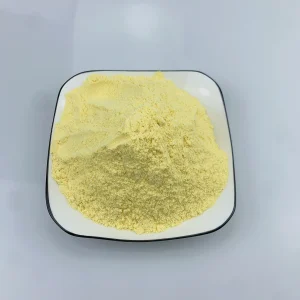
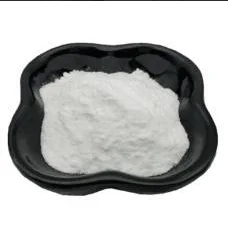
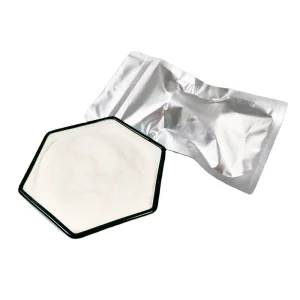
| Physical Morphology | Free-flowing white powder | Granular (80–120 mesh) | Ultra-pure crystalline | Monodisperse micro-crystals |
| Grade Classification | Tech Grade | Optic Grade | Pharma Grade | Electronic 5N |
Standardizing the end-to-end qualification process for international importers to ensure lot-to-lot consistency and customs clearance efficiency.
Each manufactured production lot undergoes dual-station quality clearance: initial titrimetric verification for active boron content, followed by Inductively Coupled Plasma Mass Spectrometry (ICP-MS) trace-element screening. Third-party testing via SGS or Eurofins is fully supported for commercial letters of credit (L/C).
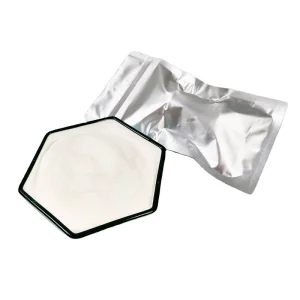
Orthoboric acid exhibits hygroscopic tendencies in tropical sea lanes. Shipments are packaged in multi-wall 25kg Kraft paper bags with heat-sealed PE inner liners or 1,000kg UV-stabilized polypropylene jumbo bags (FIBC) equipped with moisture-barrier aluminum foil liners to eliminate agglomeration during extended transit.
Under EU REACH regulations, orthoboric acid is classified under SVHC criteria due to reproductive toxicity thresholds at elevated concentrations. Verified export operations supply complete GHS-compliant Safety Data Sheets (SDS), dual-language packaging, authorized representative (OR) dossier coverage, and clean customs declarations.
How next-generation chemical engineering is transforming boron extraction through green hydrometallurgy and closed-circuit industrial recycling.
With expanding microelectronic fab capacity across East Asia, managing boron-bearing chemical mechanical planarization (CMP) and etch effluent has become critical. Forward-thinking plants are deploying selective chelating resins and electrodialysis reversal (EDR) to recover orthoboric acid directly from fab wash streams, reintroducing it into industrial glass manufacturing.
Decarbonization mandates have catalyzed the transition from coal-fired steam generation to zero-emission biomass and grid-tied electric boiler systems in refining plants. This shift reduces the embedded carbon footprint per ton of orthoboric acid by up to 34%, satisfying European Carbon Border Adjustment Mechanism (CBAM) compliance.
Emerging battery architectures are exploring borate-based solid-state electrolytes and lithium bis(oxalato)borate (LiBOB) conducting salts. These high-purity precursors demand stringent orthoboric acid feedstock with sub-ppm sodium and halogen thresholds, establishing high-value growth frontiers for chemical producers.
Authoritative guidance on crystallization, grade selection, storage thermodynamics, and international trade compliance.
The difference lies entirely in crystal sizing and physical rheology, while the chemical composition (H₃BO₃ ≥ 99.5%) remains identical. Granular orthoboric acid (typically 30–80 mesh / 0.18–0.60 mm) is engineered through controlled continuous crystallizers; it flows readily and resists caking, making it optimal for pneumatic conveying in glass and ceramic furnaces. Technical powder (passing 100–200 mesh) dissolves much faster in ambient-temperature water, making it the preferred format for agrochemical foliar formulations, timber biocides, and reaction batch synthesis.
Orthoboric acid exhibits an endothermic decomposition profile upon thermal exposure, releasing chemically bound hydration water (~44% by mass) to suppress flames. Simultaneously, it forms an insulating vitreous glassy foam layer (B₂O₃) across the substrate surface. This glassy char prevents atmospheric oxygen access, suppresses smoke emissions, and catalyzes carbonaceous charring rather than volatile hydrocarbon evolution.
In nuclear PWR reactor systems, trace chloride ions (Cl⁻) accelerate stress corrosion cracking (SCC) across austenitic stainless steel and nickel-base alloys under high-temperature pressurized conditions (300°C). In electronic dopant formulations, sulfate and halogen residues generate pinhole gate-oxide breakdowns and uncontrollable parasitic leakage currents on silicon wafers. Consequently, both grades require ion-chromatography thresholds constrained strictly below 1 ppm.
Orthoboric acid should be stored in dry, climate-stabilized warehouses at temperatures between 15°C and 30°C with relative humidity below 65%. Direct contact with uninsulated concrete flooring must be avoided using heavy-duty wooden or plastic pallets. When shipping via sea containers across equatorial lanes, bags should incorporate heat-sealed PE inner barriers, desiccant blankets inside the container envelope, and container hygroscopic monitoring strips.
Because orthoboric acid is classified under REACH SVHC (Substances of Very High Concern due to toxicological Repr. 1B labeling above specific concentration thresholds), importers require a valid REACH Registration or coverage under an Only Representative (OR) agreement. Commercial shipping dossiers must include a fully compliant 16-section SDS (Safety Data Sheet) in the destination country’s official language, a batch-traceable Certificate of Analysis (COA), and GHS-compliant pictograms visibly printed on packaging.
In specialized organic chemistry, orthoboric acid acts as an environmentally benign Lewis acid catalyst for direct amidation reactions between unprotected carboxylic acids and amines, operating with remarkable atom economy. Additionally, it serves as a specialized reagent in Suzuki-Miyaura coupling precursors, forming organoboron complexes that allow regioselective biological compound assembly without racemization.
Standardized high-purity APIs, peptide analogs, and specialized fine chemicals supplied with comprehensive analytical documentation.