Review core high-purity biological compounds, reference peptides, and small-molecule precursors ready for immediate analytical release and global customs-cleared dispatch.

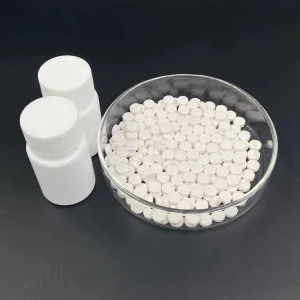
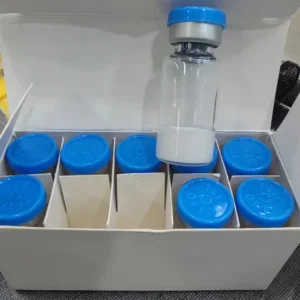
Structural integrity, chromatographic characterization, and physico-chemical profile for industrial procurement officers, contract research organizations, and QA auditors.
| CAS Registry Number | 1165910-22-4 (Validated ChemSpider / PubChem Index) |
|---|---|
| Target Purity Grade | ≥99.0% (Reversed-Phase HPLC); Ultra-pure research grade available up to 99.8% |
| Identification Methodologies | High-Resolution Mass Spectrometry (HRMS [M+H]+), Proton Nuclear Magnetic Resonance (1H-NMR, 400 MHz DMSO-d6), 13C-NMR |
| Impurity Profile Thresholds | Single Maximum Unknown Impurity: < 0.10%; Total Related Substances: < 0.50% |
| Residual Solvents (USP <467>) | Acetonitrile < 410 ppm, Methanol < 3000 ppm, Dichloromethane < 600 ppm, Dimethylformamide < 880 ppm (Headspace GC-MS) |
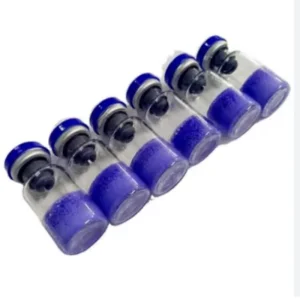
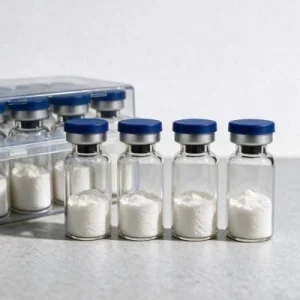
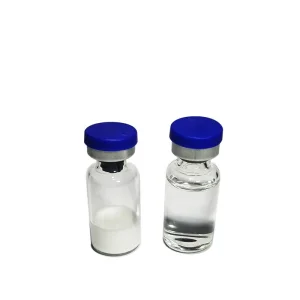
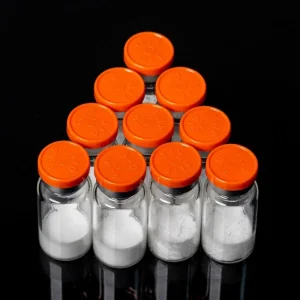
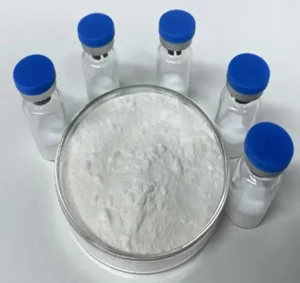
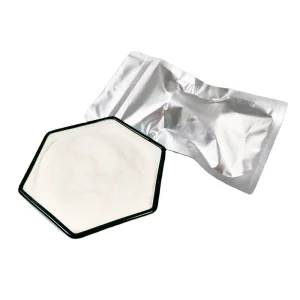
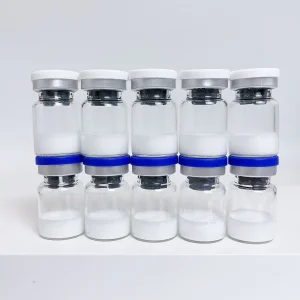
| Physical Form & Appearance | White to off-white lyophilized solid / microcrystalline powder, anhydrous matrix |
| Loss on Drying & Moisture (KF) | Karl Fischer Coulometric Titration: ≤ 1.50% w/w water content |
| Storage & Cold-Chain Integrity | Store desiccated at -20°C in inert nitrogen atmosphere. Qualified for ambient dispatch up to 14 days without hydrolytic degradation. |
In modern chemical biology, active pharmaceutical ingredient synthesis, and peptide-conjugate development, CAS 1165910-22-4 occupies a critical strategic position as a core building block and specialized bioactive intermediate. The acquisition of this compound by enterprise R&D departments demands unequivocal analytical validation. Counterfeiting, synthetic degradation, and residual coupling reagent contamination represent substantial liabilities for pharmaceutical and downstream industrial consumers.
Hebei Miaoou Technology Co., Ltd. addresses these pain points by deploying an orthogonal quality architecture. Every production batch of CAS 1165910-22-4 synthesized within our manufacturing ecosystem undergoes comprehensive spectral verification. The baseline verification includes analytical Reversed-Phase High-Performance Liquid Chromatography (RP-HPLC) utilizing C18 stationary phases under gradient aqueous-organic elution. Concurrently, Electrospray Ionization Quadrupole Time-of-Flight Mass Spectrometry (ESI-QTOF-MS) confirms the exact monoisotopic mass to a tolerance of within 2 ppm, guaranteeing that researchers receive molecular material free of stereoisomeric truncation or incomplete synthetic precursors.
Analyzing why Hebei Miaoou and the Chinese upstream chemical corridor deliver unmatched pricing stability, synthesis scale, and compliance reliability for global supply chains.
Chinese manufacturing facilities benefit from complete vertical clustering of fundamental raw materials, protected amino acid derivatives, and high-efficiency coupling reagents. Unlike Western repackagers reliant on fragmented import chains, domestic synthesis of CAS 1165910-22-4 relies on local petrochemical-to-fine-chemical feeds, insulating clients from geopolitical and trade disruptions.
Our state-of-the-art facilities in Shijiazhuang, Hebei, incorporate automated continuous-flow reactors and pilot-scale industrial Solid-Phase Peptide Synthesis (SPPS) arrays. By transitioning from labor-intensive manual vessel transfers to programmable distributed control systems (DCS), cycle times decrease by 42% while batch-to-batch coefficient of variation (CV) stays below 1.2%.
High-efficiency recycling of elution solvents, integrated cogeneration utilities, and localized synthesis engineering allow Chinese factories to offer wholesale pricing 35% to 55% lower than European or North American contract manufacturers, without compromising chromatographic fidelity or documentation rigors.
Our cleanrooms operate under ISO 9001:2015 frameworks with strict Class 100,000 environmental control in synthesis halls and Class 10,000 sterile filtration zones. Every shipment of CAS 1165910-22-4 is paired with exhaustive traceability matrices linking raw material lots, synthesis logs, and instrumental calibrations.
Cross-border freight of specialized chemical entities poses severe regulatory hurdles. Hebei Miaoou provides end-to-end Delivered Duty Paid (DDP) logistics channels. Our export clearance teams handle customs declarations, non-hazardous classification dossiers, and temperature-controlled air freight with dry-ice integrity logging.
How changing global pharmaceutical paradigms, the explosion of metabolic therapeutic vectors, and ESG compliance are restructuring chemical precursor sourcing.
The global fine chemical and therapeutic research intermediate sector is undergoing structural transformation driven by three macroeconomic phenomena: the exponential expansion of metabolic and peptide therapeutics (exemplified by GLP-1, GIP, and glucagon multi-agonists), escalating worldwide regulatory scrutiny regarding elemental and nitrosamine impurities, and the pharmaceutical industry’s commitment to green chemistry principles.
1. Escalating Demand for Complex Synthetic Intermediates: As the therapeutic landscape expands from classical small molecules into complex conjugated peptides and peptidomimetics, the structural sophistication required of building blocks such as CAS 1165910-22-4 has intensified. Global drug master file (DMF) filings reflect a compound annual growth rate (CAGR) exceeding 14.8% for specialized custom intermediates. Laboratories that historically carried out multi-step internal syntheses are outsourcing precursor synthesis to specialized Chinese factories to shorten preclinical cycles.
2. Tightening Regulatory Thresholds & ICH M7 Compliance: Regulatory bodies including the US FDA, EMA, and PMDA have elevated the standards governing starting materials and raw chemical compounds. In accordance with ICH Q7 and ICH M7 guidelines, synthetic routes for CAS 1165910-22-4 must be evaluated for mutagenic impurities and genotoxic byproduct profiles. Chinese primary factories have responded by adopting high-resolution Orbitrap mass spectrometry and ICP-MS testing to quantify trace palladium, lead, and arsenic down to sub-parts-per-billion (<ppb) thresholds.
3. Green Synthesis and Solvent Reduction Technologies: Traditional peptide and fine chemical synthesis is heavily reliant on hazardous organic solvents like DMF, NMP, and DCM. Progressive manufacturing sites in China are pioneering green peptide synthesis (GPS) methodologies. Utilizing alternative bio-based solvents, peptide synthesis in aqueous micelles, and membrane-based solvent recovery technology, Hebei Miaoou has reduced hazardous chemical discharge per kilogram of purified product by over 38% since 2021.
Integration of machine learning algorithms to model reaction kinetics in the synthesis of CAS 1165910-22-4 has eliminated unwanted side reactions, elevating pure target yields from 74% to over 91% at commercial kilogram scales.
Leading enterprise buyers are moving away from just-in-time single-source stocking, establishing dual-warehouse reserves in partnership with qualified Asian manufacturers to mitigate shipping chokepoint risks.
Operational deployment guidelines for CAS 1165910-22-4 across biological assays, medicinal chemistry, active ligand synthesis, and diagnostic formulation.
CAS 1165910-22-4 is utilized as a reference molecular ligand in competitive binding studies and receptor profiling. Its exceptional chemical purity (≥99.0%) prevents non-specific signal distortion in fluorescence polarization (FP) and surface plasmon resonance (SPR) kinetic assays.
In medicinal chemistry programs, the compound acts as a high-value core scaffold for combinatorial library synthesis. The precise position of its reactive centers allows for rapid SAR (Structure-Activity Relationship) exploration without side-chain decomposition.
Biotechnology laboratories utilize CAS 1165910-22-4 in linker-payload design, investigating bio-conjugation efficiency with target antibodies, albumin carriers, or lipid moieties to optimize systemic half-life in pre-clinical pharmacology models.
Employed in in-vitro metabolic stability experiments utilizing human liver microsomes (HLM) and S9 fractions to map metabolic cleavage routes, intrinsic clearance rates (CLint), and cytochrome P450 inhibition patterns.
Serves as a certified secondary reference standard for industrial quality control laboratories monitoring commercial batch purity, instrument calibration, and validation of chromatographic separation methods.
From single-gram pilot development to multi-metric-ton production cycles: Hebei Miaoou delivers bespoke manufacturing, packaging, and regulatory documentation.
Flexible synthesis configurations tailored to project milestones. We support custom medicinal chemistry runs from 100 grams up to multi-hundred kilogram commercial campaigns under full non-disclosure agreements (NDAs).
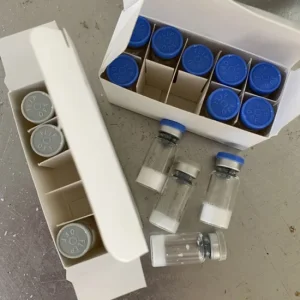
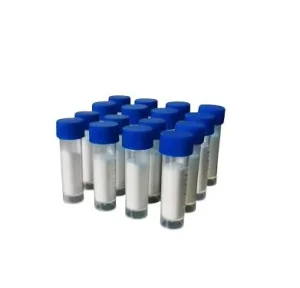
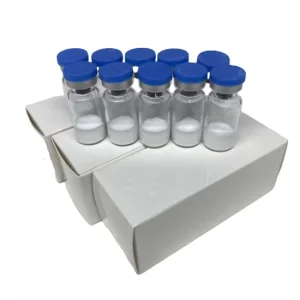
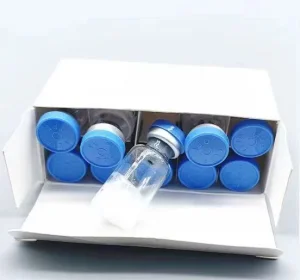
Direct aseptic dispensing into 2ml/5ml/10ml amber or clear borosilicate glass vials, aluminum heat-sealed pouches, or UN-certified industrial drums with inert argon head-space blanket to prevent oxidation.
Complete submission-ready technical documentation including Certificate of Analysis (COA), Safety Data Sheets (SDS in 12 languages), Method Validation Summaries, and residual solvent certificates.
Hebei Miaoou accepts and coordinates blinded, independent third-party sample testing through accredited international analytical providers (SGS, Eurofins, or client-nominated GLP laboratories) before batch release.
Integrated temperature-monitored supply corridors to North America, Western Europe, Japan, and Australia, backed by automated real-time customs clearance processing and re-shipment guarantees.
Strategic purchasing matrix designed for institutional procurement directors assessing primary synthesis factories in Asia.
Institutional procurement of specialty chemicals and complex intermediates like CAS 1165910-22-4 involves rigorous risk-mitigation frameworks. Global chemical organizations and research institutes evaluate suppliers based on five foundational pillars: Analytical Precision, Process Scalability, Regulatory Transparency, Supply Continuity, and Legal Assurance.
When qualifying Chinese manufacturers, international purchasing departments must look beyond advertised purity percentages. The critical metric is the presence of underlying chromatographic raw data. A trustworthy factory supplies complete integration tables illustrating baseline resolution, peak symmetry, column parameters (stationary phase type, particle diameter, pore dimension), flow rates, and detection wavelengths (commonly UV 210nm, 220nm, or 254nm). Reputable vendors maintain permanent retention samples for every batch for a minimum of 24 months post-dispatch.
Confidential disclosure of target purity specifications, acceptable residual solvent limits, and synthetic route constraints.
Synthesis and testing of a representative 10g–50g pilot batch with full HPLC, 1H-NMR, LC-MS, and KF water titration documentation.
Formal production scheduling, batch-coded cleanroom packaging, dynamic shipment tracking, and proactive customs declaration management.
Direct answers to core analytical, operational, regulatory, and logistics queries encountered by purchasing managers.
Our standard commercial synthesis campaigns deliver an HPLC purity of ≥99.0% (area normalization at 214nm/254nm). For specialized analytical standard applications and pharmacophore research, we offer ultra-high purity batches certified at ≥99.5% with no single unspecified impurity exceeding 0.10%. Every lot is accompanied by raw chromatograms showing complete peak integration.
Each shipment includes an authenticated Certificate of Analysis (COA) containing the unique batch identifier, synthetic release date, and re-test timeframe. Attached documentation includes Reversed-Phase HPLC chromatograms, Electrospray Ionization LC-MS spectral plots confirming monoisotopic mass, 1H-NMR spectra, Karl Fischer water titration results, and residual solvent quantification via headspace GC-MS.
We operate dedicated cross-border logistics lines utilizing Delivered Duty Paid (DDP) protocols. Our regulatory export team prepares comprehensive documentation, including non-hazardous chemical declarations, certified commercial invoices with accurate HS tariff classifications, and professional packaging designed to prevent border delays. We maintain a 99.4% first-pass customs clearance rate across North America, the EU, and East Asia.
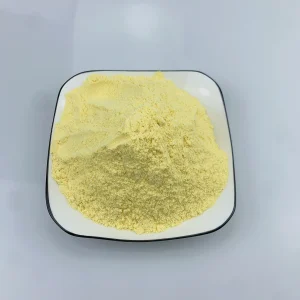
Yes. In addition to our standard 1g, 5g, 10g, and 100g vacuum-sealed vials, we supply bulk crystalline powder in sterile moisture-barrier aluminum foil bags, high-density polyethylene (HDPE) containers, or sealed argon-flushed drums (1kg to 25kg). Customized vial dimensions and specific fill weights can be tailored to match your facility's automated dispensing equipment.
For long-term preservation, CAS 1165910-22-4 should be stored desiccated at -20°C in an airtight container shielded from light. When handling, allow the container to equilibrate to room temperature before opening to avoid atmospheric moisture condensation. Once reconstituted in organic solvents or aqueous buffers, solutions should be aliquoted and stored at -80°C, minimizing freeze-thaw cycles.
Products provided on this platform are synthesized exclusively for in-vitro laboratory research, chemical synthesis development, reference standard calibration, and industrial formulation investigations. They are strictly not for direct clinical, therapeutic, veterinary, or human consumption. Commercial downstream pharmaceutical applications require appropriate secondary qualification and compliance with regional regulatory mandates.
Directly connect with certified factory pipelines for additional high-demand signaling peptides, API building blocks, and specialty analytical references.
Connect directly with our senior analytical chemistry department and export compliance directors. Secure comprehensive batch COAs, sample validation packs, and volume tiered quotations within 24 hours.

