Verified API
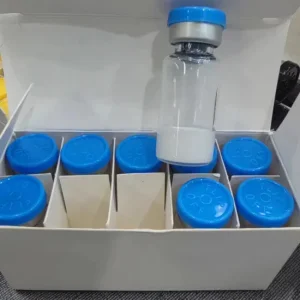
Pre-qualified laboratory APIs, reference standards, and bio-active peptides manufactured under strict batch traceability protocols with documented chromatograms.
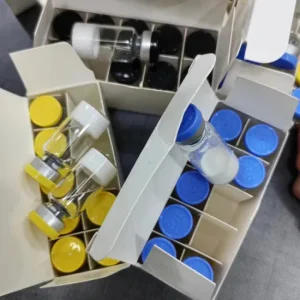
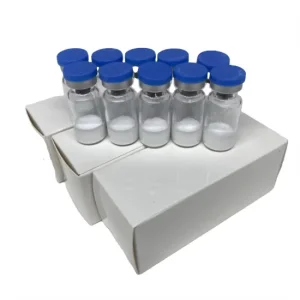
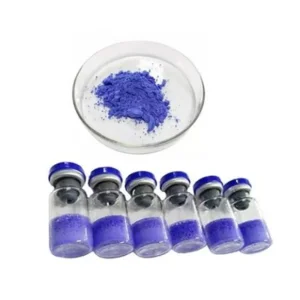

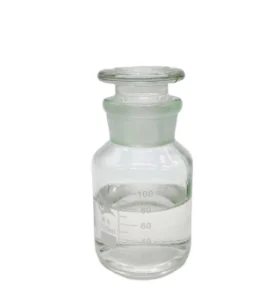
An in-depth metallurgical and chemical assessment of 17β-hydroxyandrosta-1,4-dien-3-one 10-undecenoate synthesis routes, stereochemistry, and chromatographic profiles.
The industrial-scale production begins with 4-androstene-3,17-dione (AD) derived from phytosterols (soybean sterols or stigmasterol). Using selected microbial strains such as Mycobacterium neoaurum or Arthrobacter simplex, a regio- and stereo-selective 1,2-dehydrogenation introduces a double bond between C1 and C2, yielding 1,4-androstadiene-3,17-dione (ADD). This bioconversion guarantees total enantiomeric preservation, eliminating harmful chiral impurities early in the pathway.
The isolated ADD intermediate undergoes mild, chemoselective reduction of the 17-keto functionality to the 17β-hydroxyl configuration without altering the conjugated 1,4-dien-3-one system. Industrial reactors deploy sodium borohydride (NaBH4) at sub-zero cryogenic regimes (-15°C to -5°C) in methanolic solutions. The thermodynamic trajectory heavily favors the 17β-isomer over the inactive 17α-epimer, providing an isomeric purity exceeding 99.4% in raw base yield.
Boldenone base is esterified with highly purified 10-undecenoyl chloride (CAS 760-67-8) utilizing 4-dimethylaminopyridine (DMAP) and triethylamine (TEA) in anhydrous dichloromethane. The reaction replaces the polar 17β-OH with an undecylenate lipophilic carbon chain. The post-reaction wash applies sequential dilute hydrochloric acid, saturated sodium bicarbonate, and deionized water, followed by thin-film molecular distillation to isolate pure, amber oily API without trace solvent residues.
| Analytical Parameter | Pharmacopeial Standard (In-House / EP Grade) | Testing Methodology | Enterprise Batch Significance |
|---|---|---|---|
| Chemical Structure | 17β-[(1-Oxo-10-undecenyl)oxy]androsta-1,4-dien-3-one | 1H-NMR, 13C-NMR, FT-IR | Confirms intact steroid nucleus & undecylenate side-chain ester bonding. |
| CAS Registry Number | 13103-34-9 | Chemical Inventory Database | Ensures regulatory registration with international export/import manifests. |
| Chromatographic Purity | ≥ 98.5% (Typical batch: 99.1% - 99.4%) | RP-HPLC (C18 column, UV @ 240nm) | Minimizes oxidation byproducts and free boldenone precursors in final formulation. |
| Free Boldenone Content | ≤ 0.5% (w/w) | HPLC Peak Resolution | Prevents crystallization and unesterified hormone volatility in oil solutions. |
| Residual Solvents | Methanol < 3000ppm, DCM < 600ppm, Hexane < 290ppm | Headspace Gas Chromatography (HS-GC-FID) | Compliance with ICH Q3C guidelines ensuring biosafety and zero cellular toxicity. |
| Heavy Metal Limits | Total ≤ 10 ppm; Pb ≤ 1ppm, As ≤ 1ppm, Cd ≤ 0.5ppm | ICP-MS (Inductively Coupled Plasma) | Guarantees safety in long-term injectable veterinary or scientific research lines. |
How state-of-the-art Chinese synthesis parks leverage Distributed Control Systems (DCS), continuous flow microreactors, and integrated raw material access to secure global supply stability.
China is home to the world's largest processing facilities for phytosterols, squalene, and 4-AD precursor intermediates located predominantly in Jiangsu, Zhejiang, and Hebei industrial corridors. This localized vertical integration insulates manufacturing pipelines from foreign exchange volatility, transport chokepoints, and raw ester shortages, ensuring continuous production schedules year-round.
Modernized production lines replace legacy batch glass kettles with micro-channel continuous flow reactors. Process parameters including temperature gradients, stoichiometric molar ratios, residence time, and pressure are monitored in real time via Siemens SCADA and DCS architectures. This eliminates manual technician variance, prevents thermal spikes during esterification, and produces batch-to-batch consistency with CpK > 1.33.
Export infrastructure is seamlessly linked to global logistics hubs in Shanghai, Ningbo, and Shenzhen. Our temperature-controlled bonded warehouses maintain rolling safety reserves of intermediate 4-AD and finished Boldenone Undecylenate oil base, enabling rapid dispatch within 24–48 hours of purchase order validation, circumventing supply disruptions even amidst global maritime friction.
Global pharmaceutical formulators, veterinary compounding hubs, and clinical research distributors require rigorous procurement protocols to eliminate counterfeiting, biological cross-contamination, and batch degradation.
Due to the oily liquid consistency of Boldenone Undecylenate at room temperature, unscrupulous brokers often cut material with industrial carrier oils (castor oil, benzyl benzoate, or ethyl oleate) or substitute cheaper steroid esters (such as Testosterone Enanthate). Qualified B2B enterprise procurement requires full third-party GC-MS chromatogram validation, optical rotation assessment, and quantitative HPLC peak integration to certify active molecular purity.
The terminal alkene double bond on the undecylenate side chain is vulnerable to photo-oxidation, free radical formation, and polymerization when exposed to atmospheric oxygen or UV light. Procurement standards must mandate sealed amber glass or fluorinated HDPE vessels under an inert argon or nitrogen blanket. A strict peroxide value (≤ 5.0 meq O2/kg) prevents rancidity and preserves clarity during long shelf-life formulations.
Pharma-grade compounding demands compliance with ICH Q7 Good Manufacturing Practice guidance for Active Pharmaceutical Ingredients. Procurement departments verify plant audit trail records, cleaning validation logs (to eliminate cross-contamination between hormone classes), air handling HEPA HVAC certifications (ISO Class 7/8 cleanrooms), and formal Drug Master File (DMF) availability for regulatory dossier submissions.
Addressing international customs variations, scheduled compound frameworks, and secure supply chain solutions for qualified institutional researchers and manufacturers across North America, the European Union, LATAM, and APAC.
Boldenone Undecylenate is classified differently worldwide: DEA Schedule III controlled substance in the United States, Schedule IV in Canada, Class C in the United Kingdom, and varying veterinary or prescription chemical scheduling across the European Union and Latin America. Our international operations team collaborates exclusively with licensed corporate entities, providing export declarations, End-User Undertakings (EUU), and proper Harmonized System tariff coding (HS Code 2937.29.0000) to ensure full border transparency.
Liquid and semi-solid steroid esters are sensitive to mechanical puncture, container leaching, and temperature spikes. Bulk deliveries utilize UN-approved heavy-wall fluorinated drums or medical-grade 316L stainless steel pressure cylinders. Every container is purged with 99.999% analytical-grade nitrogen to eliminate headspace oxygen, fitted with tamper-evident induction heat seals, and tracked with real-time temperature/humidity data loggers during transit.
Procuring raw API is merely the first step for manufacturing laboratories. Our localized technical service groups offer formulation solubility profiles, co-solvent optimization (benzyl alcohol, benzyl benzoate, medium-chain triglycerides, ethyl oleate), sterile filtration guidelines (0.22 μm PTFE/PVDF compatibility), and accelerated stability validation support to ensure end formulations maintain clarity and potency over their entire assigned shelf-life.
Strategic evolution of steroid active pharmaceutical ingredient manufacturing from 2025 to 2035: biocatalysis, continuous-flow synthesis, zero-carbon footprints, and artificial intelligence in Process Analytical Technology (PAT).
Traditional chemical esterification relies on acid chlorides, generating stoichiometric amounts of hydrogen chloride gas and requiring harsh organic amine acid-scavengers. The roadmap transitions toward immobilized lipase-catalyzed esterification (e.g., engineered Candida antarctica lipase B). Operating under ambient temperatures (35°C - 45°C) in supercritical CO2 or green solvent systems, this process delivers 99.8% yields while completely eliminating volatile organic amine wastes.
Next-generation synthesis integration couples in-line fiber-optic NIR (Near-Infrared) and Raman probes directly into microreactor flow channels. Machine learning algorithms trained on tens of thousands of batch hours continuously adjust pressure, temperature, and reagent feed rates within milliseconds, maintaining zero impurity deviation and ensuring every liter of finished ester meets ultra-pure pharmaceutical benchmark specs autonomously.
Long-term environmental goals establish fully circular chemical production parks. Carbon dioxide captured from industrial exhaust is biochemically converted via synthetic biology yeast strains into sterol nuclei, creating a net-negative carbon footprint for anabolic hormone precursor building blocks. Coupled with solar-powered distillation and >99% solvent closed-loop recovery loops, industrial API synthesis achieves full environmental neutrality.
Exhaustive technical answers addressing analytical characterization, physicochemical solubility, stability mechanics, and regulatory compliance for procurement professionals.
Pure Boldenone Undecylenate (CAS 13103-34-9) is a light yellow to amber-colored viscous oily liquid at standard room temperature (20°C to 25°C). Unlike shorter steroid esters which exist as crystalline powders, the long 11-carbon aliphatic undecylenate chain disrupts crystal lattice formation, depressing its melting point below ambient ranges (approx. 10°C to 17°C). At cooler storage temperatures (≤ 4°C), it solidifies into an opaque semi-solid mass that fully reconstitutes into a clear oily state upon gentle, indirect warming to 25°C without altering chemical composition.
Analytical differentiation is conducted via Reversed-Phase High-Performance Liquid Chromatography (RP-HPLC) coupled with mass spectrometry (LC-MS). Boldenone base exhibits an exact mass of 286.41 Da with a significantly shorter chromatographic retention time on a C18 column due to its free 17β-hydroxy group. Boldenone Undecylenate displays a molecular ion peak at m/z 453.3 [M+H]+ and a longer retention time corresponding to its increased lipophilicity. Furthermore, proton NMR (1H-NMR) clearly identifies the distinct terminal alkene vinyl protons (=CH2 and -CH=) of the undecylenate moiety at δ 4.9–5.8 ppm, which are absent in saturated esters like cypionate or enanthate.
Because Boldenone Undecylenate is an oily liquid at formulation temperatures, it miscible in vegetable oils (such as USP-grade sesame, grapeseed, or purified miglyol MCT oil) far more readily than crystalline steroids. For high-concentration veterinary formulation runs (250mg/mL to 300mg/mL), formulation chemists typically utilize 2% (v/v) Benzyl Alcohol as an antimicrobial preservative and 10% to 15% (v/v) Benzyl Benzoate as a viscosity reducer and co-solvent. Ethyl oleate can also be added up to 20% to decrease injection resistance in cold climates, without causing crystallization risk.
Discoloration (transitioning from pale amber to dark reddish-brown) is primarily driven by oxidative degradation at the terminal alkene double bond of the undecylenate chain, as well as secondary oxidation of the steroid A-ring dienone system when exposed to trace oxygen, heat, or ultraviolet irradiation. This degradation pathway creates conjugated organic peroxides and conjugated polymers. It can be completely mitigated by purging all transfer lines and storage vessels with high-purity argon or nitrogen gas, adding food/pharma-grade tocopherols (Vitamin E) as antioxidants where permitted, and keeping bulk vessels in dark, cold-room environments (2°C to 8°C).
When reviewing factory COAs for release into production, procurement directors must evaluate: (1) HPLC Purity: Must be ≥ 98.5% with specific reporting of single unknown impurities (≤ 0.5%); (2) Free Boldenone Content: Must be ≤ 0.5% w/w to prevent erratic bioavailability kinetics; (3) Residual Solvents: Dichloromethane < 600 ppm, Methanol < 3000 ppm via Headspace GC; (4) Water Content: ≤ 0.5% measured via Karl Fischer titration; (5) Heavy Metals: ≤ 10 ppm total; and (6) Microbial Endotoxins / Bioburden: Specified when purchasing material pre-tested for parenteral veterinary synthesis.
The undecylenate ester contains 11 carbon atoms, rendering the compound intensely hydrophobic. Once injected intramuscularly in an oil carrier depot, the molecule slowly partitions out of the lipid phase into surrounding interstitial fluid. Tissue and circulating carboxylesterases subsequently cleave the ester bond at the C17 position to release the pharmacologically active Boldenone sterol. The extended aliphatic length of the undecylenate chain significantly sterically hinders enzymatic esterase access, conferring a prolonged biological clearance half-life of approximately 14 days, minimizing injection frequency requirements in veterinary therapeutic protocols.
Raw Boldenone Undecylenate API is too viscous to filter neat through sterilizing-grade 0.22-micron membranes at ambient room temperature without excessive differential pressure that can rupture filters. In cGMP operations, the API is first fully dissolved into its targeted vehicle oil and co-solvent blend (such as MCT/BB/BA), heated to 45°C to 50°C to depress solution viscosity, and subsequently passed through a hydrophobic Polytetrafluoroethylene (PTFE) or hydrophilic Polyvinylidene Fluoride (PVDF) 0.22 μm membrane filter. Post-filtration bubble point testing must be verified to ensure filter integrity was maintained.
Compliant international export requires: (1) A signed commercial contract and Proforma Invoice detailing correct tariff nomenclature (HS Code 2937.29); (2) Manufacturer Certificate of Analysis (COA) matching drum lot numbering; (3) Validated Safety Data Sheet (SDS / MSDS) prepared compliant with GHS Revision 9; (4) Certified Packing List specifying net, gross, and tare weights; (5) Shanghai Institute of Chemical Industry Certification for Safe Transport of Chemical Goods (identifying whether cargo is classified DG or non-DG for air/sea transit); and (6) Official Certificate of Origin (COO) or Form E/Form A where preferential trade agreements apply.
Explore our certified inventory of synthetic pentadecapeptides, selective melanocortin agonists, small molecule PARP inhibitors, and advanced anabolic reference powders.