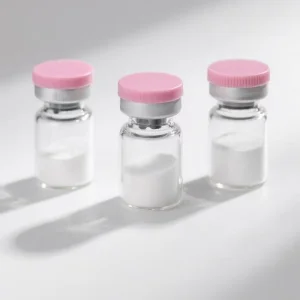
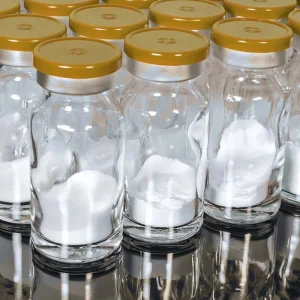
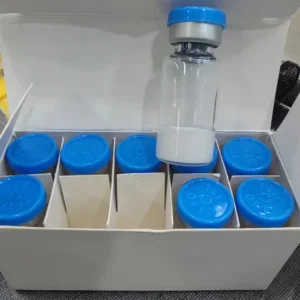
Immediate commercial supply from our GMP synthesis and cleanroom lyophilization workshops. In-stock reference standards, APIs, and synthetic compounds with validated HPLC/MS analytical release documentation.
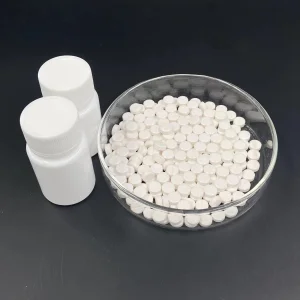

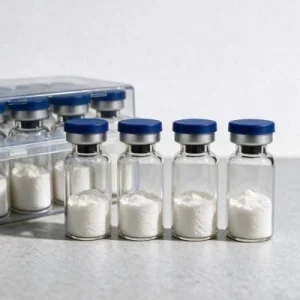
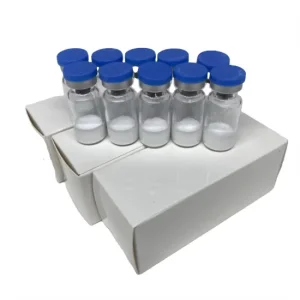
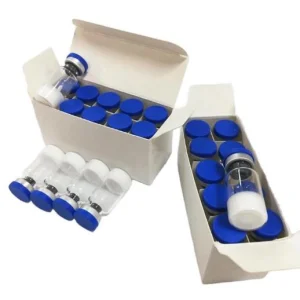
A detailed whitepaper evaluation of (S)-Dapoxetine free base (CAS 119356-77-3) and its pharmaceutical salt derivatives. Understanding stereochemical configuration, enantiomeric separation, and impurity limits under ICH Q3A/B standards.
| Analytical Parameter | Acceptance Criteria (USP / Ph. Eur. Method) | Factory Realized Value (Batch Release) | Compliance State |
|---|---|---|---|
| Chemical Name | (1S)-N,N-dimethyl-3-(naphthalen-1-yloxy)-1-phenylpropan-1-amine | Conforms to Structure via 1H/13C-NMR | Verified |
| CAS Registry Number | 119356-77-3 (Free Base) / Related HCl Salt: 129938-20-1 | CAS 119356-77-3 Certified | Documented |
| Molecular Formula & Weight | C21H23NO (Free Base: 305.41 g/mol) | Theoretical: 305.41 | HR-MS: 305.409 | Conforms |
| Chromatographic Purity (HPLC) | Not less than 99.0% area normalization | 99.62% - 99.85% | Pass |
| Chiral Purity (Enantiomer (R)) | Not more than 0.20% (Chiral HPLC) | <0.08% (ee > 99.84%) | Pass |
| Residual Solvents (ICH Q3C) | Methanol < 3000ppm, Ethanol < 5000ppm, DCM < 600ppm | Below Detection Limits (GC-HS) | Pass |
| Heavy Metals (ICH Q3D) | Lead, Arsenic, Cadmium, Mercury < 10 ppm combined | < 2.5 ppm (ICP-MS) | Pass |
| Appearance & Physical State | White to off-white crystalline solid or viscous pale yellow base | Consistent crystalline morphology | Pass |
The biological efficacy of Dapoxetine is critically dependent on its (S)-enantiomer. Our facility employs catalytic asymmetric hydrogenation combined with chiral resolution crystallization to suppress the pharmacologically inert (R)-isomer to well below 0.1%, preventing optical isomer drift during downstream tablet pressing.
Through controlled crystallization in cleanroom grade crystallization tanks, we lock the active intermediate into its most thermodynamically stable crystal habit. This guarantees consistent dissolution rates, non-hygroscopic handling, and thermal resilience during maritime container transit across varying climatic zones.
Equipped with state-of-the-art LC-MS/MS triple quadrupole spectrometers, every commercial batch of CAS 119356-77-3 is proactively audited for secondary amine nitrosation markers. We guarantee NDMA and NDEA levels far below the conservative EMA and US-FDA daily intake thresholds (<0.03 ppm).
By establishing full integration from basic petrochemical raw materials (1-naphthol, benzaldehyde, dimethylamine) to finished CAS 119356-77-3, our automated synthesis park provides global pharmaceutical brands with unparalleled price stability, uninterrupted scalability, and rigorous environmental compliance.
We do not rely on spot-market crude intermediates. Our dedicated synthesis reactors manufacture key starting materials (KSMs) on-site, isolating our clients from supply crunches, speculative price volatility, and secondary customs bottlenecks.
Reactions are orchestrated by distributed control systems (DCS) monitoring exothermic etherification, flow hydrogenation, and quench cycles. Continuous real-time data logging eliminates operator variance and guarantees flawless batch-to-batch reproducibility.
Operating multi-cubic-meter glass-lined and hastelloy synthesis suites allows us to pass aggressive volume cost savings to contract development and manufacturing organizations (CDMOs), lowering cost of goods sold (COGS) by 28-35% versus Western suppliers.
Our ecological park operates closed-loop solvent reclamation units yielding over 92% recovery efficiency. Dedicated industrial wastewater treatment plants and catalytic oxidizers guarantee uninterrupted production permits 365 days a year without regulatory downtime.
CAS 119356-77-3 is the critical precursor for Dapoxetine, the only short-acting selective serotonin reuptake inhibitor (SSRI) approved globally for the on-demand management of premature ejaculation (PE). Discover its formulation adaptations across pharmaceutical modern platforms.
The standard dosage formats (30mg and 60mg calculated as base) demand rapid dissolution in the gastrointestinal tract to achieve an ultrafast Tmax of approximately 1.01 to 1.27 hours. Our micro-pulverized API powders exhibit tight particle size distribution (D90 < 25 µm), ensuring immediate dissolution and predictable bioequivalence in clinical human studies.
The global urological sector is experiencing massive adoption of fixed-dose combination formulations pairing Dapoxetine intermediate with PDE5 inhibitors (such as Tadalafil or Sildenafil Citrate). Our material undergoes strict excipient compatibility screening to eliminate trans-esterification or salt migration when co-blended in dual-layer compressed tablets.
To overcome first-pass hepatic metabolism and further accelerate onset of action, advanced formulation laboratories leverage our ultra-pure CAS 119356-77-3 intermediate in polymer-based sublingual film matrices. The high organoleptic cleanliness and reduced bitter amine notes simplify microencapsulation and taste-masking technologies.
The global male sexual health therapeutic market is undergoing substantial transformation, projected to expand at a CAGR of 7.8% through 2032. Explore the key macro drivers incentivizing global procurement divisions to secure factory-direct contracts.
Direct-to-consumer (D2C) men's digital health platforms across North America, Latin America, and Southeast Asia have destigmatized urological consults, triggering unprecedented prescription volume increases for Dapoxetine formulations.
With original compound patents expired across most territories, tier-1 generic pharmaceutical producers in India, Brazil, Turkey, and Egypt are launching abbreviated new drug applications (ANDAs), requiring bulk intermediate sources backed by comprehensive DMF documentation.
Procurement teams have abandoned fly-by-night brokers in favor of audited Chinese manufacturing plants with verified real-world infrastructure, traceable analytical custody, and dedicated multi-ton storage capacity.
Global health authorities now require total transparency on elemental impurities (ICH Q3D), mutagenic nitrosamine precursors, and genotoxic alkylating intermediates, making our rigorous zero-defect QA release mandatory for market survival.
Our international logistics and QA divisions de-risk bulk API cross-border transactions through tamper-evident barrier packaging, specialized cold-chain air cargo arrangements, complete regulatory dossiers, and flexible trade financing structures.
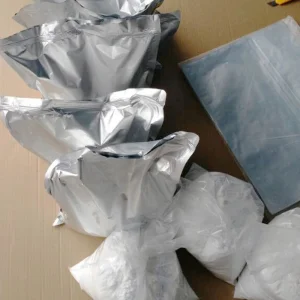
Available in 1kg double-laminated aluminum foil vacuum pouches, 5kg antistatic medical-grade polyethylene liners, and 25kg UN-approved hermetic fiber drums with desiccants and moisture-barrier nitrogen flushing. Tailored private-label and coded serialization labels compliant with GS1 international standard barcodes.
We furnish qualifying corporate buyers with comprehensive Technical Dossiers: Open-part Drug Master File (DMF), Certificate of Suitability (CEP) preparation data, complete synthetic route disclosures, validation protocols, stress-testing stability records (25°C/60% RH & 40°C/75% RH for 36 months), and explicit non-animal origin TSE/BSE statements.
Backed by more than 16 years of fine-chemical export excellence, our logistical network operates dedicated DDP, CIF, and FOB corridors. We manage all chemical classification declarations, TSCA/REACH compliance documentation, non-hazardous goods certificates (DGM), and provide transparent real-time satellite parcel and air-freight tracking until warehouse dock arrival.
Clear, unequivocal, and authoritative answers to the primary technical, analytical, regulatory, and commercial inquiries encountered by chemical procurement managers auditing CAS 119356-77-3.
CAS 119356-77-3 indexes the (S)-(+)-Dapoxetine free base molecular structure (C21H23NO), whereas CAS 129938-20-1 explicitly identifies the hydrochloride salt form ((S)-Dapoxetine HCl, C21H24ClNO). Both are core commercial products of our factory. While the free base is frequently specified for customized chemical synthesis or specialized polymer dissolution matrices, the HCl salt form is the predominant active ingredient used in solid oral tableting. Our workshops supply both compounds at ≥99.5% HPLC purity.
Enantiomeric separation is verified via validated Chiral Stationary Phase High-Performance Liquid Chromatography (Chiral HPLC) using Daicel Chiralpak IB or equivalent columns with hexane/isopropanol/diethylamine mobile phase systems. Each batch COA details both absolute retention times and relative area percentages of the desired (S)-enantiomer versus the inverted (R)-enantiomer, guaranteeing an enantiomeric excess (ee) exceeding 99.8% with (R)-isomer strictly capped below 0.10%.
Every commercial order leaves our factory with a complete release packet comprising the Batch-Specific Certificate of Analysis (COA), high-resolution analytical HPLC chromatograms, 1H/13C Nuclear Magnetic Resonance (NMR) spectra, High-Resolution Mass Spectrometry (HRMS) curves, Gas Chromatography (GC) residual solvent reports, raw material safety data sheets (16-section GHS-compliant SDS), and packing list with commercial invoice cross-referencing batch numbers.
When stored in intact original factory containers, sealed under inert nitrogen atmosphere in a cool, dry place between 2°C and 8°C (or tightly sealed at controlled ambient temperatures 15°C to 25°C away from direct photolytic radiation), CAS 119356-77-3 features a validated shelf-life and recommended re-test period of 36 months from the date of manufacture. Real-time and accelerated stability study data under ICH Q1A guidelines are available upon request.
Yes. We routinely support academic institutes, contract analytical laboratories, and formulator pilot plants with qualified analytical reference standards and evaluation samples ranging from 10 grams, 50 grams, to 500 grams. Each evaluation sample is pulled directly from the active commercial master batch and mirrors the exact specifications of prospective multi-ton deliveries.
Yes. Utilizing cleanroom-installed pneumatic jet milling systems, we can tailor the physical particle size distribution to meet your pharmaceutical compounding requirements—whether your formulation relies on direct compression, wet granulation, or dry roller compaction. Typical customizations range from D90 < 10 µm for ultra-fast dispersing strips to coarse crystalline distributions for high-speed automated rotary tablet presses.
Complete portfolio of laboratory-grade research compounds, therapeutic peptide standards, and fine-chemical APIs. Direct from our automated production facilities with guaranteed batch traceability.