Procure reference-grade chemical substances, lyophilized peptides, and active research compounds with traceable analytical documentation directly from manufacturing facilities.
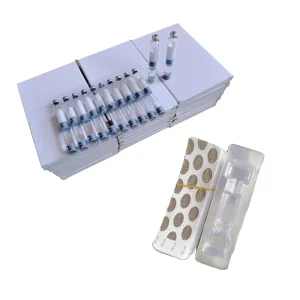
Procurement teams and contract testing laboratories require verifiable structural criteria. Below is the chemical profile and analytical threshold established for CAS 13103-34-9 synthesis.
| Analytical Parameter | Reference Test Standard | Factory Acceptance Criteria | Commercial Impact |
|---|---|---|---|
| Chemical Identification | 1H / 13C-NMR & FT-IR ATR | Conforms to Reference Standard Spectrum | Eliminates counterfeit or structurally misassigned isomers. |
| HPLC Chromatographic Purity | Reversed-Phase HPLC (UV @ 240nm) | ≥98.5% – 99.2% (Area Normalized) | Ensures high signal-to-noise ratio in metabolic & endocrine assays. |
| Individual Known Impurities | RP-HPLC Method | ≤0.50% (Boldenone Free Base, 17-alpha epimer) | Protects down-stream cell-line integrity from non-specific bindings. |
| Residual Solvents | Headspace GC-FID (USP <467> / ICH Q3C) | Methanol <3000ppm, Dichloromethane <600ppm | Prevents volatile organic solvent contamination in testing facilities. |
| Heavy Metals Content | ICP-MS (ICH Q3D Elemental Impurities) | Pb <0.5ppm, As <0.5ppm, Cd <0.5ppm, Hg <0.1ppm | Guarantees bio-analytical and environmental standard compliance. |
| Specific Optical Rotation [α]D | Polarimetry (c=1 in Dioxane at 20°C) | +38.0° to +43.0° | Validates complete chiral fidelity at positions 8, 9, 10, 13, 14, 17. |
| Water Content (Karl Fischer) | Coulometric Titration (USP <921>) | ≤0.30% | Prevents spontaneous ester hydrolysis during prolonged warehouse cold-storage. |
Understanding supply chain bottlenecks, raw material sourcing dependencies, and multi-tier synthesis dynamics governing international distribution channels.
The manufacturing corridor relies on 4-Androstene-3,17-dione (4-AD) or Phytosterols derived from soybean or tall-oil fatty acids. Disruption in agricultural supply lines directly alters the pricing threshold of intermediate 1,4-Androstadiene-3,17-dione (ADD). We buffer market price shocks through strategic long-term precursor procurement reserves.
Conventional batch acylation using undecylenoyl chloride often leads to dark colorization and over-esterification impurities. Modernized micro-channel continuous flow reactors optimize residence times, keeping reaction temperatures strictly between 0°C and 5°C, eliminating thermal side products and ensuring a lighter, cleaner liquid yield.
Geopolitical restrictions, customs reclassifications, and logistics bottlenecks necessitate distributed logistics hubs. Hebei Miaoou Technology maintains dual-continent intermediate holding nodes, allowing vetted enterprise buyers to secure contracted allocations without single-point-of-failure vulnerabilities.
A transparent, five-stage quality checkpoint system engineered to provide the documentary evidence expected by senior quality directors and chemical auditors.
Microbial fermentation sterols undergo FT-IR fingerprinting and GC purity testing before release into the core synthesis pipeline.
Selective enzymatic or chemical dehydrogenation of the 1,2-position on the A-ring to generate the 1,4-diene scaffold with >97% conversion rate.
Chemoselective reduction of the 17-keto group to the corresponding 17β-hydroxyl configuration, monitored by TLC and in-process HPLC.
Coupling with high-purity undec-10-enoyl chloride under inert argon atmosphere, followed by flash silica chromatographic purification and low-temp solvent vacuum stripping.
Comprehensive analytical testing including 1H-NMR, 13C-NMR, HPLC purity assay, headspace GC, and Karl Fischer moisture validation.
Navigating global regulatory jurisdictions, controlled substance compliance, REACH registration, and customs clearance protocols for laboratory procurement.
In the United States, CAS 13103-34-9 is regulated as a Schedule III controlled substance under the Anabolic Steroids Control Act. Distribution for analytical, reference, or veterinary pharmaceutical manufacturing mandates active DEA Form 222 or Form 357 execution, strictly limited to licensed research institutions, DEA-registered analytical laboratories, and compliant intermediate processors.
Importation into European Union member states requires adherence to REACH Regulation (EC) No 1907/2006. Depending on the intended scientific application, compliance with local national controlled substance legislation (such as BtMG in Germany or the Misuse of Drugs Act in the UK) is verified prior to invoice finalization, accompanied by dual-language SDS and complete import declarations.
For buyers throughout the Asia-Pacific region, customs clearing requires verified chemical safety documentation, compliant GHS labeling, and proper Harmonized System (HS) code classification (HS Code: 29372900). Our dedicated freight forwarders utilize temperature-monitored, sealed freight containers to ensure zero degradation across intercontinental air transit routes.
Where does CAS 13103-34-9 deploy? Examining verified laboratory, veterinary therapeutic, and anti-doping reference applications.
Forensic toxicity laboratories and World Anti-Doping Agency (WADA) accredited testing hubs utilize our ultra-pure CAS 13103-34-9 as primary internal reference standards for calibrating High-Resolution Liquid Chromatography-Tandem Mass Spectrometry (LC-HRMS) protocols detecting steroid metabolites in equine and canine biological matrices.
In licensed veterinary clinical medicine, long-acting esters of boldenone have historically been studied for nitrogen retention and lean tissue regeneration in debilitated equine models. Contract research organizations (CROs) source this active ingredient to benchmark bio-availability models and pharmacokinetics.
Biomedical researchers investigating androgen receptor (AR) transcriptional activity and cellular signal transduction utilize CAS 13103-34-9 to measure relative binding affinity versus 5α-reductase enzymatic resistance, helping map steroid selectivity without estrogenic co-activation in vitro.
Academic institutions and organic synthesis research groups study the slow-release depot kinetics of 17β-undecenoate ester cleavage by tissue carboxylesterases. These studies provide fundamental chemical data for modern pro-drug lipophilic delivery matrices.
Where modern organic chemistry meets sustainable chemical synthesis: reducing energy footprint while maximizing enantiomeric yield.
By engineering specialized strains of Mycobacterium and Arthrobacter simplex, our R&D team is shifting away from heavy metal oxidants like selenium dioxide and stoichiometric DDQ. This biotransformation yields higher stereoselectivity, lower batch carbon footprints, and completely eliminates toxic residual heavy metal traces.
Replacing traditional petroleum ether and hexane recrystallization with super-critical carbon dioxide (scCO2) chromatographic purification. This modern purification technology ensures zero halogenated organic solvent residuals and preserves thermo-sensitive 17β-ester linkage stability during final distillation.
Integration of real-time spectroscopic PAT (Process Analytical Technology) driven by neural network algorithms. Optical probes monitor the esterification conversion in milliseconds, halting feed lines at optimal purity plateaus and lowering side-product generation below detectable limits.
Critical commercial, regulatory, and quality control clarifications addressing the inquiries most frequently posed by corporate procurement teams.
Explore our extended range of active pharmaceutical raw materials, specialized freeze-dried research compounds, and hormone analogs with documented HPLC assay verification.
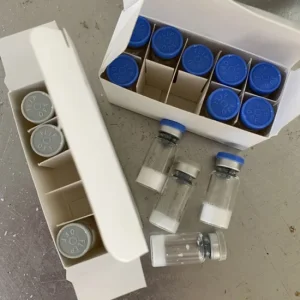
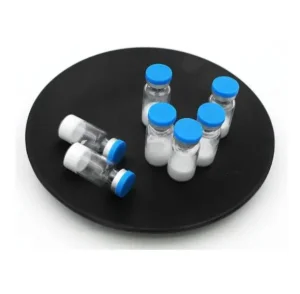
Ensure regulatory safety, analytical verification, and financial security before executing chemical procurement contracts.
Verify that the specific lot identification stamped upon outer packaging exactly corresponds to the HPLC peak integration and mass analysis on the accompanying COA.
Demand unedited HPLC baseline graphs with zoom windows around the solvent peak rather than accepting summary numerical purity claims.
Ensure Headspace Gas Chromatography profiles confirm levels of class 1, 2, and 3 solvents fall comfortably beneath strict USP <467> toxicity limits.
Confirm the manufacturing factory willingly supports third-party verification by ISO/IEC 17025 accredited analytical laboratories prior to large volume settlement.
Verify that your supplier operates under recognized ISO 9001 and ISO 14001 operational frameworks, providing transparent factory origin certificates.