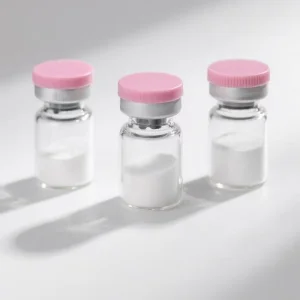
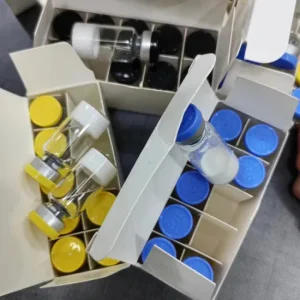
Explore directly available export compounds, peptide syntheses, and active intermediate lines manufactured under strict analytical quality control.
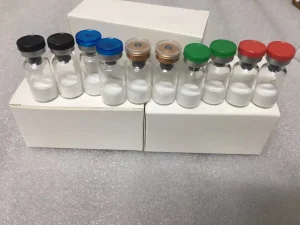
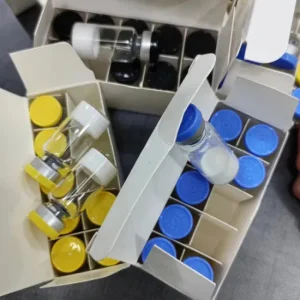
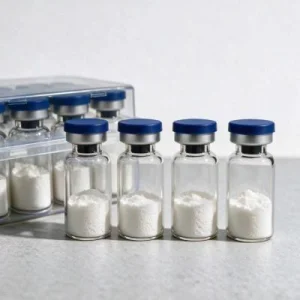
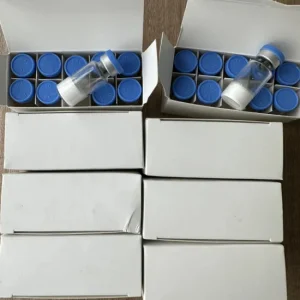
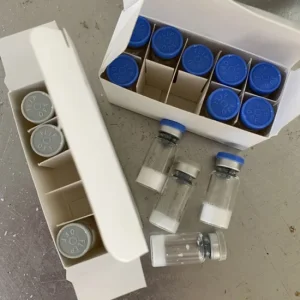
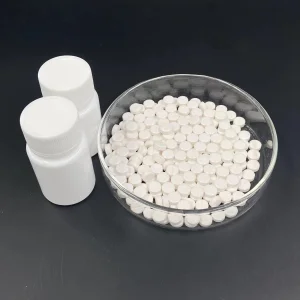
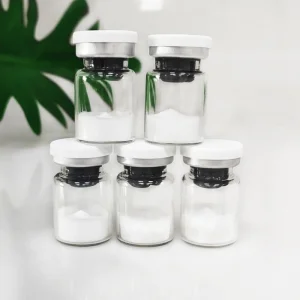
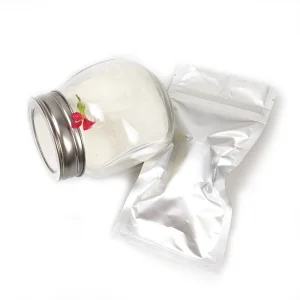
Methyl 2-phenylacetoacetate (frequently referred to in analytical contexts as MAPA, methyl alpha-phenylacetoacetate, or methyl 3-oxo-2-phenylbutanoate, CAS Number 16648-49-7) occupies a pivotal role in modern synthetic organic chemistry. As a multifunctional beta-keto ester derivative, it functions as an essential synthon in diverse transformation cascades ranging from specialty agrochemical active ingredients to fine fragrance compounds and heterocyclic API precursors.
Characterized by a labile alpha-proton flanked by an aromatic phenyl core and an electron-withdrawing beta-dicarbonyl moiety, facilitating rapid nucleophilic additions, asymmetric hydrogenations, and heterocycle condensations.
The ester carbonyl and ketone carbonyl exhibit distinct reactivity profiles under tuned stoichiometric conditions, enabling selective hydrolytic decarboxylation, enolate alkylation, and cyclocondensation routes.
Global pharmaceutical and industrial contract research organizations (CROs/CDMOs) demand rigorous GC-MS and HPLC specifications, tightly limiting residual acetic derivatives and moisture to protect downstream catalyst yields.
In modern industrial procurement, purchasing Methyl 2-phenylacetoacetate requires profound familiarity with regulatory classification frameworks, dual-use chemical legislation, and stringent international supply chain auditing. Due to its potential utility in diverse synthesis platforms, international regulatory bodies maintain targeted classification standards that direct legal B2B sales exclusively to validated industrial entities.
Over the last five years, national narcotics and dual-use precursor control authorities—including the UN International Narcotics Control Board (INCB), the European Chemicals Agency (ECHA), and the US Drug Enforcement Administration (DEA)—have categorized MAPA as a regulated precursor under targeted schedules. This requires verified manufacturers and global buyers to operate under explicit licensing protocols.
Legitimate factories must uphold exhaustive Know-Your-Customer (KYC) compliance, issuing rigorous End-User Declarations (EUD), checking corporate registration documentation, and securing export permits prior to customs dispatch. Commercial procurement departments must navigate these regulatory channels with qualified Chinese manufacturers capable of furnishing compliant legal dossiers.
Historically synthesized across European and North American specialized chemical corridors, bulk production of Methyl 2-phenylacetoacetate has concentrated overwhelmingly within integrated Chinese chemical manufacturing zones (principally Hebei, Shandong, Jiangsu, and Zhejiang). This consolidation is driven by direct upstream raw material access, comprehensive thermal-oil plant infrastructure, and sophisticated continuous-flow production tech.
Global procurement teams in Germany, India, Brazil, Japan, and the United States partner with primary Chinese manufacturers to secure stable, multi-ton contractual volumes that hedge against spot-market volatility, raw material shortages, and international maritime freight bottlenecks.
The operational competitiveness of Chinese fine chemical manufacturers is not simply founded on competitive labor; it is rooted in vertical upstream chemical integration, large-scale automated microreactor implementations, advanced environmental protection loops, and dedicated chemical industrial park infrastructures.
Leading Chinese plants operate directly adjacent to world-scale benzyl cyanide, phenylacetic acid, and methyl ester crackers. By internalizing feedstocks such as methyl acetate, sodium alkoxide bases, and aromatic hydrocarbons, manufacturers eliminate intermediate distribution markups and buffer against feedstock shocks.
Replacing obsolete 5,000L glass-lined stirred batch reactors with tubular continuous-flow reactors (CFR) and micro-channel technology. This provides precise millisecond residence time control, superb exotherm management, lower side-product formation, and superior energy efficiency.
Modern Chinese synthesis hubs operate under Grade-A Provincial Safety and Environmental licenses. Solvent recycling units recover >96% of organic extraction solvents (toluene, ethyl acetate, heptane), maintaining competitive production costs while respecting stringent carbon policies.
While public discussion often focuses on precursor regulation, commercial enterprises utilize Methyl 2-phenylacetoacetate primarily across specialized pharmaceutical synthesis, agrochemical manufacturing, and organic fragrance formulation.
Serves as a pivotal carbon scaffold in synthesizing complex central nervous system therapeutics, cardiovascular agents, chiral synthons, and enzyme inhibitors. Its bifunctional dicarbonyl core permits selective functionalization without degradation of adjacent chiral centres.
Utilized as an intermediate in creating macrocyclic musks, phenyl-substituted floral notes, and fixative esters for cosmetic perfumes and detergent formulations. Decarboxylation and catalytic hydrogenation yield unique aromatic alcohols with high olfactory tenacity.
Employed in developing selective herbicides, broad-spectrum fungicides, and novel botanical crop protection formulations. The phenyl ketoester backbone enables the construction of stable pyrazole and pyridazine ring systems designed for environmental degradability.
Purchasing directly from primary manufacturing facilities requires strict validation of analytical instrumentation results. Below are standard export-grade specifications verified by HPLC, GC-FID, MS, and Karl Fischer titration.
| Analytical Parameter | Commercial Grade Spec | High-Purity API Grade | Test Methodology | Compliance Status |
|---|---|---|---|---|
| Chemical Appearance | White to Off-White Crystalline Mass | Pure White Crystal Powder | Visual Inspection (USP <631>) | Conforms |
| Assay Purity (GC/FID) | ≥ 98.50% | ≥ 99.20% | Agilent 8890 GC-FID System | Certified |
| HPLC Chromatographic Purity | ≥ 98.00% (area normal) | ≥ 99.00% (area normal) | Reverse-Phase C18 Column (254nm) | Verified |
| Mass Spectrometry (MS Identity) | Matches Standard Spectrum [M+H]+: 193.1 | Matches Standard Spectrum [M+H]+: 193.1 | LC-MS Quadrupole Analysis | Conforms |
| Karl Fischer Moisture Content | ≤ 0.50% wt/wt | ≤ 0.20% wt/wt | Coulometric Titration (ASTM E1064) | Certified |
| Residue on Ignition (Ash) | ≤ 0.10% | ≤ 0.05% | Thermogravimetric Gravimetry | Compliant |
| Residual Solvents (Toluene/Methanol) | ≤ 890 ppm Toluene / ≤ 3000 ppm MeOH | ≤ 400 ppm Toluene / ≤ 1000 ppm MeOH | Headspace GC-MS (ICH Q3C Class 2/3) | Pass |
| Heavy Metals (Pb, Cd, As, Hg) | ≤ 20 ppm total | ≤ 10 ppm total | ICP-MS Detection | Pass |
A transparent procurement pathway safeguards global buyers against contractual delays, customs holds, or non-conforming bulk shipments.
Initial legal verification, vetting recipient enterprise credentials, review of intended chemical application, and bilateral execution of End-User Declarations.
Dispatch of representative 50g-250g production samples accompanied by batch-specific HPLC, GC-MS chromatograms, and certified COA for customer lab qualification.
Microreactor synthesis run under digital DCS supervision, followed by vacuum recrystallization, drying, and packaging into UN-rated fluorinated HDPE drums.
Execution of dangerous goods declarations (if applicable), MSDS/SDS integration, HS-code harmonization, and temperature-controlled freight forwarding.
Technological advancement and heightened ESG standards are reshaping how factories design, synthesize, and distribute intermediate ketoesters worldwide.
Research centers are advancing solid-supported base catalysts and neat microwave/photochemical reactors to synthesize phenylacetoacetate derivatives without halogenated or aromatic solvents, slashing hazardous waste streams by over 40%.
Modern factories are adopting in-situ Focused Beam Reflectance Measurement (FBRM) and AI Process Analytical Technology (PAT) to monitor crystal nucleation in real time, yielding uniform crystal geometries that accelerate centrifugation and filtration cycles.
To navigate stringent international regulatory oversight smoothly, Tier-1 chemical manufacturers are integrating tamper-proof digital batch records tracking raw materials from tank farm entry through synthesis, purification, and international container loading.
Essential answers to critical regulatory, chemical, packaging, and logistical questions faced by commercial purchasers.
Direct B2B supply lines featuring comprehensive analytical verification, high-purity specifications, and reliable export documentation.