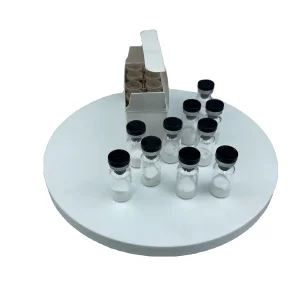
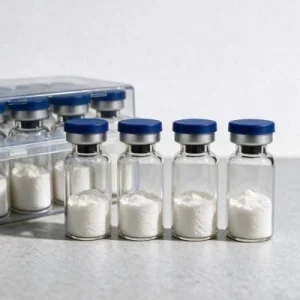
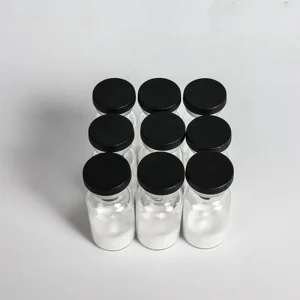
Direct factory-source procurement for research-grade biological molecules, high-affinity receptor agonists, and reference standard chemicals featuring verified lot-traceable COA and HPLC documentation.
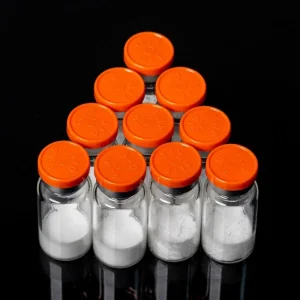
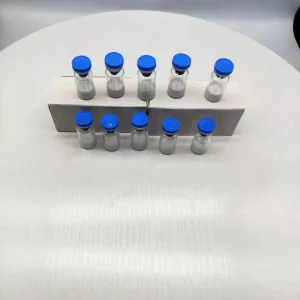
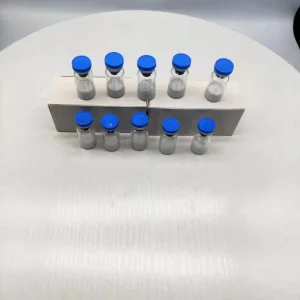
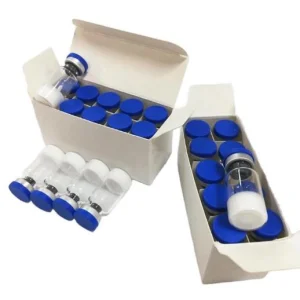
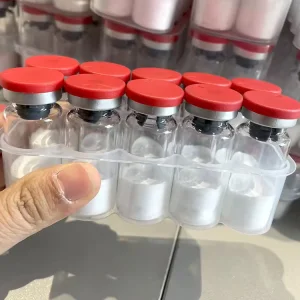
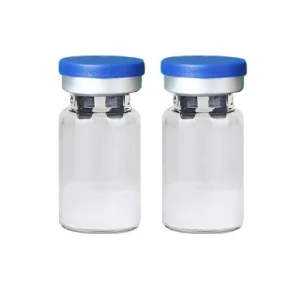
Navigating global structural transitions in androgen active pharmaceutical ingredient (API) manufacturing: from raw phytosterol fermentation cascades to ultra-purified synthetic esters for institutional therapeutic compounds.
Modern industrial synthesis bypasses animal extraction and traditional diosgenin mining by relying on microbial side-chain cleavage of natural plant sterols (stigmasterol, sitosterol) derived from soy and tall oil pitch. Industrial strains of Mycobacterium smegmatis biotransform phytosterols directly into key 17-ketosteroid platform intermediates: 4-Androstene-3,17-dione (4-AD) and 1,4-Androstadiene-3,17-dione (ADD). This bioconversion represents the backbone of 88% of global testosterone precursor capacity.
Unmodified micronized base testosterone exhibits an oral half-life under 10 minutes due to rapid hepatic first-pass glucuronidation and sulfation. Chemical esterification at the 17β-hydroxy locus using acid chlorides or anhydrides in pyridine/DCM introduces lipophilic hydrocarbon chains: Cypionate (8 carbons), Enanthate (7 carbons), Propionate (3 carbons), and Undecanoate (11 carbons). Industrial batch reactors must achieve >99.2% acyl conversion while suppressing 3-enol ester side impurities.
The macro testosterone market is expanding exponentially beyond traditional male hypogonadism and bilateral orchiectomy therapies. Institutional compounding and formulation volume is surging across female hypoactive sexual desire disorder (HSDD) protocols, cachexia counter-measures in oncological therapies, severe burn regenerative protocols, and gender-affirming endocrine medicine. Sourcing pure, non-pyrogenic APIs has evolved from a transactional task into a mission-critical risk hedge.
Contaminated intermediates or suboptimal microbial bioconversion can introduce trace 1,4-dien-3-one isomers or unreacted 4-AD residuals into final bulk crystals. Even at parts-per-thousand levels, these related substances violate USP <621> chromatographic criteria and EDQM European Pharmacopoeia (Ph. Eur.) Monographs, resulting in mandatory batch quarantine, border interdiction, or expensive recall liabilities for finished pharmaceutical compounders.
High-volume production parameters, solvent recovery efficiency, and chemical asset footprint powering modern multi-ton steroid API manufacturing facilities.
Concentrated primary fermentation facilities utilize 50,000-liter deep-tank aerated fermenters for bioconverting phytosterols. Advanced strain mutagenesis yields high-efficiency conversion of soy sterol fractions into 4-AD with zero halogenated reagents. This upstream phase represents 60% of total chemical operating expenditures.
Transitioning from traditional glass-lined stirred batch reactors to microfluidic continuous flow reactors has dramatically curtailed side reactions. Continuous acylation optimizes stoichiometric ratios of acyl halides, reducing overall reaction times from 18 hours to 4 minutes while drastically minimizing residual solvent hazards (Class 2 & 3 solvents per ICH Q3C).
API dissolution profiles in carrier oils or transdermal hydrogels are heavily dictated by polymorph crystal habits and particle size distribution (PSD). State-of-the-art ultrasound-assisted crystallization (sonocrystallization) produces tight D50 (15-25µm) or ultra-micronized D90 (<10µm) powder specifications directly out of the anti-solvent wash.
Navigating DEA Schedule III, EU Controlled Substances regulations, bonded warehouse management, and strict technical dossier release for multinational pharmaceutical procurement.
Provision of active Type II Drug Master Files (DMF) registered with the US FDA, alongside Certificates of Suitability to the monographs of the European Pharmacopoeia (CEP). Open-part documentation supports rapid formulation filing for ANDA and 505(b)(2) new drug submissions.
Androgen steroid esters are strictly designated under DEA Schedule III in the United States, Controlled Drugs and Substances Act (CDSA) Schedule IV in Canada, and Class C drugs in the UK. International transit utilizes verified institutional import/export permits (DEA Form 236/357), sealed tamper-evident bonded containers, and door-to-door GPS trackable chain-of-custody tracking.
Steroid ester crystalline structures, particularly Testosterone Cypionate and Enanthate, have low melting points (36°C-102°C) and can undergo photo-induced oxidation or hydrolytic cleavage in humid environments. Material packaging utilizes heat-sealed multi-layer aluminum barrier bags purged with ultra-high purity pharmaceutical Argon or Nitrogen gas (residual O2 <0.5%).
Every commercial delivery includes an exhaustive analytical package: validated RP-HPLC traces demonstrating base and ester retention times, GC headspace analysis for residual Class 2 solvents (methanol, acetonitrile, DCM), Inductively Coupled Plasma Mass Spectrometry (ICP-MS) elemental impurity data complying with ICH Q3D, and Pyrogen testing via Kinetic Turbidimetric LAL Assay.
| Active Ingredient Specification | CAS Registry | Molecular Formula | USP / Ph. Eur. Melting Point | Standard Assay Target | Primary Clinical / Research Format |
|---|---|---|---|---|---|
| Testosterone Base (Micronized) | 58-22-0 | C19H28O2 | 153°C to 157°C | 98.0% – 102.0% | Transdermal Gel, Sublingual Troche, Implant Pellet |
| Testosterone Cypionate | 58-20-8 | C27H40O3 | 98°C to 104°C | 97.0% – 103.0% | Intramuscular Depot (Cottonseed / Grapeseed Oil) |
| Testosterone Enanthate | 315-37-7 | C26H40O3 | 34°C to 39°C | 97.0% – 103.0% | Intramuscular Depot (Sesame Oil Carrier Vehicle) |
| Testosterone Propionate | 57-85-2 | C22H32O3 | 118°C to 123°C | 97.0% – 103.0% | Rapid-Release Injectable / Multi-Ester Blends |
| Testosterone Undecanoate | 5949-44-0 | C30H48O3 | 59°C to 61°C | 98.0% – 102.0% | Oral Self-Emulsifying Gelcap, Long-Acting 1000mg Depot |
From cGMP sterile injectable compounding suites to transdermal delivery matrices, precision raw material inputs dictate formulation stability, bio-absorption kinetics, and patient outcomes.
Injectable testosterone solutions require absolute solubility stability to prevent cold-chain crystallization in multi-dose vials. Formulating cypionate (200mg/mL) or enanthate (250mg/mL) demands high-purity API free from particulate foreign matter. Compounding pharmacists utilize benzyl benzoate as a secondary solubilizing co-solvent and benzyl alcohol (0.5%-2%) as an antimicrobial preservative in refined pharmaceutical-grade carrier oils (USP sesame, ethyl oleate, or refined cottonseed oil).
Transdermal therapeutic systems (e.g., 1% and 1.62% hydrogels) depend critically on micronized Testosterone Base with tight particle size distributions (D90 < 10 microns). Sub-micron crystals dissolve instantly across a matrix composed of ethanol/isopropyl alcohol, purified water, and isopropyl myristate penetration enhancers. Inadequate micronization creates crystalline aggregation, gritty topical texture, and wildly inconsistent cutaneous permeation across the stratum corneum.
Clinical pathology laboratories, in vitro diagnostics (IVD) reagent manufacturers, and anti-doping testing organizations (WADA accredited) require secondary and primary reference materials with ultra-high isotopic clarity. Supplying high-purity crystalline powders for LC-MS/MS calibration curves and steroid hormone proficiency testing programs ensures cross-laboratory diagnostic reproducibility.
Addressing environmental regulations, carbon footprint pressures, and chemical safety through enzyme catalysis and automated continuous crystallized manufacturing.
Legacy industrial processes utilize sodium borohydride (NaBH4) or catalytic hydrogenation with precious metals (Raney nickel, palladium) to selectively reduce the 17-keto group of 4-AD into the 17β-hydroxyl of testosterone. Modern green chemistry deploys engineered Carbonyl Reductases (CRED) and 17β-Hydroxysteroid Dehydrogenases (17β-HSD) in aqueous enzyme cocktails. This achieves >99.9% enantiomeric selectivity (ee), completely eradicating hazardous heavy metal waste streams.
Process Analytical Technology (PAT) is redefining pharmaceutical steroid crystallization. Focused Beam Reflectance Measurement (FBRM) combined with in-situ Fourier-Transform Infrared (FTIR) probes and AI-driven image analysis monitor real-time crystal nucleation and cord-length growth. This closed-loop automated system ensures polymorphic purity (Form I vs Form II) while avoiding over-crystallization and eliminating post-synthesis jet-milling steps.
Supercritical CO2 (scCO2) technologies are replacing toxic solvent precipitation protocols. Testosterone esters precipitated via Rapid Expansion of Supercritical Solutions (RESS) generate crystalline powders with complete absence of volatile organic chemical (VOC) residuals. This green synthesis breakthrough guarantees 100% compliance with tightening European REACH regulations and California Proposition 65 limits.
Direct manufacturer availability for oncology intermediates, finished ester solutions, anti-estrogenic agents, and specialized peptides engineered for B2B supply lines.
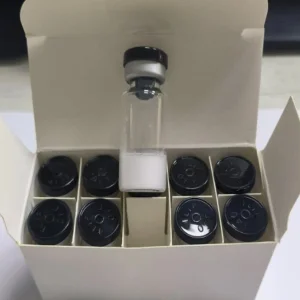
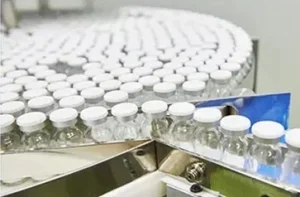
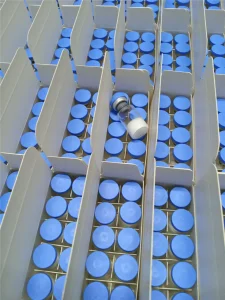
Critical compliance, chromatographic validation, and transactional parameters addressed for procurement officers and quality assurance teams.
Batches must meet or exceed USP and Ph. Eur. monograph criteria. Acceptance mandates an HPLC assay of 97.0%–103.0% on a dried basis. Under reverse-phase HPLC (C18 column with UV detection at 240nm / 254nm), any single unspecified related substance must remain below 0.10%, total impurities below 0.50%, and residual free testosterone base below 0.20%. Complete chromatograms with integration tables accompany each shipment.
For international buyers in jurisdictions where steroid APIs are regulated (such as DEA Schedule III in the United States or equivalent international frameworks), transactions proceed strictly via verified institutional pathways. The buyer provides an endorsed Import Permit issued by their national health authority. Our regulatory affairs office coordinates the export clearance (e.g., DEA Form 236/357 or state-level counterparts) with cross-referenced INCOTERMS 2020 delivery terms (CIP/DAP) via bonded customs carriers.
Yes. We offer tailored particle engineering through controlled sonocrystallization and inert fluid-energy jet milling. Standard crystalline bulk presents a D50 of 40–80 microns, whereas our micro-engineered line delivers a D90 < 10 microns and D50 < 5 microns. This fine particle specification is required for transdermal gels, micro-emulsions, and uniform sublingual formulations, preventing active sedimentation in oily vehicles.
We welcome and encourage third-party verification by ISO 17025 accredited analytical laboratories (e.g., Janoshik, Chromatec, or Eurofins). In case of an analytical divergence, protocols outline cross-testing using retained reference samples in an agreed reference laboratory adhering to official USP <621> validation methodologies. Full credit or lot replacement is contractually executed if materials deviate from the agreed specifications.
Residual solvents are analyzed by Gas Chromatography Headspace (GC-HS) according to ICH Q3C guidelines, ensuring Class 2 solvents (such as dichloromethane or methanol) remain strictly within permissible exposure levels (<600 ppm for DCM; <3000 ppm for MeOH). To halt hydrolytic cleavage of ester bonds, APIs are packed in triple-barrier moisture-proof aluminum foil containers purged with dry high-purity nitrogen, supplemented with food/pharma-grade molecular sieve desiccants.
Yes. Institutional compounding pharmacies utilize our high-grade active pharmaceutical ingredients to compound sterile intramuscular injections and non-sterile preparations. However, compounding entities are legally required to execute their own bioburden, endotoxin (LAL), sterility verification, and release testing on finished preparations in full alignment with cGMP, USP <797>, and USP <71> guidelines.