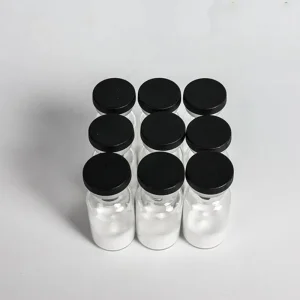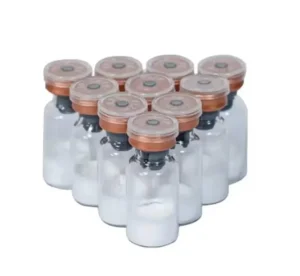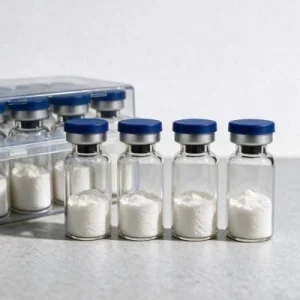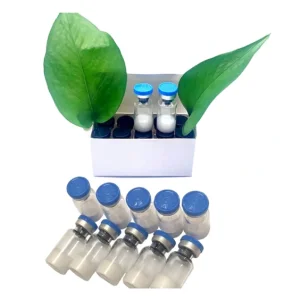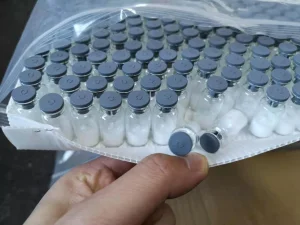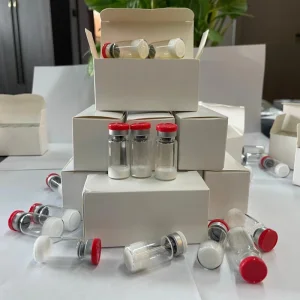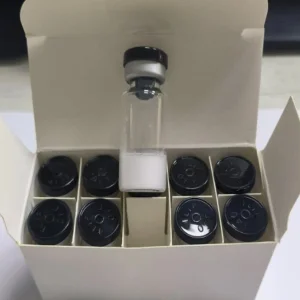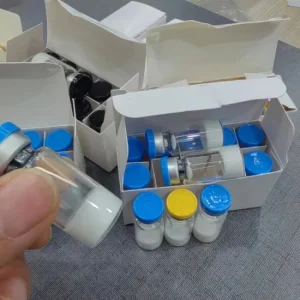
Factory-direct synthesized bio-active peptides, research APIs, and standard reference materials produced under strict ISO and GMP qualification protocols.
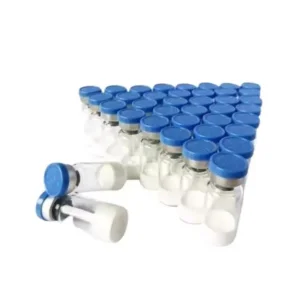
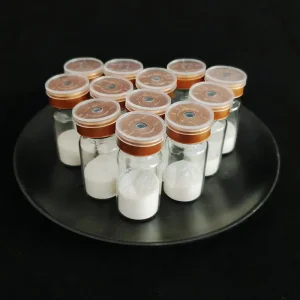

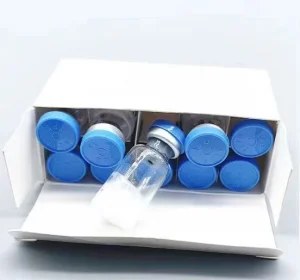
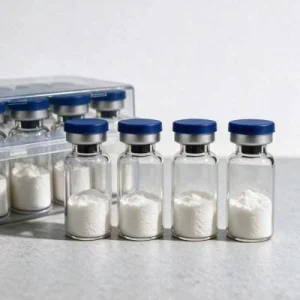
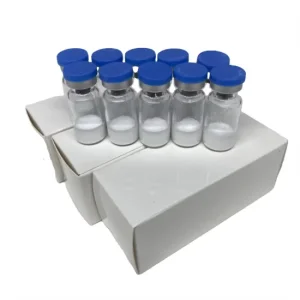
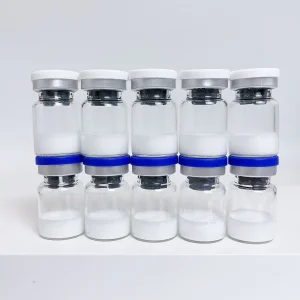
Within advanced organic synthesis, 4-chloro-17a-methyl androst- core frameworks represent a sophisticated class of functionalized C19 steroids. Historically derived from fundamental androstane skeletons, these compounds are defined by electrophilic chlorine substitution at the C-4 position and methylation at C-17α, imparting remarkable metabolic stability against standard enzymatic conversion cascades.
The insertion of the 4-chloro moiety alters the stereoelectronic geometry of the steroid A-ring. This steric hindrance selectively inhibits aromatization into estrogenic metabolites via the cytochrome P450 aromatase enzyme complex (CYP19A1). Industrial researchers leverage these characteristics to develop stabilized receptor-binding probes and analytical reference standards that resist rapid in vitro hepatic breakdown.
Across North America (FDA/DEA), Europe (EMA), and Australasia (TGA), downstream applications of chlorinated androgenic structures are regulated under rigorous research-chemical mandates. International procurement demands full synthetic documentation, structural elucidation, and clear distinction between laboratory reference substances, pharmacological raw materials, and regulated items.
World Anti-Doping Agency (WADA) accredited laboratories and clinical diagnostic centers maintain steady institutional demand for verified reference materials. The precise characterization of long-term metabolites—such as 17β-hydroxymethyl-17α-methyl-18-norandrost-13-en derivatives—necessitates high-grade reference standards synthesized by specialized chemical manufacturers.
China’s dominance in steroid hormone and functional intermediate production rests upon a fully integrated industrial value chain. Spanning from bio-fermentation precursors to cryogenic multi-step synthesis, Chinese manufacturing clusters in Hebei, Hubei, and Jiangsu deliver unmatched economies of scale.
| Operational Parameter | China Industrial Standard (Modernized Facilities) | Legacy Global Competitors | Impact on International B2B Buyers |
|---|---|---|---|
| Precursor Origin | Phytosterol bio-fermentation to 4-AD and Androstenedione (100% natural feedstocks) | Multi-step chemical degradation from animal or petroleum sources | Higher sustainability, stable pricing, lower residual heavy metals. |
| Chlorination Technology | Continuous-flow microreactors with selective organic chlorinating agents | Batch-reactor hypochlorite or gaseous chlorine processing | Drastic decrease in over-halogenated side products; uniform isomeric purity. |
| Quality Control Protocol | Routine in-house 400/600 MHz 1H-NMR, LC-MS/MS, and GC-FID impurity profiles | Basic HPLC-UV analysis often outsourced to secondary contractors | Instant access to comprehensive audit trails and verifiable impurity indexing. |
| Lead Times (Metric Scale) | 10–15 business days for continuous multi-kilogram production runs | 8–12 weeks dependent on intermediary transit | Optimized just-in-time inventory control for industrial formulation centers. |
Pioneering Chinese factories have transitioned steroid halogenation from classical stirred-tank vessels into continuous-flow microfluidic platforms. This minimizes reaction residence times down to milliseconds, suppressing the formation of poly-chlorinated and rearranged degradation isomers.
Stringent compliance with national environmental regulations (GB standards) drives comprehensive closed-loop recovery of volatile organic solvents (tetrahydrofuran, dichloromethane). Vacuum distillation arrays ensure high recovery rates, preventing environmental discharges while decreasing unit overhead.
By cultivating microbial fermentation strains (e.g., Mycobacterium mutations) capable of selectively cleaving phytosterol side chains directly into androstenedione, Chinese chemical producers remain immune to international raw-material supply shocks.
The application profile of 4-chloro-17a-methyl androst- entities spans rigorous forensic assay design, cellular receptor characterization, and downstream biochemical synthesis.
International toxicology and sports anti-doping bodies require certified reference materials (CRMs) to calibrate gas chromatography–tandem mass spectrometry (GC-MS/MS) and liquid chromatography–high-resolution mass spectrometry (LC-HRMS). The structural integrity of 4-chloro-17α-methyl derivatives synthesized by specialized factories serves as an analytical baseline for identifying trace epimeric urinary metabolites.
In academic pharmacology, these molecules act as tool compounds to delineate the structural activity relationships (SAR) between androgen receptor (AR) activation and co-activator recruitment. The presence of the chlorine atom at position 4 prevents metabolic 5α-reduction into more potent dihydrotestosterone analogs, isolating baseline receptor kinetics.
Specialty chemical laboratories exploit the chlorinated steroid backbone as an intermediate for heterocyclic fusions, such as introducing pyrazole or isoxazole rings across the 2,3-positions. This modularity allows medicinal chemists to generate proprietary chemical libraries for oncology and cachexia pathway research.
When global chemical procurement managers audit Chinese factories producing 4-chloro-17a-methyl androst- series, quality evaluation extends far beyond crude melting point or total assay percentages. The table below illustrates the critical qualification criteria mandatory for tier-one supply contracts.
Traditional electrophilic chlorination can inadvertently generate 2-chloro, 6-chloro, or 4,6-dichloro side products. Modern suppliers must provide high-resolution RP-HPLC and GC-MS chromatograms proving complete separation of these critical structural isomers, ensuring target purity thresholds of ≥98.5% to 99.0%.
Steroid crystallization often utilizes volatile hydrocarbon or halogenated solvents. Tier-one factories perform rigorous headspace gas chromatography (HS-GC) to certify that residual methylene chloride, methanol, and toluene fall well below strict ICH guidelines (e.g., DCM < 600 ppm).
Advanced synthesis involving transition-metal catalysts (such as palladium or ruthenium coupling reagents) demands inductively coupled plasma mass spectrometry (ICP-MS) clearance. Maximum permissible limits for elemental impurities (Pd, As, Cd, Pb, Hg) must remain below 10 ppm.
Due to potential air-oxidation of sensitive crystalline interfaces over prolonged oceanic or aerial transit, leading factories offer standard multi-barrier aluminum foil vacuum sealing with dry nitrogen or argon purging to maintain moisture levels below 0.5% KF.
Cross-border commercial declarations require accurate Harmonized System (HS) code classification (typically Chapter 29 fine chemicals). Top-tier exporters supply certified Material Safety Data Sheets (MSDS) per GHS Rev.8, full Certificates of Analysis (COA), and end-use statements.
In accordance with quality management guidelines, reputable Chinese manufacturers archive retain samples from each commercial batch for a minimum of 24 to 36 months, facilitating retrospective analysis if regulatory or quality audits occur.
The Chinese specialty chemical sector is undergoing structural upgrading. Three central megatrends are reshaping the steroid intermediate and peptide manufacturing landscape through 2026 and beyond.
Leading research institutions and factory consortiums employ machine-learning algorithms to model transition-state thermodynamics in steroid ring halogenation. By predicting regioselectivity and side-reaction pathways prior to industrial scaling, development times for complex custom intermediates have decreased by 40%.
National dual-carbon policies ("30-60 targets") are pushing production parks in China toward dedicated renewable energy grids. Chemical production facilities are adopting enzymatic biocatalysis alongside continuous-flow processes, drastically lowering the overall carbon footprint per kilogram of active intermediate produced.
Transparency is the new benchmark for trust. Leading exporters now provide encrypted digital access to raw LC-MS and NMR spectral files rather than flat static PDFs. Procurement departments can independently review retention times, peak splits, and molecular fragmentation data prior to vessel dispatch.
Detailed answers regarding synthesis specifications, regulatory positioning, quality control, and shipping documentation.
Discover high-purity peptides, selective modulators, and lyophilized powders manufactured with verified batch homogeneity and analytical trace data.