Certified Chinese manufacturing batches complete with batch-specific Certificates of Analysis (CoA), HPLC impurity profiling, and cold-chain international delivery guarantees.
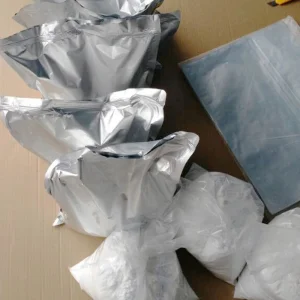
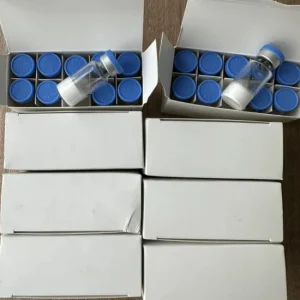
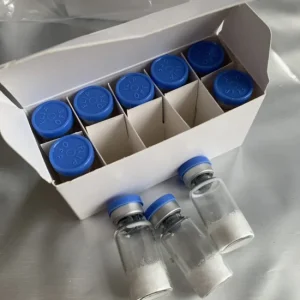
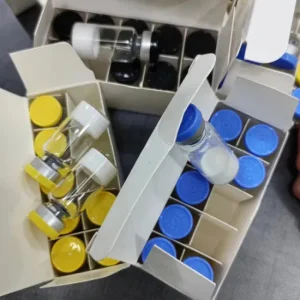
Analyzing the shifting dynamics of local anesthetic active pharmaceutical ingredients (APIs), raw chemical integration, and why modern procurement relies on vetted Chinese supply chains.
China’s production dominance in Benzocaine (Ethyl 4-aminobenzoate, CAS 94-09-7) is underpinned by fully integrated chemical corridors in Hebei, Shandong, and Jiangsu. The localized availability of critical upstream feedstocks—specifically 4-nitrobenzoic acid, toluene derivatives, and continuous catalytic reduction agents—allows Chinese manufacturers to insulate international buyers from the volatile price shocks common in Western European synthesis facilities.
Demand profiles continue to diversify globally. While North America and Western Europe account for over 58% of pharmaceutical-grade Benzocaine consumption across OTC mucosal analgesics, dermal pain relief sprays, and dental anesthesia formulations, emerging hubs in Latin America and Southeast Asia exhibit accelerating consumption within veterinary sedation and deep-water commercial finfish aquaculture handling systems.
Procurement teams previously faced a trade-off between low-cost uncertified bulk powders and hyper-expensive Western European compendial materials. Leading Chinese chemical conglomerates now operate fully compliant cGMP automated synthesis facilities, offering complete United States Pharmacopeia (USP) and European Pharmacopoeia (EP) compliance at standard Chinese domestic factory scales, fundamentally altering total cost of ownership (TCO).
B2B buyers should exercise caution regarding ultra-low-priced technical-grade ester derivatives flooding grey markets. Technical Benzocaine frequently carries unreacted 4-nitrobenzoic acid precursors, heavy metal residues exceeding 20 ppm, and unacceptable levels of carcinogenic primary aromatic amines. Legitimate suppliers provide full batch trace records linking the physical shipping container directly to validated high-performance liquid chromatography (HPLC) and gas chromatography mass spectrometry (GC-MS) data.
Precision chemical specifications benchmarked against USP43-NF38, EP 10.0, and BP 2021 pharmacopeial monographs for Ethyl 4-aminobenzoate.
| Analytical Parameter | USP Monograph Standard | EP / BP Compendial Limit | China cGMP Manufacturer Actual | Analytical Verification Method |
|---|---|---|---|---|
| Chemical Name | Ethyl 4-aminobenzoate | Ethylis aminobenzoas | Ethyl 4-aminobenzoate | IUPAC Nomenclature |
| CAS Registry Number | 94-09-7 | 94-09-7 | 94-09-7 | CAS Verification Record |
| Assay (Purity on Dried Basis) | 98.0% – 101.0% | 99.0% – 101.0% | 99.85% – 100.20% | Titration / HPLC Assay |
| Melting Range | 88.0°C to 92.0°C | 89.0°C to 92.0°C | 89.5°C to 91.2°C | Capillary Melting Apparatus |
| Loss on Drying | ≤ 1.0% | ≤ 0.5% | ≤ 0.12% | Vacuum Oven at 60°C |
| Residue on Ignition (Sulfated Ash) | ≤ 0.1% | ≤ 0.1% | ≤ 0.03% | Muffle Furnace Ashing (600°C) |
| Related Substances (Single Impurity) | ≤ 0.25% | ≤ 0.10% | < 0.05% | Reverse-Phase HPLC (UV 220nm) |
| Heavy Metals (Pb, Cd, As, Hg) | ≤ 10 ppm | ≤ 10 ppm | < 2 ppm | ICP-MS Inductively Coupled Plasma |
| Residual Solvents (Ethanol, Toluene) | ICH Q3C Compliant | ICH Q3C Compliant | Undetected / Well Below Limits | Headspace Gas Chromatography (GC) |
The predominant industrial route deployed in scalable Chinese plants entails the acid-catalyzed Fischer esterification of 4-aminobenzoic acid (PABA) with an excess of absolute anhydrous ethanol. Utilizing concentrated sulfuric acid or solid heteropolyacid catalysts at reflux temperatures (78–82°C), water is continuously removed azeotropically. Neutralization with sodium carbonate followed by controlled crystallization yields pristine white needle crystals with minimal degradation.
Advanced Tier-1 Chinese manufacturers utilize the esterification of 4-nitrobenzoic acid with ethanol to produce ethyl 4-nitrobenzoate, which subsequently undergoes continuous micro-channel catalytic hydrogenation over a Palladium on Carbon (Pd/C) or Raney Nickel catalytic fixed-bed. This modern green engineering methodology eliminates toxic iron-sludge Béchamp reduction wastes and yields a final API with negligible color degradation and zero aromatic amine cross-contamination.
Overcoming the hurdles of international customs, drug master filings, nitrosamine safety guidelines, and destination clearance documentation.
Leading Chinese Benzocaine exporters maintain active Type II Drug Master Files (DMF) registered with the United States Food and Drug Administration (US FDA) and possess Certificates of Suitability (CEP) issued by the EDQM in Strasbourg. This enables downstream pharmaceutical brand owners to reference the supplier's Chemistry, Manufacturing, and Controls (CMC) dossier directly in Abbreviated New Drug Applications (ANDAs).
In strict compliance with modern EMA and FDA mandates (ICH M7 guidelines), Chinese synthesis protocols are rigorously mapped to evaluate secondary and tertiary amine interactions. Advanced LC-MS/MS analytical screening protocols confirm that N-nitrosodimethylamine (NDMA) and related nitrosamine impurities remain strictly below the acceptable intake limit of <0.03 ppm, satisfying tier-one commercial audit standards.
Benzocaine falls under international Harmonized System (HS) Code 2922.49. Certified suppliers provide comprehensive Export Declarations, Non-Dangerous Goods declarations where compliant, REACH registration documentation for EU importers, and verified Bills of Lading. Factory-direct DDP (Delivered Duty Paid) models remove supply chain friction across North American and European ports.
Examining the diverse biophysical mechanics of Benzocaine as a hydrophobic surface-acting ester local anesthetic across core global industries.
Due to its low aqueous solubility and high lipid partitioning coefficient, Benzocaine is poorly absorbed into systemic circulation, rendering it exceptionally safe for topical skin preparations (gels, creams, aerosols at 5% to 20% concentrations) indicated for sunburn relief, insect stings, and minor abrasions.
Benzocaine remains the premier choice in oral healthcare for pre-injection desensitization of oral mucosa, soothing mouth ulcer gels, and throat lozenges. It reversibly binds and blocks voltage-gated sodium channels (VGSC) on nerve membranes, halting nerve impulse propagation within 30 seconds of mucosal contact.
In international commercial fish hatcheries and aquaculture operations, Benzocaine is employed as a humane anesthetic for grading, weighing, tagging, and transporting finfish. Readily absorbed via gill lamellae, it induces rapid stage-3 anesthesia with rapid recovery upon return to untreated oxygenated water.
Beyond pharmacology, Ethyl 4-aminobenzoate functions as a core structural building block in fine organic synthesis. The primary aromatic amino group facilitates diazotization reactions, acting as a precursor for specialized azo dyestuffs, UV stabilizers in polymer matrices, and experimental supramolecular liquid crystalline compounds.
Mapping out the technological modernization of Chinese chemical manufacturers between 2025 and 2030, driven by green chemistry mandates and AI quality analytics.
The transition from legacy batch reactors (5,000L enamel kettles) to continuous micro-channel flow reactors represents the most critical engineering shift in Chinese API synthesis. Continuous flow allows exquisite control over heat transfer during exothermic esterification, slashing reaction residence time from 8 hours to under 90 seconds while eliminating thermal hot spots that generate colored degradation byproducts.
Meeting downstream pharmaceutical customer demand for precise particle size distribution (PSD) without abrasive mechanical milling has led to the adoption of Supercritical Antisolvent (SAS) precipitation techniques. Utilizing supercritical carbon dioxide, Chinese facilities now synthesize uniform micro-crystalline and nano-scale Benzocaine powders, drastically improving dissolution kinetics in mucosal hydrogels.
Integration of continuous In-line Process Analytical Technology (PAT) using Fourier-Transform Near-Infrared (FT-NIR) spectroscopy and focused beam reflectance measurements (FBRM) provides automated, real-time tracking of crystallization dynamics. AI predictive control loops continuously optimize solvent-to-antisolvent feed ratios, guaranteeing zero batch-to-batch variation in crystal habit.
Critical technical, regulatory, and contractual answers addressing the real-world inquiries of international chemical procurement directors.
Direct manufacturing supply lines from our verified Chinese synthesis production partners. Inquire directly for bulk contracts, batch specifications, and dispatch logistics.