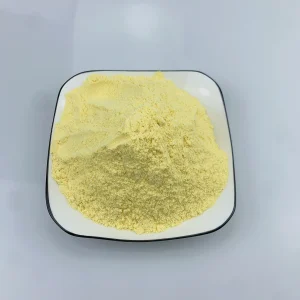
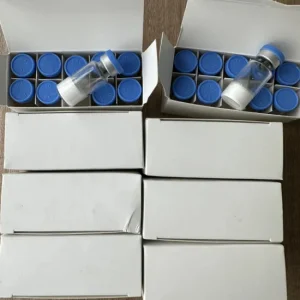
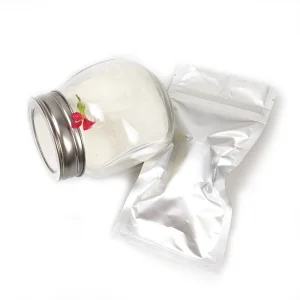
Explore our top verified laboratory compounds, research peptides, and reference APIs manufactured under rigorous chromatography audit conditions.
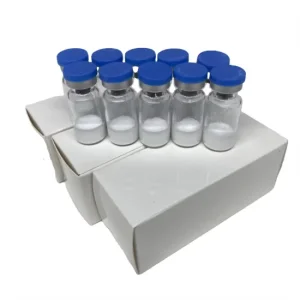

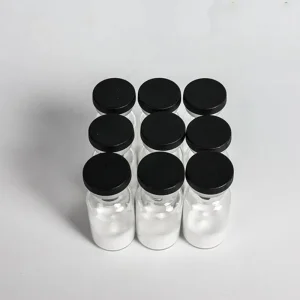
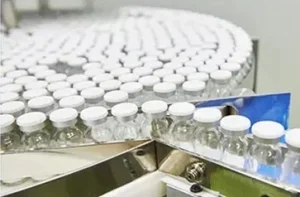
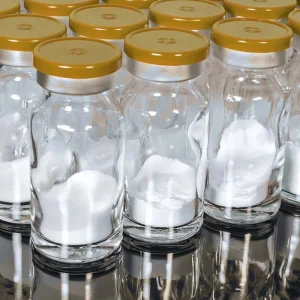
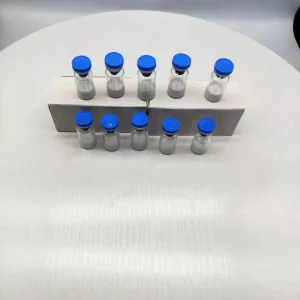
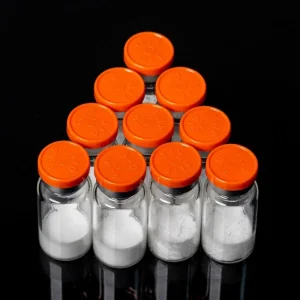
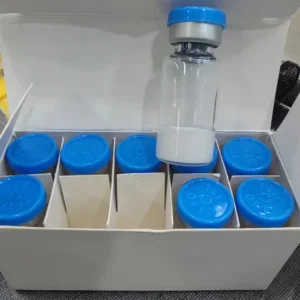
Trenbolone (17β-hydroxyestra-4,9,11-trien-3-one) represents a unique trienone steroid structure engineered via deliberate synthetic modifications that differentiate it from parent 19-nortestosterone molecules.
The defining attribute of CAS 10161-33-8 is the presence of conjugated double bonds across carbon positions 9 and 11, forming a rigid 4,9,11-triene core. This electron-rich chromophore prevents enzymatic aromatization by cytochrome P450 aromatase complexes, eliminating endogenous conversion to 17β-estradiol and providing unprecedented steric stability against reductive metabolic pathways.
Due to molecular flattening caused by the extended triene system, CAS 10161-33-8 exhibits roughly three-to-five times higher binding affinity for the androgen receptor (AR) relative to testosterone. Simultaneously, it acts as an antagonist to glucocorticoid response elements and possesses high-affinity interactions with progesterone receptor (PR) domains, altering tissue metabolic cascades.
Unlike classic androgens, the conjugated 9,10 and 11,12 π-systems impede 5α-reductase enzymatic processing into 5α-dihydro isomers. Consequently, pharmacological and veterinary actions are directly attributable to the unreduced intact molecule, making analytical batch traceability and synthetic purity monitoring imperative for researchers.
A macroscopic evaluation of international synthesis corridors, supply security, feed-efficiency economics, and analytical verification standards across key trade regions.
China serves as the foundational epicenter for steroidal precursor engineering, primarily originating from microbial biotransformation routes using plant phytosterols (such as stigmasterol and campesterol) into 4-androstene-3,17-dione (4-AD) and 1,4-androstadiene-3,17-dione (ADD). Domestic fine chemical clusters in Hebei, Jiangsu, and Hubei leverage closed-loop synthetic integration, allowing Chinese factories to control quality parameters, chiral yields, and impurity profiles (such as 17α-epimers) from precursor to finalized raw active materials.
The commercial viability of CAS 10161-33-8 is heavily anchored in certified agricultural sectors across North America, South America (Brazil, Argentina), and Australia. In these regions, esterified forms (predominantly Trenbolone Acetate) serve as FDA-approved growth implants in feedlot cattle, enhancing feed conversion efficiency (FCE) and nitrogen retention by 15-20%. Chinese manufacturing centers ensure consistent, high-tonnage API supplies that adhere strictly to USP and EP veterinary grade residue thresholds.
Concurrently, the European Union enforces a strict prohibition on anabolic growth promoters in food production under Directive 96/22/EC. This has created a vibrant, high-value international market for ultra-pure analytical reference standards (≥99.5% by GC-MS/LC-MS/MS). Qualified analytical laboratories require authentic CAS 10161-33-8 reference materials to validate mass-spectrometric screening methods for primary metabolites—specifically epitrenbolone and trenbolone glucuronide—in bovine urine, animal feed, wastewater effluents, and sports anti-doping matrices monitored by WADA-accredited facilities.
How Chinese chemical factories configure synthesis output, particle micromanagement, and packaging architectures for specific institutional end-users.
Veterinary pharmaceutical processors utilize raw micronized CAS 10161-33-8 (or its acetate ester) to engineer solid compressed subcutaneous implants. These pellets, coated with slow-eroding polymers (e.g., polyglycolic acid matrices), require uniform crystallographic integrity to deliver zero-order drug release over a 90 to 200-day cattle pasturing cycle without initial burst kinetics.
Environmental hydrologists and toxicology agencies study the endocrine-disrupting potential of CAS 10161-33-8 photoproducts. Research has revealed that trenbolone metabolites rapidly undergo direct photolysis under sunlight, but can reversibly re-evolve back into active 17β-trenbolone in low-light, anaerobic conditions. High-purity reference material from China enables continuous verification of riverine runoff models.
Academics in biochemical pharmacology utilize authenticated Chinese raw powders to establish competitive binding curves across recombinant androgen, progesterone, and neurosteroid receptors. Due to batch-to-batch stability and extensive NMR characterization, our product line ensures clean baseline controls across fluorometric cellular transactivation assays.
Transitioning from hazardous organometallic bromination/dehydrobromination routes toward microchannel continuous flow and biocatalyzed enzymatic cascade synthesis.
Historically achieved through total synthesis or partial synthesis via 3-methoxy-estra-2,5(10)-dien-17-one using multi-step liquid ammonia Birch reduction followed by chemical halogenation and vigorous acid-catalyzed dehydrohalogenation. Yields often hovered below 42%, producing significant isomeric impurities.
Implementation of modern continuous flow chemistry platforms in leading Chinese chemical clusters. Microchannel designs drastically lower thermodynamic hotspots during the hazardous introduction of conjugated 9,11-unsaturations, raising isolated stereospecific yields to >84% with solvent recycling.
Deployment of real-time Process Analytical Technology (PAT) incorporating inline Raman and mid-IR spectroscopy coupled with AI neural networks. This closed-loop automated architecture autonomously adjusts reactant dosing and crystal growth temperature to virtually eliminate 17α-epimer deviations.
Complete synthetic overhaul leveraging synthetic biology. Engineered Pichia pastoris and Streptomyces strains containing re-coded sterol desaturases and 17β-hydroxysteroid dehydrogenases will directly assemble the trienone core from bio-sourced phytosterols in mild aqueous fermentation.
Strategic supply chain infrastructure designed to overcome the three primary pain points of raw active pharmaceutical intermediate sourcing: chemical adulteration, supply disruptions, and regulatory seizure.
To safeguard research buyers against under-dosed or synthetic analogue mixtures, our manufacturing release protocol mandates four tiers of release data: Reverse-Phase High-Performance Liquid Chromatography (RP-HPLC), High-Resolution Liquid Chromatography–Tandem Mass Spectrometry (LC-MS/MS), Carbon-13 / Proton NMR spectroscopy, and Karl Fischer trace moisture titration.
International shipping is supported by our dedicated trade clearance division. We generate comprehensive customs declarations, certified HS codes (Harmonized System Chapter 29), multi-language Safety Data Sheets (SDS compliant with UN GHS Rev. 10), and temperature-controlled airfreight tracking to protect delicate steroid crystal morphology across cross-border hubs.
Eliminate batch-to-batch inconsistencies through localized lot tracking. Whether your facility specifies 100g double-bagged nitrogen-purged foil packages, pharmaceutical-grade 1kg HDPE wide-mouth canisters, or 25kg UN-rated fiber drums, our cleanroom packaging guarantees vacuum integrity and zero environmental contamination.
Direct answers to core queries raised by laboratory procurement officers, analytical chemists, and chemical distribution partners.
Explore complementary high-purity peptides, peptide hormones, and advanced analytical research intermediates ready for worldwide dispatch.