Explore our specialized portfolio of certified compounds, APIs, and reference-grade peptides. Every catalog compound is produced under strict QC inspection with HPLC-MS traceability.
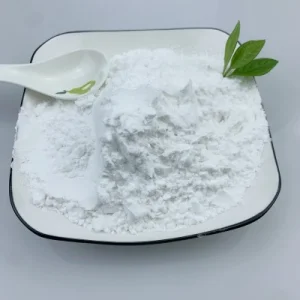
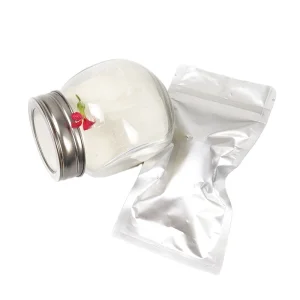
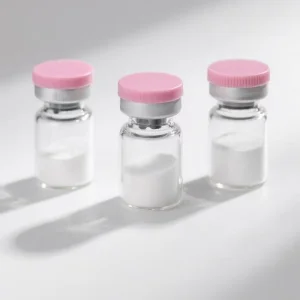
A comprehensive examination of Pramocaine Hydrochloride (Pramoxine HCl), an established surface local anesthetic API characterized by low systemic toxicity and minimal cross-sensitization risks.
| Analytical Parameter | USP / Ph. Eur. Pharmacopeia Reference | Enterprise In-House Monograph Specification | Methodology / Analytical Instrument |
|---|---|---|---|
| Chemical Name / IUPAC | Pramocaine Hydrochloride / Pramoxine HCl | 4-[3-(4-butoxyphenoxy)propyl]morpholine hydrochloride | Structural Verification (1H-NMR, 13C-NMR) |
| CAS Registry Number | 637-58-1 | 637-58-1 (Free Base: 140-65-8) | Chemical Substance Registry Reference |
| Molecular Formula & Weight | C17H27NO3 · HCl (329.86 g/mol) | Confirmed Monoisotopic Mass: 329.17 g/mol | High-Resolution Mass Spectrometry (HRMS) |
| Appearance & Physical State | White or practically white crystalline powder | White crystalline powder, free-flowing | Visual / Organoleptic Inspection (EP 2.2.1) |
| Assay (Dried Substance) | 98.0% to 102.0% | 99.0% to 100.5% (High Batch Uniformity) | Potentiometric Titration with 0.1M HClO4 |
| Chromatographic Purity | Total impurities ≤ 1.0% | Total ≤ 0.5%, Any single unknown ≤ 0.10% | Reverse-Phase HPLC (UV @ 224 nm) |
| Loss on Drying (LOD) | ≤ 1.0% (at 105°C for 3 hours) | ≤ 0.50% (Strict environmental drying) | Thermogravimetric / Vacuum Oven |
| Residue on Ignition (Sulfated Ash) | ≤ 0.10% | ≤ 0.05% | Muffle Furnace Combustion (EP 2.4.14) |
| Residual Solvents (ICH Q3C) | Methanol < 3000 ppm, Toluene < 890 ppm | Methanol < 500 ppm, Toluene < 100 ppm | Headspace Gas Chromatography (HS-GC-FID) |
| Nitrosamine Impurity Risk | Below Toxicological Threshold (TTC) | NDMA, NDEA, NDIPA < LOQ (< 0.03 ppm) | LC-MS/MS Quantitative Screen |
Unlike typical amino-ester (e.g., procaine, tetracaine) or amino-amide (e.g., lidocaine, bupivacaine) local anesthetics, Pramocaine Hydrochloride incorporates a morpholine ring connected via an ether linkage to an alkylated phenoxy group. This proprietary ether-linked morpholine structure eliminates the ester-linkage hydrolytic instability and avoids metabolic breakdown into para-aminobenzoic acid (PABA)—drastically reducing the risk of allergic contact dermatitis. By binding reversibly to voltage-gated sodium channels (Nav) in the peripheral neuronal membrane, it decreases permeability to sodium ions, blocking action potential propagation and providing reliable surface desensitization without systemic cardiovascular depression.
Procurement directors and quality managers across North America, Europe, and Asia Pacific require verifiable metrics before approving suppliers of CAS 637-58-1 for commercial drug formulation.
Modern regulatory expectations (ICH M7) mandate stringent control over mutagenic impurities. In the synthesis of Pramocaine HCl, residual alkylating intermediates such as 1-chloro-3-(4-butoxyphenoxy)propane must be rigorously monitored. Our production facilities maintain validated LC-MS/MS analytical methodologies ensuring potential genotoxic impurities are restricted below the Threshold of Toxicological Concern (<1.5 µg/day exposure level).
For topical creams, transdermal gels, and hemorrhoidal hydrocortisone-pramoxine combinations, micronization parameters determine release kinetics and sensory mouthfeel/dermal spreadability. We offer customized milling services providing standard, micronized (D90 < 15 µm), and ultra-micronized grades (D50 < 5 µm) backed by Malvern Mastersizer laser diffraction certificates of analysis.
In accordance with FDA and EMA guidelines regarding secondary amines, morpholine-derived molecules present theoretical vulnerability to nitrosation. Our dedicated synthesis lines utilize nitrite-free process water, validated high-purity morpholine precursors, and non-acidic solvent crystallization routes, ensuring complete absence of N-nitroso-pramocaine across all commercial lots.
How Chinese chemical clusters optimize feedstock security, process chemistry efficiency, and environmental compliance for global pharmaceutical clients.
Direct backward integration into basic building blocks (4-butoxyphenol and 3-chloropropanol) prevents supply bottlenecks, hedging global buyers against volatile commodity pricing and raw material deficits.
Replacing antiquated batch reactor kettles with micro-channel continuous flow reactors elevates reaction yield, reduces exotherm risks, and eliminates side-product formation during alkylation and etherification.
Implementation of high-efficiency distillation trains recovers over 95% of reaction solvents (e.g., ethanol and ethyl acetate), lowering effluent VOC emissions and minimizing manufacturing overhead.
Final isolation of CAS 637-58-1 occurs within ISO Class 7 / Class 8 cleanrooms utilizing agitated filter dryers (Nutsche filter dryers) to prevent particulate and airborne microbial contamination.
A technical assessment comparing historical legacy synthesis against third-generation catalytically intensified processes for Pramocaine Hydrochloride.
| Synthetic Route Generation | Key Intermediate Reagents | Overall Chemical Yield | Atom Economy & E-Factor | Industrial Viability |
|---|---|---|---|---|
| Gen-1: Legacy Alkylation (1950s-1980s) | 4-Butoxyphenol + 1-Bromo-3-chloropropane + Morpholine | 58% - 66% | High E-factor (>45); Generates halogenated toxic waste | Phased out; high cost, severe regulatory scrutiny |
| Gen-2: Improved Phase-Transfer Catalysis (PTC) | 4-Butoxyphenol + 4-(3-Chloropropyl)morpholine under TBAB/TEBA | 78% - 84% | Moderate E-factor (~20); Phase separation wastewater challenges | Current commercial baseline across standard chemical plants |
| Gen-3: Continuous Flow Catalytic Etherification (Our Facility) | Alkoxy-activated phenolate + morpholine ether in continuous micro-reactor | 93% - 96.5% | Low E-factor (<7); High atom economy, solvent recycling >95% | Next-generation sustainable cGMP API scale-up |
Real-time inline Fourier Transform Infrared (FTIR) and focused beam reflectance measurement (FBRM) probes monitor crystal nucleation during hydrochloride salt formation, securing 100% polymorphic purity (Form I) and eliminating polymorph variations.
By transitioning from fossil-fueled steam boilers to solar photovoltaic-driven electric heating and bio-based reaction solvents, our plants target a 42% carbon footprint reduction per kilogram of API produced by 2028.
Comprehensive preparative HPLC and QTOF-MS profiling systems enable continuous tracking of unknown impurities down to 0.01% abundance, safeguarding drug makers against unexpected batch quarantine delays.
Market consumption of CAS 637-58-1 continues to expand steadily driven by aging demographics, OTC dermatological innovations, and multi-active topical pain therapeutics.
The US and Canada represent over 45% of global pramocaine demand. Key commercial preparations encompass anti-itch lotions (e.g., pramoxine 1% with calamine or colloidal oatmeal), topical hemorrhoidal creams (hydrocortisone 1% + pramoxine HCl 1%), and post-tattoo anesthetic soothing ointments. Stability and lack of sensitization make it a preferred alternative to benzocaine.
With strict cosmetic and medicinal boundaries under EMA, European formulators deploy Pramocaine Hydrochloride in prescription-grade proctological therapeutics and post-surgical topical foam applications. Compliance with Ph. Eur. monographs and REACH documentation is mandatory for all inbound shipments.
Rapid growth in clinical dermatology and burn-care clinics across Brazil, Mexico, India, and Southeast Asia has accelerated localized pharmaceutical manufacturing. B2B buyers in these territories prioritize flexible MOQ packaging (1 kg to 25 kg drums) and full customs clearance logistics support.
Ensure seamless filing with national drug administrations through comprehensive technical documentation, on-site audit readiness, and global logistics coordination.
We provide open-part and closed-part DMF documentation for US FDA (Type II DMF) and Canadian Health Authorities. Letters of Authorization (LoA) are issued directly to qualified pharmaceutical sponsors submitting Investigational New Drug (IND) or Abbreviated New Drug Applications (ANDA).
Our manufacturing sites welcome third-party and client QA audits. We facilitate remote video facility walkthroughs, analytical method verification sessions, and full access to clean utility validation reports (WFI, HVAC, Nitrogen blanket lines).
Standard packaging consists of food/pharma-grade double polyethylene liner bags inside UN-certified fiber drums (25 kg net weight) with tamper-evident security seals. Complete cold-chain monitoring or temperature-logged ocean/air freight is arranged with DDP, CIF, or FOB terms.
Direct technical answers addressing purity, analytical testing, regulatory documentation, stability, and formulation compatibility.
Under recommended storage conditions—tightly sealed in original light-resistant containers, protected from direct moisture and stored at controlled room temperature (20°C to 25°C / 68°F to 77°F)—Pramocaine Hydrochloride demonstrates a retest period of 36 to 48 months. Real-time and accelerated ICH stability studies (25°C/60% RH and 40°C/75% RH) confirm no significant assay degradation or increase in related substances.
The standard USP monograph identifies related impurities originating from unreacted starting materials: 4-butoxyphenol (Impurity A) and 4-(3-chloropropyl)morpholine (Impurity B). Our production process uses an optimized excess ratio and counter-current crystallization that controls Impurity A to <0.05% and Impurity B to non-detectable levels via calibrated HPLC gradient analysis.
Pramocaine HCl is freely soluble in water and ethanol, and soluble in chloroform. It exhibits excellent physicochemical compatibility with common topical vehicles, including carbomer gels, cetyl alcohol emulsion systems, and lipophilic ointment bases. It is stable within a pH range of 3.0 to 6.0, avoiding phase separation or salt precipitation when paired with hydrocortisone or zinc oxide.
Yes. Every commercial shipment is accompanied by a formal Certificate of Analysis (COA) cross-referencing the container batch number. Full analytical dossiers containing raw HPLC chromatograms, 1H-NMR spectra, FTIR identity scans, and GC residual solvent integration reports are delivered upon request for quality assurance sign-off.
Our standard pilot trial MOQ starts at 1 kg for R&D formulation development. Commercial drum quantities (25 kg, 50 kg, 500 kg, and metric ton scale) are maintained in constant inventory in our central warehouse. Standard export dispatch occurs within 3 to 5 business days upon proforma confirmation.
Our export trade division manages all commercial documentation including accurate HS Code classification (2934.99), Dangerous Goods (DG) declarations (Pramocaine HCl is typically classified as non-hazardous for transport), Certificate of Origin (COO), and formal proforma invoices tailored to local customs clearance protocols in the US, EU, and Latin America.
Explore our advanced synthetic peptides, metabolic research compounds, and fine chemical precursors manufactured under stringent laboratory conditions.
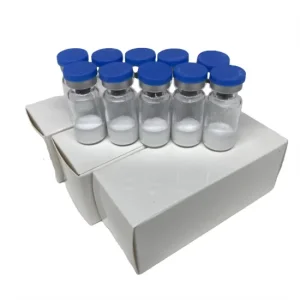
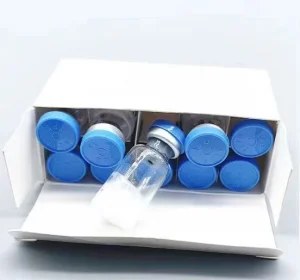
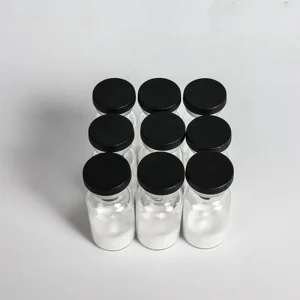
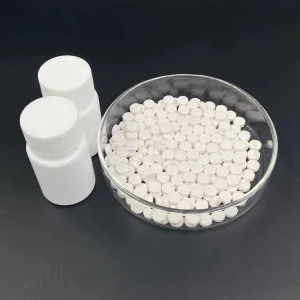
Connect with our technical regulatory team to receive comprehensive Pharmacopeia monographs, Drug Master File (DMF) open parts, sample validation vials, and commercial volume pricing.

