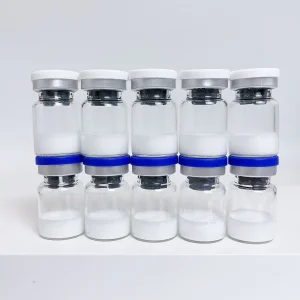
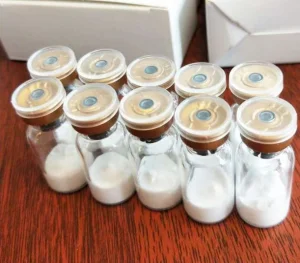
Verified batch-to-batch consistency with comprehensive analytical traceability, optimized for international academic institutions, pharmaceutical screening, and wholesale distribution.
Evaluating commercial synthesis pathways, market adoption rates, and technical differentiation between native GHRH analogs and bio-conjugated formulations.
CJC-1295 is a synthetic 30-amino acid peptide acting as a Growth Hormone Releasing Hormone (GHRH) analogue. The core innovation lies in the Drug Affinity Complex (DAC) bioconjugation technology. CJC-1295 with DAC covalently binds to endogenous albumin post-administration, vastly extending its biological half-life from ~30 minutes to over 6-8 days. Without DAC (Modified GRF 1-29), the compound exhibits physiological pulsatile release mechanisms favoured in receptor kinetic assays.
Worldwide research into longevity biology, pituitary pathway signaling, and cellular senescence has precipitated a surge in international peptide requisitions. European and North American academic centers and analytical labs demand massive kilogram-scale API batches. High demand has shifted compound sourcing heavily toward Chinese manufacturing centers capable of meeting cGMP standards while absorbing raw reagent overhead.
A persistent risk in international peptide trading is the prevalence of truncated peptide chains and diastereomeric impurities resulting from incomplete solid-phase synthesis coupling cycles. Premier Chinese factories deploy automated microwave-assisted SPPS coupled with multi-stage preparative HPLC, providing verified COAs with individual retention profiles, mass spectrometry (ESI-MS), and net peptide content analysis.
How state-of-the-art domestic infrastructure, upstream chemical supply chains, and advanced engineering provide unmatched B2B advantages.
China commands over 70% of global basic amino acid and side-chain protected amino acid synthesis (Fmoc, Boc chemistry). Domestic factories synthesize peptides right at the source, eliminating intermediate import tariffs, agent markups, and long supply lead times.
By leveraging large-scale commercial multi-channel synthesizers, Chinese peptide factories achieve unprecedented throughput. Scaled automation minimizes human error, standardizes resin deprotection, and optimizes cleavage protocols to maintain purity levels exceeding 99%.
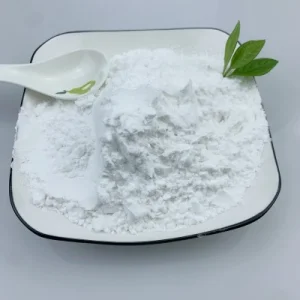
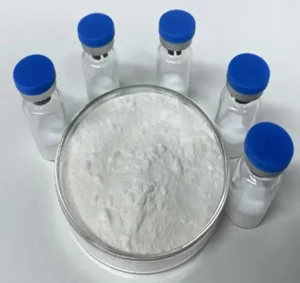
Proper lyophilization (freeze-drying) dictates long-term stability and reconstitution clarity. China's top cleanroom facilities utilize industrial-grade freeze-dryers with programmable sublimation curves, producing uniform crystalline cakes resistant to degradation.
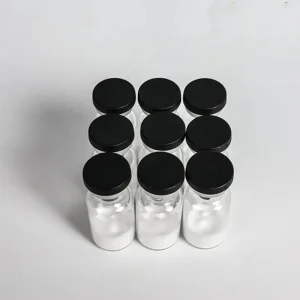
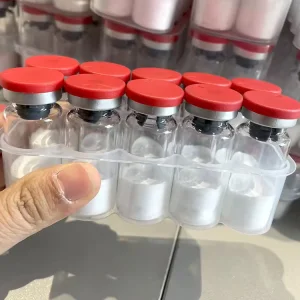
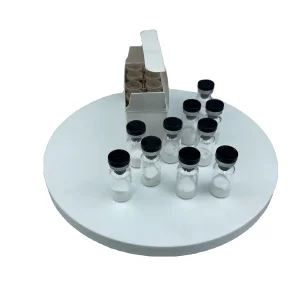
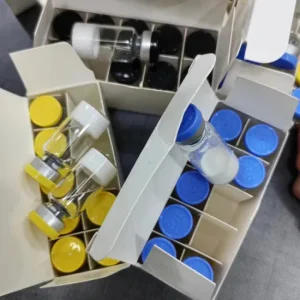
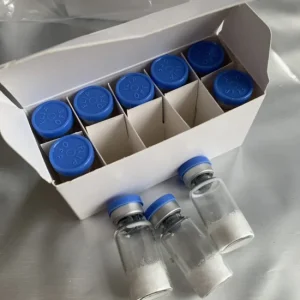
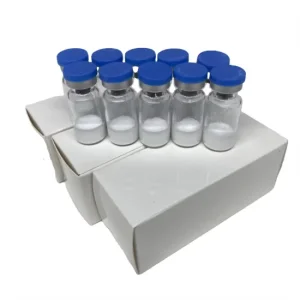
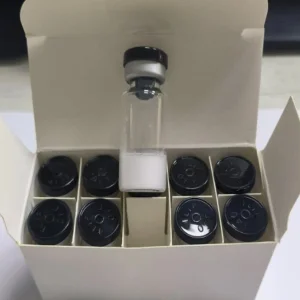
From microgram pilot batches for biochemical assay validation to industrial kilogram bulk drums for clinical trials, factories offer complete OEM packaging, sterile vial aliquoting (2mg, 5mg, 10mg), customized caps, and third-party laboratory verification.
Understanding downstream research contexts and the changing landscape of global pharmaceutical procurement.
CJC-1295 is applied predominantly in endocrine signaling research, somatotropic axis modeling, and receptor affinity comparisons against natural human GHRH. In vitro bio-assays investigate how its 4-amino acid substitution protects against dipeptidyl peptidase-4 (DPP-4) enzymatic degradation, demonstrating how targeted chemical modifications maintain structural stability.
Global research procurement is trending rapidly toward enhanced shelf-life formulations. Current industrial investigations focus on mannitol and trehalose excipient balancing during lyophilization. This ensures maximum stability across fluctuating cold-chain parameters during cross-border maritime and air freight corridors, avoiding denaturation.
Global regulatory oversight over peptide research chemical suppliers has increased drastically. Enterprise purchasers no longer settle for standard PDF COAs. They now require complete high-resolution chromatography datasets, solvent residue tests (headspace GC), acetate salt verification, and heavy metal screening conforming to USP <232>/<233> standards.
Critical considerations for professional buyers evaluating CJC-1295 factories, custom synthesis specifications, and compliance workflows.
CJC-1295 with DAC includes a Drug Affinity Complex (maleimidoproprionic acid) conjugated via a lysine linker at the C-terminus. This functional group enables covalent bonding to serum albumin, extending pharmacokinetics. CJC-1295 without DAC (frequently referred to in research circles as Modified GRF 1-29) consists of the 29-amino acid sequence without the DAC bioconjugate, resulting in rapid in-vitro metabolic clearance.
Credible tier-1 Chinese manufacturers run rigorous orthogonal analytical testing. Purity is determined by Reversed-Phase High-Performance Liquid Chromatography (RP-HPLC) with variable wavelength UV detection. Identity is confirmed via Electrospray Ionization Mass Spectrometry (ESI-MS) or MALDI-TOF to match calculated theoretical molecular weights against observed peak ion signatures.
Lyophilized CJC-1295 is stable at ambient room temperature for up to 30 to 60 days during transit. However, long-term storage across enterprise research facilities requires desiccated environments at -20°C or -80°C. Once reconstituted in bacteriostatic or sterile water, solutions must be kept strictly at 2°C to 8°C and protected from intense light exposure to prevent spontaneous hydrolysis or oxidation.
B2B enterprise shipments include comprehensive batch documentation: full Certificate of Analysis (COA), high-resolution raw HPLC chromatograms, Mass Spectrometry (MS) printouts, Materials Safety Data Sheets (MSDS), and Certificate of Origin (COO). Heavy metal, residual solvent (GC), and Karl Fischer moisture analysis reports are also available upon request.
Explore complementary small-molecule compounds, signaling analogues, and high-purity peptides available direct from manufacturing stock.