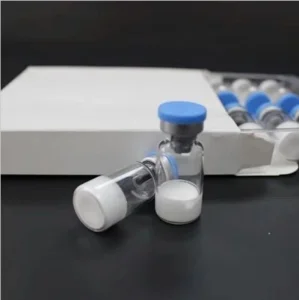
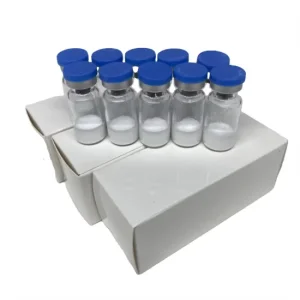
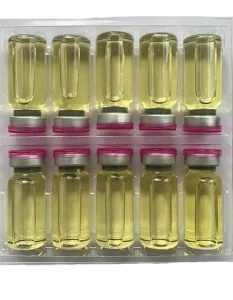
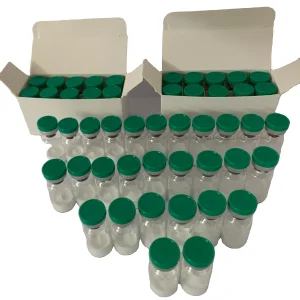
Verified laboratory reagents, reference standards, and high-affinity analogs manufactured under strict ISO/cGMP conditions, supplied directly from Chinese specialized synthesis hubs.
An in-depth biochemical breakdown of Larocaine (CAS 553-63-9), an ester of 4-aminobenzoic acid exhibiting dual local anesthetic and monoamine transporter modulation properties.
Larocaine, systematically designated as (3-diethylamino-2,2-dimethylpropyl)-4-aminobenzoate, possesses a core ester bridge connecting an aromatic aniline ring to a sterically hindered neopentyl-type aliphatic amine chain. This spatial configuration prevents rapid plasma cholinesterase degradation, prolonging receptor interaction compared to procaine.
Within in vitro scientific research models, Larocaine functions as a voltage-gated sodium channel (Nav) blocker, attenuating neuronal signal conductance. Concurrently, it displays measurable affinity for the dopamine transporter (DAT), making it an indispensable reference ligand in comparative neurochemical assays evaluating monoamine reuptake kinetics.
While the freebase state presents as an unctuous or low-melting semi-solid susceptible to atmospheric oxidation, Chinese specialized chemical production predominantly yields the monohydrochloride crystalline salt (Dimethocaine HCl, CAS 553-63-9). This formulation ensures robust thermal stability, hygroscopic resilience, and homogeneous solubility.
| Analytical Parameter | Monograph Standard (Larocaine Monohydrochloride) | Instrumental Validation Method |
|---|---|---|
| Chemical Name | (3-Diethylamino-2,2-dimethylpropyl) 4-aminobenzoate monohydrochloride | IUPAC / Chemical Abstracts Identification |
| CAS Registry Number | 553-63-9 (HCl Salt) | 94-15-5 (Freebase) | Cross-verified against CAS Registry Database |
| Assay Purity (HPLC) | ≥ 99.0% (Single Impurity ≤ 0.50%) | Agilent 1260 HPLC (C18 Column, UV @ 295 nm) |
| Structural Confirmation | Conforms to reference standard fragmentation | 1H-NMR (400 MHz, CDCl3/D2O) & LC-MS/ESI+ |
| Melting Point Range | 196.0 °C – 199.5 °C | Automated Capillary Melting Apparatus |
| Loss on Drying / Moisture | ≤ 0.50% wt/wt | Karl Fischer Volumetric Titration |
| Heavy Metal Limits | Pb ≤ 2ppm, As ≤ 1ppm, Cd ≤ 1ppm, Hg ≤ 0.5ppm | Inductively Coupled Plasma Mass Spectrometry (ICP-MS) |
The global fine chemical industry relies on precision, safety compliance, and cost predictability. Chinese chemical industrial clusters offer unmatched upstream synthesis capabilities for tertiary amino alkyl esters.
Chinese facilities possess direct pipeline access to key primary precursors: Para-aminobenzoic acid (PABA), diethylamine, and neopentyl glycol derivatives (specifically 3-diethylamino-2,2-dimethylpropan-1-ol). By bypassing third-party precursor intermediaries, Chinese manufacturers insulate global buyers from geopolitical raw-material spikes and synthesis delays.
Modern fine-chemical plants in Hebei, Jiangsu, and Shandong provinces have transitioned from conventional stirred tank reactors to continuous micro-channel reactors. This engineering shift maximizes transesterification heat dissipation, minimizes thermal byproduct formation (such as ethyl 4-aminobenzoate residues), and boosts reaction atom economy.
Under national Green Chemistry guidelines, Chinese scale synthesis operations utilize closed-loop solvent recovery systems for ethyl acetate, dichloromethane, and isopropanol. This low Environmental Factor (E-Factor) operational footprint ensures long-term regulatory continuity, preventing supply chain blackouts common in unpermitted workshops.
Larocaine is strictly utilized across laboratory research, reference testing, and secondary synthesis. Below are the verified operational domains driving international B2B acquisition.
Analytical and toxicology reference facilities utilize certified Larocaine HCl standards to populate GC-MS, LC-MS/MS, and FT-IR spectral libraries, establishing baseline retention times for global border agency screening.
Academic institutions and bio-sensor designers leverage Larocaine to validate conductive polymer electrodes and carbon-nanotube electrochemical sensors for rapid ester-type local anesthetic detection.
Cellular electrophysiology laboratories study voltage-gated Nav1.2 and Nav1.5 channels via patch-clamp instrumentation, using Larocaine as a stable molecular probe to assess localized channel-gating mechanisms.
Industrial laboratories employ tertiary amino aliphatic chains derived from the core structure as building blocks for specialized surfactant synthesis and proprietary corrosion inhibitor additives in chemical manufacturing.
Procuring fine chemicals internationally demands an exhaustive understanding of jurisdictional import controls, end-user declarations, and analytical audit compliance.
Larocaine occupies varying legal frameworks globally. In the United States, it is not explicitly scheduled under the Federal Controlled Substances Act (CSA), though commercial handling may trigger Federal Analogue Act reviews depending on intent. In the European Union, member states enforce differing national narcotics acts or analog legislation. Qualified corporate buyers must ensure municipal compliance before cross-border booking.
Every commercial batch supplied by verified Chinese partners must be paired with comprehensive batch-specific documentation: Certificate of Analysis (COA), Liquid Chromatography-Mass Spectrometry (LC-MS), high-field 1H/13C-NMR spectra, and an updated Safety Data Sheet (SDS) compliant with GHS 16-section guidelines.
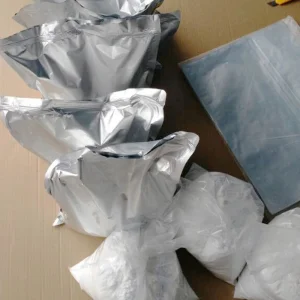
To avoid ester hydrolysis caused by atmospheric humidity during maritime or express air transit, materials are sealed inside double-layer pharmaceutical LDPE liners, followed by hermetic vacuum-sealed aluminum moisture-barrier foil bags with oxygen scavengers, housed in reinforced UN-rated fiber drums.
Technological trends advancing production standards, automation, and environmental impact across the Chinese chemical manufacturing landscape.
Shifting from harsh inorganic acid halides toward biocompatible heterogeneous titanium and zirconium oxide catalysts. This innovation yields ultra-pure crystalline fractions while eliminating corrosive acid vapor generation during large-scale manufacturing.
Integration of real-time Process Analytical Technology (PAT) using Focused Beam Reflectance Measurement (FBRM) and in-situ FT-IR probes. Automated feedback loops adjust supersaturation rates, creating uniform crystal size distributions for predictable reconstitution.
Leading Chinese chemical export manufacturers are adopting digital lot ledgering. QR-coded drum labels provide immediate access to raw NMR data, HPLC run parameters, synthesis date, and customs clearance clearance history directly to international QA audit teams.
Comprehensive answers addressing common questions regarding chemical purity, salt conversions, minimum order quantities (MOQ), and laboratory compliance standards.
Larocaine Freebase (CAS 94-15-5) exhibits a molecular mass of 278.39 g/mol and presents as an amber oily liquid or low-melting crystalline solid at ambient temperature, making it vulnerable to oxidative degradation. Larocaine Hydrochloride (CAS 553-63-9, MW 314.85 g/mol) is a crystalline salt formed via equimolar gaseous HCl introduction, providing superior thermal stability, high water solubility, and a clear shelf life exceeding 24 months under dry nitrogen.
Every commercial batch is tested via High-Performance Liquid Chromatography (HPLC) coupled with a Photodiode Array (PDA) detector and confirmed by High-Resolution Mass Spectrometry (HRMS) and 1H/13C-NMR spectroscopy. Acceptance criteria enforce ≥ 99.0% total purity with any unspecified individual impurity restricted to ≤ 0.10%. Full raw chromatograms and integration tables are delivered alongside the COA.
Pilot laboratory orders commence at an MOQ of 100 grams up to 1 kilogram for spectroscopic evaluation and reference standard creation. Industrial synthesis runs can scale to hundreds of kilograms or metric tons monthly, backed by automated continuous production facilities in Hebei and Shandong fine-chemical corridors.
Larocaine HCl must be stored within a designated temperature-controlled facility at 2°C – 8°C or dry ambient conditions (under 25°C) in tightly sealed, light-resistant containers purged with inert nitrogen or argon gas. Personnel handling the active ingredient must utilize protective nitrile gloves, certified eye protection, and certified chemical fume hood ventilation.
Yes. Chinese contract research and manufacturing organizations (CRO/CDMO) provide targeted isotopic labeling (e.g., Dimethocaine-d6, Dimethocaine-d10) for internal standard quantification in isotope-dilution mass spectrometry, as well as customized alkylation derivatives on the aliphatic amine head upon enterprise request.
All international consignments are assigned correct Harmonized System (HS) classifications, complete Non-Dangerous Goods declarations where verified by Shanghai Chemical Industry Institute inspection certificates, and accompanied by formal commercial proforma invoices and end-use statements to ensure compliant logistics.
Browse our integrated selection of high-purity metabolic peptides, signaling analogs, and specialty reference compounds available for worldwide wholesale dispatch.
Connect directly with our fine chemical synthesis team and overseas regulatory compliance managers. We furnish custom packaging specs, bulk tier pricing, and technical verification within 24 business hours.