Explore our export-ready analytical grades, bioactive peptides, and chemical building blocks certified via NMR, HPLC, and High-Resolution Mass Spectrometry (HRMS).
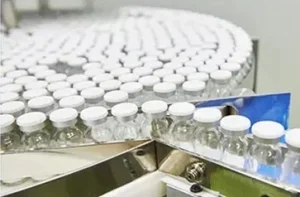

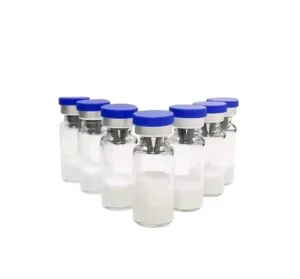
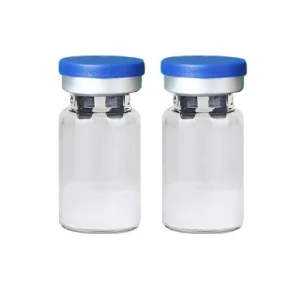
A rigorous industrial perspective on the synthesis, chemical characterization, impurity profiling, and analytical testing protocol for international compliance and procurement verification.
| Analytical Parameter | Monograph Standard (USP / EP Reference) | Factory In-House Release Specification | Methodology / Analytical Instrument |
|---|---|---|---|
| IUPAC Name | 17β-hydroxy-17α-methylandrosta-1,4-dien-3-one | Conforms to Structure | 1H-NMR, 13C-NMR Spectrometry |
| CAS Number | 72-63-9 | 72-63-9 | Global Chemical Registry Index |
| Molecular Formula / Mass | C20H28O2 / 300.44 g/mol | 300.44 ± 0.05 g/mol | High-Resolution Mass Spec (HR-MS) |
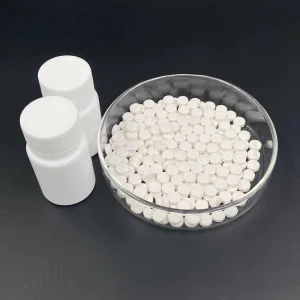
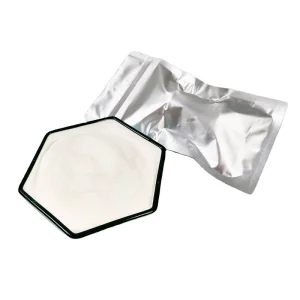
| Physical Appearance | White or off-white crystalline powder | Pure white microcrystalline powder | Visual / Optical Microscopy |
| Assay (on dried basis) | 97.0% - 103.0% | 98.8% - 99.8% | Reversed-Phase HPLC (UV @ 245nm) |
| Melting Point Range | 163.0 °C to 167.0 °C | 164.5 °C to 166.0 °C | Capillary Melting Apparatus (Optimelt) |
| Specific Optical Rotation | +7.0° to +11.0° (in dioxane) | +8.5° to +10.0° | Automatic Polarimeter @ 20°C |
| Loss on Drying (LOD) | ≤ 0.50% | ≤ 0.25% | Thermogravimetric Analysis / 105°C Vacuum |
| Residue on Ignition | ≤ 0.10% | ≤ 0.05% | Sulfated Ash Muffle Furnace (600°C) |
| Heavy Metal Limits | ≤ 20 ppm | < 5 ppm (Class 1, 2, 3) | ICP-MS Multi-element Screen |
| Residual Solvents (ICH Q3C) | Meets ICH guidelines | Methanol < 500ppm, Acetone < 500ppm | Headspace Gas Chromatography (GC-FID) |
Methandienone exhibits a 17α-alkylation paired with a distinctive 1,2-dehydrogenation (double bond across C1 and C2) on the 3-keto-4-ene nucleus. This conformational modification stabilizes the steroid core, drastically attenuating hepatic aromatization kinetics relative to unmodified androgens and shifting the electronic topology of the A-ring.
Industrial scale-up demands meticulous suppression of 6β-hydroxy epimers, unreacted methyltestosterone intermediates, and 17-epi degradation products. Our proprietary fractional crystallization cascades retain cumulative related substances strictly beneath 0.5%, providing high baseline stability during HPLC/UPLC analysis.
Controlled crystallization rates utilizing high-purity organic solvent pairs guarantee Phase Form I microcrystalline morphology. This delivers repeatable dissolution constants, optimal bulk density (0.42–0.54 g/mL), and seamless blending attributes for secondary solid-dosage formulation development and diagnostic assays.
How China's raw material upstream clusters, advanced biotransformation capacity, and logistics networks create an uninterrupted global procurement pipeline.
Chinese chemical manufacturers command the world's most stable supply of phytosterol precursors, extracted from soybean and pine tall oil distillates. By avoiding intermediate imported precursor dependencies, our synthesis starting from 4-Androstenedione (4-AD) and Androsta-1,4-diene-3,17-dione (ADD) remains fully self-sufficient and immune to cross-border geopolitical raw-material bottlenecks.
By running continuously scaled 5,000-liter glass-lined catalytic reactors, our facility achieves supreme thermal efficiency and optimal solvent recovery ratios (>92%). This industrial scalability permits competitive bulk tiered pricing, shielding corporate buyers from volatile Western fine-chemical markups and unbuffered market price spikes.
Positioned within easy proximity to global transshipment hubs in Beijing, Shanghai, and Hong Kong, our supply chain incorporates bonded warehouses, specialized DDP (Delivered Duty Paid) frameworks, temperature-controlled air freight options, and hazardous/fine-chemical compliant customs documentation, ensuring on-schedule global deliveries.
Operating in state-level fine chemical parks with dedicated Class-A wastewater treatment plants, volatile organic compound (VOC) recovery scrubbers, and permanent safety permits guarantees zero operational halts during national environmental inspections, ensuring continuous batch deliveries year-round.
Navigating the operational, analytical, and legal parameters demanded by qualified laboratory procurement managers, pharmaceutical formulation buyers, and CRO researchers.
Global procurement teams cannot rely on generic certificates. We provide batch-specific HPLC chromatograms showing peak area percentages, 1H/13C-NMR spectra confirming carbon-hydrogen linkages, and High-Resolution Mass Spectra (HR-MS) confirming intact molecular mass, alongside secondary validation by accredited third-party labs upon request.
Adulteration with inexpensive steroid bases (such as unalkylated testosterone or methyltestosterone derivatives) remains a chronic hazard across unvetted broker pipelines. Our authenticated direct-from-factory source ensures zero lot-blending, with cryptographic QR seals matching batch numbers across product drums, inner liners, and analytical release documentation.
Steroids with C1-C2 unsaturation can experience micro-oxidation when exposed to prolonged ambient humidity and oxygen. We package bulk active compounds in double food-grade polyethylene heat-sealed liners, vacuum-flushed with pharmaceutical-grade nitrogen (N2), contained within reinforced, tamper-evident aluminum foil barrier pouches or fiber drums.
Whether procurement requires 100-gram benchmark evaluation quantities for validation runs or multi-hundred-kilogram lots for commercial contract manufacturing, our dual synthesis lines accommodate dynamic scaling with linear impurity comparability across production lots.
The transition from legacy chemical dehydrogenation reagents toward biological enzymes and clean, sustainable steroid processing.
Historic synthesis routes relied on toxic oxidants such as selenium dioxide (SeO2) or 2,3-dichloro-5,6-dicyano-1,4-benzoquinone (DDQ), which routinely introduced residual heavy metal impurities and mutagenic risks. Modern Chinese facilities leverage engineered Arthrobacter simplex or Nocardioides simplex biocatalytic fermentation, introducing the double bond at C1-C2 with 100% chemo- and stereo-specificity.
Under tightening global green chemistry parameters, toxic Class 1 chlorinated reaction media (such as chloroform and carbon tetrachloride) have been completely eliminated. Our modern reactors utilize renewable polar aprotic solvents, supercritical fluid extraction for intermediate separation, and closed-loop ethanol/ethyl acetate recycles.
By employing in-situ Fourier Transform Infrared (FTIR) probes and automated Focused Beam Reflectance Measurement (FBRM) inside the crystallization vessels, we achieve continuous real-time monitoring of supersaturation levels and crystal nucleation, guaranteeing tight crystal size distribution (CSD) batch after batch.
The regulatory evolution toward unified ICH Q7 active ingredient standards mandates end-to-end electronic lot traceability. Our manufacturing processes record every parameter digitally from starting sterol qualification to drying cycles, providing seamless compliance with international quality audits.
Critical scientific, diagnostic, and laboratory sectors depending on high-purity certified Methandienone reference standards.
Accredited anti-doping reference laboratories and forensic toxicology centers worldwide utilize our primary-grade Methandienone to establish calibrated LC-MS/MS and GC-MS spectral reference libraries. Accurate quantification of major metabolites, such as epimetendiol and long-term 17β-hydroxymethyl-17α-methyl-18-norandrosta-1,4,13-trien-3-one metabolites, hinges upon pure unadulterated chemical reference standards.
Academic institutions and CROs investigating nuclear androgen receptor (AR) dynamics employ our compound as a standard ligand in competitive radioligand binding assays, exploring transcriptional co-activator recruitment, osteoblast proliferation mechanics, and cellular gene expressions without cross-reactivity risks from unidentified contaminants.
Formulation scientists rely on high-purity API material to run forced degradation studies under ICH Q1A(R2) conditions (acid/base hydrolysis, thermolysis, oxidation, and photolysis), creating precise degradation kinetic matrices necessary for validating stability-indicating analytical chromatographic methods.
Environmental testing laboratories rely on reference-standard materials to detect endocrine-disrupting chemical (EDC) trace residues in agricultural wastewater runoffs and municipal effluents, validating Solid-Phase Extraction (SPE) recovery curves down to picogram-per-liter detection thresholds.
Every commercial batch produced in our facilities passes through six distinct operational gates before receiving an analytical release certificate.
Incoming 4-Androstenedione and sterol feeds are assayed via HPLC and GC to verify purity >99.0% and confirm absolute absence of heavy metal traces.
Microbial 1,2-dehydrogenation conducted in automated bioreactors under continuous pH, oxygen, and temperature feedback loops.
Multistage solvent-mediated recrystallization eliminates stereoisomers and byproduct traces, setting optimal Phase Form I crystal structures.
Comprehensive QC assay running HPLC purity checks, 1H/13C-NMR structure validation, Headspace-GC residual solvent test, and LOD determination.
Packing executed within an ISO Class 7 cleanroom: double nitrogen-purged internal food-grade liners, sealed in light-impervious aluminum barrier foils.
Creation of complete batch dossiers (COA, SDS, packing lists, export declaration codes) matched with real-time GPS-tracked global air freight.
In-depth responses covering legal qualification, analytical verification, shipping stability, and commercial contract terms.
Explore our extended series of authentic research compounds, metabolic active agents, and specialty fine chemicals engineered for laboratory validation.
Connect with our senior chemical engineering support team to receive our current batch Certificate of Analysis, HPLC chromatograms, SDS, tiered wholesale pricing, and sample qualification protocols.

