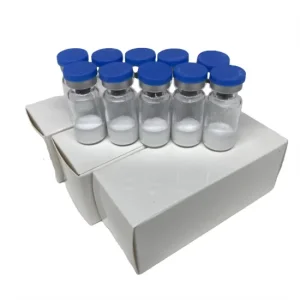
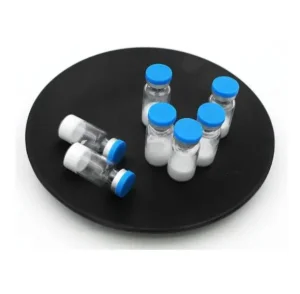
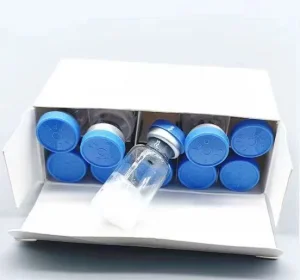
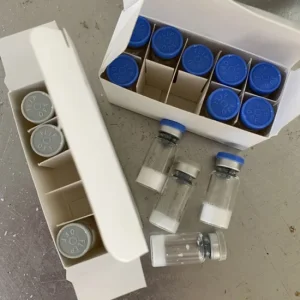
Verified batches compliant with global research standards, featuring comprehensive Certificate of Analysis (COA) protocols, NMR verification, and direct factory-to-laboratory logistics.
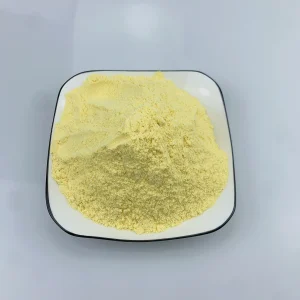
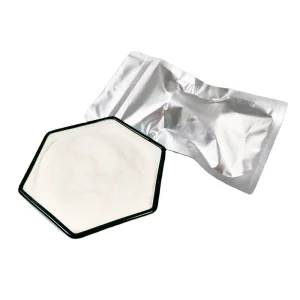
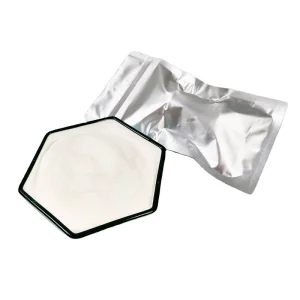
Trenbolone Acetate (CAS 10161-34-9), chemically designated as 17β-acetyloxyestra-4,9,11-trien-3-one, represents one of the most potent synthetic steroidal compounds derived from the 19-norandrostane structural skeleton. Recognized industrially for its conjugated triene system encompassing double bonds at carbon positions 4, 9, and 11, the molecule possesses extraordinary chemical stability and distinct optical and receptor-binding characteristics. In the global chemical industry and commercial veterinary domain, Trenbolone Acetate serves as an indispensable active pharmaceutical ingredient (API) for veterinary livestock formulation—specifically in cattle pellet implants aimed at feed conversion efficiency optimization—and as an analytical reference standard for pharmacological, metabolic, and anti-doping diagnostic institutions.
As an established Chinese manufacturing center operating within strict cGMP-aligned chemical synthesis guidelines, our production infrastructure delivers bulk Trenbolone Acetate characterized by high crystalline density, low volatile solvent retention, and superior stereochemical purity. With international regulatory thresholds tightening under FDA, EMA, and VICH frameworks, industrial B2B procurement heads must evaluate suppliers not solely on headline price per kilogram, but on the integrity of the synthetic route, rigorous impurity indexing (specifically 17α-epimer suppression and secondary oxidation derivatives), and traceable batch documentation.
| Analytical Parameter | Standard Acceptance Criteria | Testing Methodology |
|---|---|---|
| Chemical Name | 17β-(Acetyloxy)estra-4,9,11-trien-3-one | IUPAC Nomenclature Nomenclature |
| CAS Registry Number | 10161-34-9 | Chemical Abstracts Service |
| Molecular Formula / Weight | C20H24O3 / 312.40 g·mol⁻¹ | High-Resolution Mass Spectrometry (HRMS) |
| Appearance | Pale yellow to light yellow crystalline powder | Visual Inspection / Colorimetry |
| Chromatographic Purity (HPLC) | ≥ 99.0% (Custom high-grade ≥ 99.5%) | RP-HPLC at λ = 340 nm |
| 17α-Epimer Impurity | ≤ 0.30% | Chiral Stationary Phase HPLC |
| Loss on Drying (LOD) | ≤ 0.50% | Vacuum Desiccation at 60°C |
| Residual Solvents | Meets USP <467> and ICH Q3C limits | Headspace Gas Chromatography (GC-FID) |
| Heavy Metals (Pb, Cd, As, Hg) | Total ≤ 10 ppm; Individual toxic metals < 1 ppm | Inductively Coupled Plasma Mass Spectrometry (ICP-MS) |
Analyzing cross-continental distribution patterns, agricultural veterinary demands, and the risk mitigation models deployed by Fortune-class chemical buyers.
In North America, South America (Mercosur nations), and Australia, Trenbolone Acetate serves as an approved active agent in controlled-release subcutaneous ear implants for beef cattle. Industrial formulation entities require consistent bulk densities (typically between 0.35 and 0.50 g/mL) to guarantee steady machine compression without erratic tablet fragmentation or dissolution variations during livestock deployment.
Global anti-doping agencies (accredited under WADA codes), university bio-analytical labs, and forensic toxicology centers procure ultra-high purity (>99.5%) Trenbolone Acetate along with its primary metabolites—Epitrenbolone and Trenbolone free base—for isotopic dilution assays, LC-MS/MS calibration curves, and metabolic pathway mapping in mammalian biological fluids.
The major pain point for B2B procurement directors is batch-to-batch inconsistency caused by sub-optimal hydrogenation or unquenched side reactions during acylation. Unstable intermediates lead to rapid photolytic degradation into dimerized quinoid forms. Our factory stabilizes the crystalline structure through strict nitrogen purging and controlled polymorphic crystallization.
A granular examination of the multi-step chemical synthesis from steroidal sterols to pure Trenbolone Acetate crystals, detailing critical process control parameters.
The production of high-grade Trenbolone Acetate requires meticulous chemoselective and stereoselective mastery over the estrane steroid core. The classic industrial route utilized in our Hebei manufacturing facility initiates from estra-4,9-diene-3,17-dione or 19-norandrostenedione (19-NOR), produced via microbial phytosterol fermentation. The step-by-step reaction cascade involves:
The 17α-epimer possesses minimal biological activity and acts as an adulterant. Our process relies on sterically hindered organoborane hydrides or modified NaBH4 reduction regimes that maintain 17α-epimer concentrations below 0.30%, well beneath standard pharmacopeial thresholds.
The 4,9,11-triene system exhibits intense UV absorption (λmax at 340 nm), making it vulnerable to light-induced crosslinking and free-radical autoxidation. We perform post-synthesis processing in light-attenuated ISO 7 cleanrooms and store finished lots under argon atmospheres in double-lined aluminum canisters.
By replacing toxic legacy solvent systems like benzene and chloroform with class III alternatives (ethyl acetate, ethanol) and applying fluidized bed vacuum drying at 45°C, residual solvent levels are maintained below 500 ppm, exceeding USP <467> and ICH Q3C requirements.
Transitioning steroidal synthesis toward continuous flow chemistry, enzyme-catalyzed transformations, and zero-discharge production architecture.
Engineering cytochrome P450 and steroid 11β-hydroxylase variants via directed evolution to insert 9,11-unsaturations biologically, eliminating DDQ reliance and hazardous metal catalysts.
Replacing large 3000L batch reactors with continuous-flow microfluidic modules for rapid exotherm management during acetylation, improving chemical yield by 14% and reducing isomer formation.
Implementing real-time membrane pervaporation systems recovering >95% of volatile ethyl acetate and pyridine on-site, diminishing the carbon and solvent footprint per batch metric ton.
Integrating in-line Fourier-Transform Near-Infrared (FT-NIR) and Raman spectroscopy probes to monitor continuous crystallization and crystallization polymorph emergence in real time.
Every commercial batch of Trenbolone Acetate shipped from our China facility undergoes exhaustive qualitative and quantitative testing prior to QA/QC release.
Reverse-phase Ultra-Performance Liquid Chromatography coupled with Photodiode Array detection evaluates purity at 340 nm and 240 nm. Columns: C18 stationary phases (1.7 μm particle size) with acetonitrile/water/formic acid gradients. We guarantee baseline separation between Trenbolone Acetate, Trenbolone Enanthate, Parabolan, and free Trenbolone.
Structure elucidation is established via 400 MHz 1H and 13C Nuclear Magnetic Resonance (NMR) spectroscopy in CDCl3, confirming carbon skeleton assignments: C17 proton triplet (δ 4.58), C4 olefinic singlet (δ 5.79), and C11/C12 vinylic multiplets. High-Resolution Electrospray Ionization Mass Spectrometry (ESI-HRMS) precisely confirms m/z [M+H]+ at 313.1802.
Differential Scanning Calorimetry (DSC) establishes an unambiguous melting endotherm peak between 94.0°C and 97.0°C. Specific optical rotation ([α]D20) is calibrated between +34.0° and +38.0° (c=1 in chloroform). Karl Fischer coulometric titration verifies that residual moisture content stays safely beneath 0.50% w/w.
Comprehensive customs declarations, regional compliance matrices, and localized documentation support across Tier-1 and emerging markets.
For veterinary manufacturers in the United States and Canada operating under veterinary drug directives, our shipments are accompanied by detailed Technical Data Sheets (TDS), complete batch COAs, and raw-material traceability declarations. For LATAM cattle-implant operations (Brazil, Argentina, Mexico), we provide bilingual documentation and apostilled chemical declarations to support swift customs clearance.
In jurisdictions governed by REACH and specific veterinary intermediate exemptions, all packages feature GHS-compliant multilingual labels, complete 16-section Safety Data Sheets (SDS), and Harmonized System (HS) code classifications (typically HS 293729). In APAC research hubs (Singapore, Japan, Australia), analytical-grade reference samples are supplied with NMR/MS dossiers for import authority pre-approval.
Steroidal active ingredients with extended conjugated trienes are susceptible to thermal degradation when exposed to temperatures exceeding 30°C over transit windows. We deploy vacuum-sealed multi-barrier aluminum foil containment, secondary desiccants, shock-resistant outer packaging, and optional single-use USB temperature loggers for door-to-door temperature surveillance.
Direct technical and logistical answers addressing analytical validation, commercial MOQs, storage conditions, and custom formulation options.
The difference resides entirely in the ester moiety appended at the 17β-hydroxyl position. Trenbolone Acetate carries a short two-carbon acetyl ester (C2H3O2), while Enanthate utilizes a seven-carbon heptanoyl ester (C7H13O2). This variance alters the molecular weight (312.40 g/mol for Acetate vs 382.54 g/mol for Enanthate), melting point profiles, lipophilicity, and the release rate (hydrolysis kinetic) when formulated into oil-based veterinary depots or compressed pellets.
The 4,9,11-triene core is susceptible to auto-oxidation and photolytic cleavage. Our plant processes all crystallized compounds under filtered amber light and inert nitrogen blankets. Packaging incorporates heat-sealed, light-proof multi-layer laminated aluminum pouches backed by food/pharma-grade moisture desiccants, protected within UN-certified high-density polyethylene (HDPE) drums.
Yes. Beyond standard unground crystalline material (median D50: 80–120 μm), we provide air-jet micronization services yielding fine powder specifications: D90 < 20 μm or D50 < 8 μm. This is ideal for veterinary implant formulations where uniform tablet density, consistent dies filling, and predictable in-vivo erosion kinetics are critical.
The recommended re-test timeframe is 36 months from the date of manufacture when held in original unopened containers under controlled conditions: stored between 2°C to 8°C (refrigerated) or 15°C to 25°C in a dry, ventilated warehouse away from direct sunlight, open heat sources, and strong oxidizing reagents.
Absolutely. We regularly cooperate with international testing laboratories including SGS, Eurofins, and qualified contract testing organizations. Pre-shipment batch samples can be transmitted directly to an appointed laboratory for independent HPLC purity, chiral chromatography, and heavy metal testing prior to balance payment release.
Standard sample testing packs for accredited institutional buyers and commercial pilot runs commence at 100 grams. Regular industrial supply begins at 1 kilogram, scaling up to commercial batches of 50 kg to 500 kg per consignment, packaged in standardized 1 kg aluminum bags or 25 kg fiber drums.
Explore complementary active APIs, metabolic peptides, and sterile injection-grade lyophilized powders from our comprehensive manufacturing portfolio.