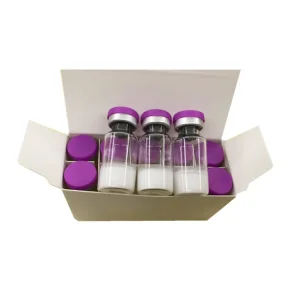
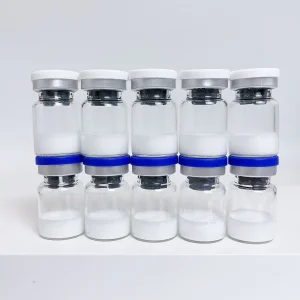
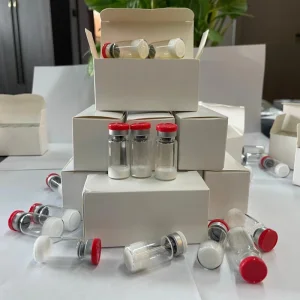
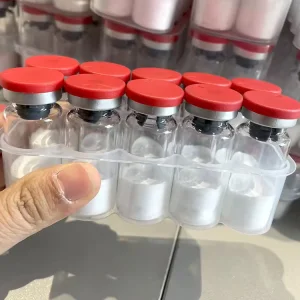
Explore high-purity reference reagents, synthetic secretagogues, and peptide lyophilized powders verified through HPLC and High-Resolution Mass Spectrometry.
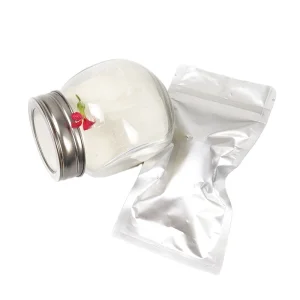
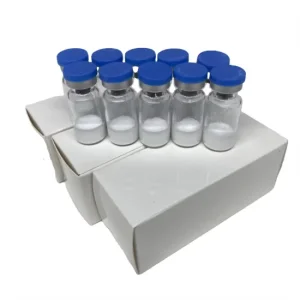
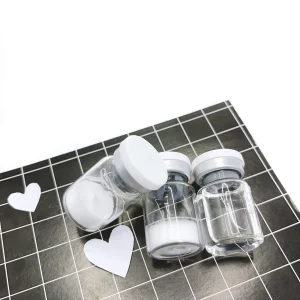
In-depth molecular analysis for research chemists, compliance auditors, and global B2B procurement managers seeking standardized chemical integrity.
CAS 109555-87-5 represents a specialized synthetic hexapeptide derivative of significant interest in endocrinology, cellular growth factor signaling, and synthetic bio-organic pathways. Belonging structurally to the class of growth hormone secretagogues (GHS) and functional ghrelin receptor (GHSR-1a) agonists, this compound is engineered to evaluate pulsatile cellular signaling, transcription activation, and protein turnover in non-clinical research environments. Modern academic institutions and commercial laboratories depend on batch reproducibility that strictly matches exact stereochemical alignments.
Unlike simplistic peptide chains, CAS 109555-87-5 incorporates non-natural and aromatic D-amino acid modifications (such as D-Trp and methyl-substituted His configurations) engineered to resist endogenous aminopeptidase degradation. This steric protection extends half-life during in vitro assays. However, synthesis complexity increases exponentially: improper racemate resolution or incomplete side-chain deprotection generates truncation fragments that closely co-elute with the target peak during analytical chromatography.
| Analytical Parameter | Technical Specification | Testing Methodology (USP / Ph. Eur.) | Procurement Significance |
|---|---|---|---|
| Chemical / IUPAC Name | L-Histidyl-2-methyl-D-tryptophyl-L-alanyl-L-tryptophyl-D-phenylalanyl-L-lysinamide | IUPAC Nomenclature System | Unambiguous identification across international borders |
| CAS Registry Number | 109555-87-5 (Free Base / Acetate Variant Reference) | Chemical Abstracts Service (CAS) | Customs declaration and CAS registry verification |
| Empirical Formula | C47H58N12O6 (Base form) | High-Resolution Mass Spectrometry (HRMS) | Calculated monoisotopic exact mass confirmation |
| Molecular Weight | 887.04 g/mol (Base) / Counter-ion Dependent | ESI-Q-TOF Mass Spectrometry | Structural release criteria (±0.5 Da variance tolerance) |
| Chromatographic Purity | ≥99.0% (Single Impurity <0.5%) | Reversed-Phase HPLC (RP-HPLC at 220 nm) | Prevention of off-target receptor interaction in assay |
| Net Peptide Content (NPC) | 80.0% – 88.5% (Balance: Acetate & H2O) | Amino Acid Quantitative Analysis (AAA) | Eliminates under-dosing errors caused by gross lyophilized weight |
| Counter-Ion Specification | Acetate (TFA residual < 0.25% w/w) | Ion-Exchange Chromatography / 19F-NMR | Essential for cellular viability; avoids fluorinated cytotoxicity |
Comparing classical solution-phase coupling with modern Continuous-Flow Solid-Phase Peptide Synthesis (CF-SPPS) for scalable, ultra-pure production.
Utilizing high-loading Rink Amide-MBHA or 2-Chlorotrityl chloride resin matrices. Precise resin swelling in anhydrous N,N-Dimethylformamide (DMF) guarantees uniform micro-pore diffusion for the initial C-terminal Fmoc-Lys(Boc)-OH immobilization.
Automated iterative cleavage of the Fmoc protecting group via 20% piperidine in DMF, followed by sequential condensation of D-Phe, Trp(Boc), Ala, and 2-Me-D-Trp with high-efficiency coupling cocktails: HATU / HOAt in the presence of DIPEA.
TFA-mediated full global deprotection using a specialized scavenger system: Trifluoroacetic acid / Triisopropylsilane / 1,2-Ethanedithiol / Water (92.5 : 2.5 : 2.5 : 2.5) to permanently prevent re-alkylation of vulnerable indole rings on tryptophan moieties.
Crude peptide isolation via ice-cold methyl tert-butyl ether (MTBE) precipitation, followed by high-pressure DAC (Dynamic Axial Compression) columns packed with 10μm C18 stationary phase using a triethylammonium phosphate / acetonitrile gradient.
Crucial industrial processing converting residual toxic trifluoroacetate counter-ions into physiological acetate forms via Dowex/Amberlite weak anion-exchange resin beds, keeping remaining fluorine compounds strictly below analytical detection limits.
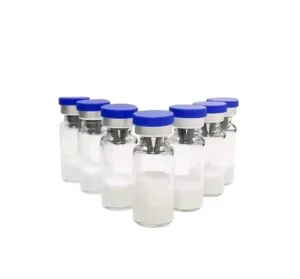
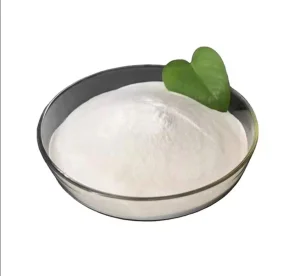
Multi-stage freeze-drying cycle inside Class 100 cleanrooms: primary sublimation under 0.05 mbar at -35°C followed by secondary desorption at +22°C, producing homogeneous, cake-stable lyophilized powder with moisture content under 3.0%.
Rigorous analytical benchmarks that separate verified chemical manufacturers from grey-market repackagers and speculative traders.
Every commercial batch is tested across multiple wavelengths (214 nm, 220 nm, and 280 nm) using ultra-high-resolution core-shell C18 columns. We provide the full raw chromatogram, peak table, baseline parameters, and integration thresholds — never an edited summary percentage.
Electrospray Ionization Time-of-Flight mass spectroscopy confirms exact isotopic distribution. Both single protonated [M+H]+ and double protonated [M+2H]2+ ions are documented to rule out sequence truncations, deletions, or beta-alanine insertion errors.
Residual organic solvent quantification according to ICH Q3C Guideline limits. Critical testing targets Class 2 and Class 3 processing solvents including Acetonitrile (<410 ppm), Dichloromethane (<600 ppm), DMF (<880 ppm), and Diethyl ether (<5000 ppm).
Using quantitative Limulus Amebocyte Lysate (LAL) reagents to maintain pyrogen levels strictly below 0.01 EU per milligram of active peptide. Non-pyrogenic borosilicate vials and pharmaceutical-grade crimp closures prevent bio-burden introduction.
Documented methodologies for academic investigations, structural biology models, and diagnostic reagent development.
Utilized as a high-affinity positive control in competitive radioligand and fluorescence polarization assays examining receptor internalization, calcium mobilization, and beta-arrestin recruitment in human recombinant cell lines.
Applied extensively in ischemia-reperfusion cell culture models to examine cardioprotective signaling pathways independent of growth hormone secretion, notably mediated by CD36 scavenger receptor binding affinities.
Acts as an analytical benchmark for investigating peptide stability modifications. Comparative degradation profiling versus native Ghrelin informs drug design targeting oral or intranasal transmucosal transport formulations.
How integrated manufacturing corridors in Hebei and regional fine-chemical clusters protect overseas buyers from pricing shocks and supply interruptions.
The global fine-chemical and peptide supply chain has experienced unprecedented stress tests over recent years. As Western contract research organizations face soaring solvent prices, regulatory delays, and limited synthesis reactor availability, Chinese primary manufacturers — specifically established facilities in Shijiazhuang and Hebei Province — provide unparalleled supply chain resilience.
This structural advantage is rooted in complete vertical backward integration. Rather than importing precursor protected amino acids (Fmoc-Ala-OH, Fmoc-Trp(Boc)-OH, etc.) and coupling reagents (HATU, HBTU) from intermediate traders, our facility procures starting raw materials directly from adjacent domestic chemical synthesizers. This immediate access cuts precursor acquisition lead times from weeks to hours and insulates B2B pricing from foreign exchange shifts.
Operating solid-phase peptide reactors ranging from 5-liter pilot units to 500-liter industrial glass-lined synthesizers. We accommodate custom multi-gram research batches up to metric-ton scale chemical intermediate contracts seamlessly.
Continuous investment in closed-loop solvent reclamation, automated VOC absorption beds, and biological wastewater scrubbers ensures our plant operates without risk of sudden regulatory shutdowns common during environmental audits.
We maintain an active physical inventory of frequently requested reference peptides stored under temperature-monitored -20°C and -80°C validated freezers, enabling dispatch within 24 hours of proforma clearance.
Navigating HS codes, customs documentation, and temperature-controlled air freight across North America, Europe, and Asia-Pacific.
Proper declaration under Chapter 29 classifications (HS 2937.19 or 2933.99 depending on local jurisdiction guidelines). Compliant invoices avoid import holds, misclassification fines, or secondary regulatory audits.
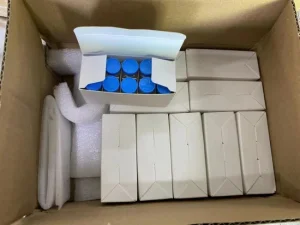
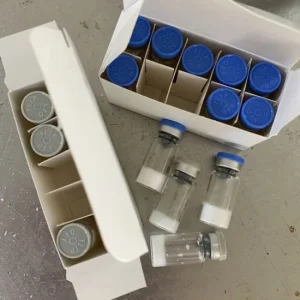
Products are shipped in sealed pharmaceutical vials with PTFE-coated butyl septa, double-bagged under inert nitrogen atmosphere in vacuum aluminum pouches, accompanied by frozen gel packs or dry-ice insulated containers for transit.
Every consignee receives an updated GHS-compliant Safety Data Sheet, batch-specific Certificate of Analysis signed by our QC Director, Certificate of Origin (COO), and formal Proforma for easy customs duty reconciliation.
Transparent, technical responses covering analytical data interpretation, sample testing, minimum orders, and stability parameters.
We supply research-grade batches with a certified purity of ≥98.0% or ≥99.0% by RP-HPLC, depending on order specifications. Every shipment includes a non-redacted HPLC chromatogram and ESI-MS spectrum matching the batch code stamped on the primary vial.
Lyophilized peptides naturally contain counter-ions (such as acetate or residual trifluoroacetate) and trace moisture bound to hydrophilic amino acid residues. While total powder weight may be 10.0 mg, the actual active peptide content is typically 80-88%. Stating NPC ensures exact dosing calculations in biochemical experiments.
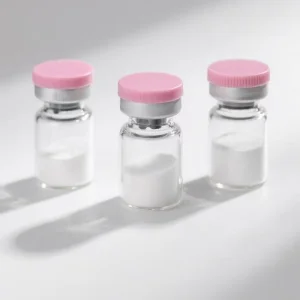
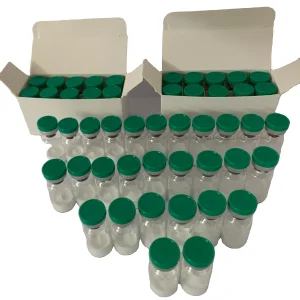
Yes. We accommodate precise automated micro-dosing into 2ml, 5ml, and 10ml borosilicate glass vials (e.g., 2mg, 5mg, 10mg, 50mg, 100mg per vial) as well as bulk gram and kilogram vacuum containers. Custom OEM labels, batch-matched color coding, and tamper-evident caps are fully supported.
Lyophilized powder should be stored desiccated at -20°C (shelf-stable for up to 24–36 months). For reconstitution, dissolve in sterile bacteriostatic water, deionized water, or sterile PBS buffer. Avoid repeated freeze-thaw cycles by aliquoting solutions into single-use micro-tubes.
Absolutely. We routinely work with international testing agencies (such as Janoshik, MZ Biolabs, or accredited university core labs). You may reserve a sample from your production lot for independent verification prior to final balance clearance.
In-stock compounds dispatch within 24 to 48 hours via verified express logistics channels. We provide full tracking visibility and maintain a 100% reship guarantee if goods are delayed or confiscated due to carrier documentation handling errors.
Explore related high-purity peptides, active biological intermediates, and specialized small-molecule compounds produced under strict ISO/GLP standards.