Explore our core catalog of certified APIs, peptide reference standards, and precision fine chemicals verified through comprehensive chromatographic chromatography.
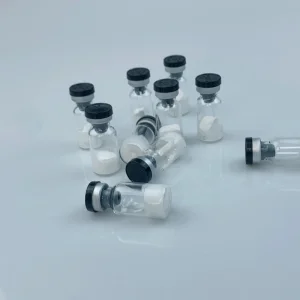
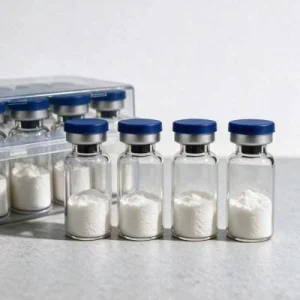
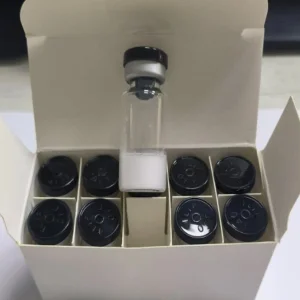
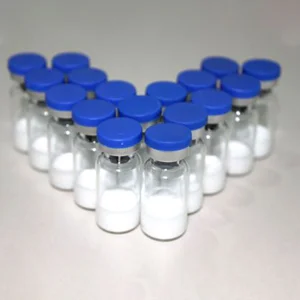
A rigorous examination of molecular geometry, synthetic precursors, enantiomeric stability, and qualification benchmarks for research institutions and contract analytical laboratories.
Cas 4f-Adb (systematically classified as Methyl (2S)-2-{[1-(4-fluorobutyl)-1H-indazole-3-carbonyl]amino}-3,3-dimethylbutanoate) features an indazole-3-carboxamide core substituted with a terminal 4-fluorobutyl chain and an L-tert-leucinate ester moiety. Precise chiral induction during coupling is mandatory to prevent racemization.
Synthesizing reference-grade material begins with high-purity methyl 1H-indazole-3-carboxylate. Alkylation with 1-bromo-4-fluorobutane in an anhydrous polar aprotic solvent requires stoichiometric thermal regulation to suppress dialkylation and regioisomeric N2-alkyl adduct formation.
Factory-grade Cas 4f-Adb must undergo reversed-phase Ultra-High Performance Liquid Chromatography (UHPLC) with photodiode array (PDA) detection coupled with High-Resolution Accurate-Mass Mass Spectrometry (HRAM-MS), ensuring isotopic purity above 99.0% with zero unknown single impurities >0.1%.
Factory Quality Advisory: True high-purity Cas 4f-Adb requires rigorous verification against regioisomeric impurities (such as the 2-alkyl indazole isomer) which exhibit identical nominal mass spectra under conventional GC-EI-MS. Only certified laboratories utilizing 1H/13C NMR and chromatographic resolution can certify reference calibration accuracy.
Understanding shifting regulatory compliance, forensic demand cycles, and regional procurement parameters across international research ecosystems.
Global public health agencies, forensic science laboratories, and national customs bureaus require authentic reference materials of Cas 4f-Adb to update screening libraries (SWGDRUG, NIST, Cayman Spectral Library). As indazole synthetic cannabinoids evolve, factories with standardized synthesis infrastructure play an indispensable role in providing validated analytical standards.
The regulatory classification of Cas 4f-Adb varies significantly across jurisdictions. Licensed industrial manufacturers must maintain strict Know-Your-Customer (KYC) compliance, export declaration documentation, and end-user verification declarations (EUD) ensuring that distribution remains confined strictly to licensed academic, clinical, and governmental analytical testing facilities.
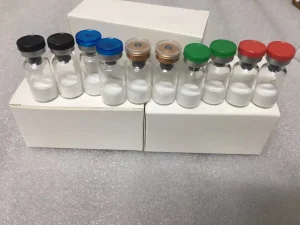
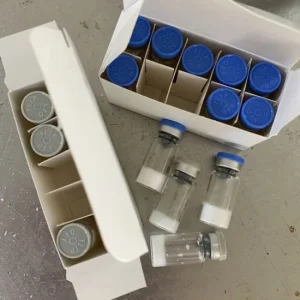
Legacy unregulated production routes have been dismantled by stringent environmental safety mandates and international control frameworks. Current enterprise procurement demands auditable ISO-certified manufacturing hubs capable of supplying small-vial analytical calibrators (e.g., 1 mg, 5 mg solutions or powders) with complete multi-spectral documentation.
The manufacturing architecture of Cas 4f-Adb demands systematic process optimization to mitigate toxic side-products, unreacted precursors, and optical degradation.
Indazole core esters and fluoro-alkylating halides undergo GC-MS purity verification (≥99.5%) prior to reactor vessel charging.
Precision temperature controls (0°C to 25°C under dry argon) suppress isomeric substitution at the N2 indazole position.
Utilizing high-efficiency coupling reagents (e.g., HATU/EDC) with L-tert-leucine methyl ester to avoid stereocenter inversion.
Preparative C18 column fractionation isolates the target molecule, stripping residual trace catalysts and synthetic dimers.
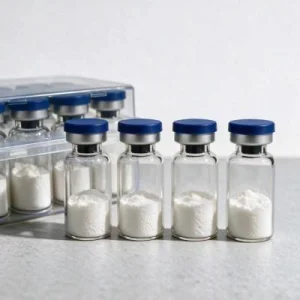
Vacuum freeze-drying followed by flame-sealed or amber crimp-top vial packing under inert argon eliminates oxidative moisture.
| Analytical Parameter | Commercial Grade (Low Tier) | Certified Standard Factory Grade | Verification Instrument |
|---|---|---|---|
| Chemical Purity (HPLC) | 90.0% – 95.0% | ≥99.2% (Area Normalization) | Agilent 1290 UHPLC-PDA |
| Regioisomeric Impurities (N2-isomer) | Up to 4.5% | <0.10% (Below Detection Limit) | 600 MHz 1H-NMR / UHPLC |
| Enantiomeric Purity (Chiral HPLC) | Uncontrolled / Mixed D/L | >99.5% L-Enantiomer | Chiralpak IB Column |
| Residual Solvents (ICH Class 2/3) | Often >2500 ppm | <500 ppm Combined Total | Headspace GC-MS |
| Residual Heavy Metals (Pb, As, Cd, Hg) | Not routinely quantified | <5 ppm Total Heavy Metals | ICP-MS Validation |
| Moisture Content (Karl Fischer) | 1.5% – 3.0% | <0.5% (Lyophilized Anhydrous) | Coulometric KF Titration |
Legitimate, institutional utilization of verified Cas 4f-Adb in advanced academic, forensic, and pharmacological testing frameworks.
Toxicology laboratories in North America, Europe, and Australasia rely on certified pure Cas 4f-Adb as an analytical calibrator in liquid chromatography-tandem mass spectrometry (LC-MS/MS) matrices. It enables accurate quantification of parent drug concentrations and bio-fluid metabolic profiling in biological specimens.
Neuroscience research groups utilize reference-grade indazole-3-carboxamides to map competitive binding affinities (Ki) and functional GTPγS activation curves against human CB1 and CB2 receptors, providing scientific insights into the pathophysiology of high-potency synthetic agonists.
Human liver microsome (HLM) and recombinant cytochrome P450 (CYP) incubation trials depend on ultra-pure parent compounds to trace primary ester hydrolysis metabolites and subsequent oxidative mono-hydroxylation cascades, which serve as biomarkers for forensic retrospective testing.
How automation, microfluidic continuous synthesis, and blockchain supply chains are redefining chemical manufacturing reliability.
Transitioning from traditional multi-liter batch glassware to continuous flow microreactors enables ultra-precise temperature residence control and stoichiometric stoichiometry, practically eliminating regioisomeric N2-alkylation side reactions and drastically minimizing hazardous chemical waste streams.
Machine-learning models trained on reaction thermodynamic data optimize reagent feed rates and solvent matrices in real-time, predicting degradation pathways before they form and guaranteeing that finished production lots achieve consistent purity over 99.5%.
Future factory shipments will incorporate tamper-proof cryptographic signatures tied directly to high-resolution raw analytical datasets (FID chromatograms, HRMS spectra, raw NMR FID files), giving compliance auditors and procurement officers instant verification against counterfeit batches.
Addressing the major operational risks faced by professional chemical buyers: batch inconsistency, customs clearance delays, and documentation shortfalls.
Every lot is paired with a comprehensive Certificate of Analysis (COA), Safety Data Sheet (SDS) prepared under GHS Revision 9, certified raw HPLC traces, and structural confirmation spectra.
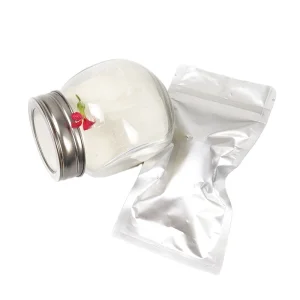
Packaged in vacuum-sealed fluorinated containers with argon headspaces and outer anti-puncture barrier pouches to prevent environmental hydration and thermal degradation during transit.
Our dedicated regulatory liaison department collaborates with international forwarding brokers, providing validated HS codes, tariff manifests, and non-dangerous good declarations where applicable.
Whether procurement requires 100 mg analytical standards or custom multi-kilogram pilot-scale intermediate campaigns, our reactor infrastructure scales smoothly under strict cGMP protocols.
Essential guidance on chemical stability, storage conditions, analytical troubleshooting, and international procurement standards.
For research and reference standards, Cas 4f-Adb should be stored in an airtight amber glass container purged with inert gas (argon or nitrogen) at -20°C. Prolonged exposure to ambient humidity or elevated temperatures can initiate hydrolysis of the terminal methyl ester bond, yielding the corresponding free carboxylic acid inactive degradant.
Our synthesis protocol utilizes low-temperature kinetically-controlled deprotonation using steric bases in DMF/DMSO, followed by preparative reverse-phase column chromatography. Routine testing via 2D NOESY / HMBC NMR confirms unequivocal C-N bond assignment, guaranteeing that our reference product contains <0.1% N2 regioisomer.
Each delivery includes a batch-specific Certificate of Analysis featuring quantitative UHPLC purity percentages, MS fragmentation spectra, 1H/13C NMR spectral overlays, KF water content analysis, and residual solvent headspace GC-MS charts. A fully compliant GHS Safety Data Sheet (SDS) is provided electronically and physically.
Cas 4f-Adb demonstrates excellent solubility in polar organic solvents: ≥30 mg/mL in anhydrous dimethyl sulfoxide (DMSO), ≥25 mg/mL in acetonitrile (MeCN), and ≥20 mg/mL in HPLC-grade methanol or ethanol. It exhibits negligible solubility in neutral aqueous buffers (<0.05 mg/mL), requiring co-solvents for biological assay preparations.
Catalog reference calibrators are dispatched from stock within 24 to 48 hours via specialized global courier services with tracking. Custom large-batch intermediate synthesis projects require 2 to 4 weeks depending on batch volume. All orders are reviewed against international export sanction lists and require appropriate institutional credentials.
Browse our expanded line of high-purity chemical powders, analytical reference standards, and bio-active raw materials engineered for research consistency.