Pre-qualified active pharmaceutical ingredients, research-grade synthetic peptides, and batch-tested reference standards available for commercial enterprise dispatch.
Comprehensive analysis of Delta Sleep-Inducing Peptide (DSIP): chemical stability, stereospecificity, and critical process parameters in commercial solid-phase peptide synthesis (SPPS).
CAS 62568-57-4 represents the standardized chemical identifier for Delta Sleep-Inducing Peptide (DSIP), a linear nonapeptide with the conserved amino acid sequence: Trp-Ala-Gly-Gly-Asp-Ala-Ser-Gly-Glu (MW: 848.81 g/mol, Formula: C35H48N10O15). First isolated from the cerebral venous blood of rabbits undergoing low-frequency electrical stimulation of the intralaminar thalamus, this biomolecule plays vital physiological roles across sleep regulation, circadian entrainment, stress adaptation, and neuroendocrine modulation.
Industrial manufacturing of CAS 62568-57-4 demands precise stereochemical controls. The presence of labile residues—specifically Tryptophan (Trp1), Aspartate (Asp5), and Serine (Ser7)—renders the peptide exceptionally susceptible to side reactions including oxidative degradation, aspartimide formation, and beta-elimination during deprotection phases.
Critical Synthesis Checkpoint: Suppression of Aspartimide intermediate formation during piperidine-mediated Fmoc deprotection is accomplished using 0.1 M HOBt or OxymaPure formulations with 20% piperidine in DMF.
Tier-1 manufacturers employ modern Fmoc solid-phase peptide synthesis on low-loaded Wang resins or 2-Chlorotrityl chloride resins to yield full C-terminal free acids without racemizative C-terminal activation. Protection schemes typically integrate Boc protection on Trp, OtBu for Asp and Glu, and tBu on Ser.
Cross-border biopharmaceutical pipelines, peptide-based therapeutics, and rigorous regulatory oversight are redefining procurement strategies across North American and European labs.
Global demand for CAS 62568-57-4 has evolved dramatically from fundamental neurochemical investigations to high-throughput preclinical assays. With increased institutional funding poured into circadian biology, sleep-disordered metabolic balance, and stress-induced oxidative cascades, commercial contract research organizations (CROs) require kg-scale procurement with unified batch-to-batch kinetic reproducibility.
Global regulatory bodies (US FDA, EMA, NMPA) have intensified scrutiny on raw material provenance, residual solvent profiles, and trace impurities in peptide raw powders. The market has definitively bifurcated: low-tier traders offering non-validated powders are systematically displaced by accredited cGMP-aligned manufacturers providing full analytical dossiers.
Pharmaceutical supply chain disruptions have compelled institutional procurement heads to enforce dual-sourcing architectures. Modern contracts necessitate verified factory partnerships that maintain buffer stockpiles, cold-chain redundancy (-20°C continuous temperature data-logging), and localized customs documentation capabilities to mitigate trans-pacific shipping delays.
A granular analytical comparison establishing the difference between commercial broker material and high-grade industrial synthesized CAS 62568-57-4.
| Analytical Parameter | Catalog Trading Intermediary | Certified Factory Tier-1 Standard | Testing Methodology |
|---|---|---|---|
| HPLC Chromatographic Purity | 90.0% – 95.0% (Uncalibrated Peaks) | ≥99.0% (Single Impurity <0.5%) | RP-HPLC (C18 Column, ACN/TFA Gradient @ 214nm) |
| Molecular Mass Verification | Nominal mass check / Non-specific | Exact Mass: 848.81 ± 0.5 Da | ESI-MS / MALDI-TOF Mass Spectrometry |
| Residual Solvent Limits | Undisclosed / Variable | Compliant with ICH Q3C (DMF <880ppm) | Headspace Gas Chromatography (HS-GC) |
| Counter-Ion Specification | High Residual TFA (>10%) | Acetate Salt / Controlled TFA <1.0% | Ion-Exchange Chromatography / 19F-NMR |
| Bacterial Endotoxin Levels | Not monitored (>5.0 EU/mg) | <0.05 EU/mg (Bio-Assay Grade) | Turbidimetric / Chromogenic LAL Endotoxin Assay |
| Batch Consistency (Lot-to-Lot) | Fluctuating (Mixed source stockpiling) | Fully Integrated In-House SPPS Lot Runs | Fingerprint HPLC Overlay & Peptide Content Ratio |
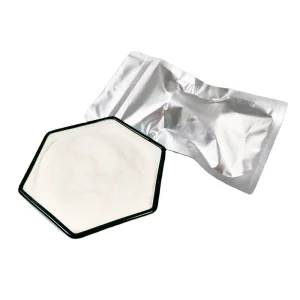
Strategic Procurement Insight: When auditing factory supply agreements for CAS 62568-57-4, procurement officers must mandate quantitative Net Peptide Content (NPC) verification via Amino Acid Analysis (AAA). Pure white powder appearance does not guarantee peptide concentration, as counter-ions, residual moisture, and trace salts can constitute 15%–30% of gross powder weight.
Engineering workflows deployed by established production facilities to achieve commercial capacity without sacrificing chemical purity or batch yields.
Traditional vessel-based solid-phase synthesis is constrained by slow mass transfer and non-uniform thermal distribution during large-scale peptide elongation. Leading Chinese manufacturing plants have pioneered Automated Continuous-Flow SPPS reactors for CAS 62568-57-4.
By circulating reagents through temperature-controlled resin beds at 60°C with shortened cycle durations (2.5 minutes per coupling step), side reactions like racemization and premature chain termination are suppressed by over 80%. This breakthrough elevates crude crude yield from 65% up to 88%, dramatically driving down downstream purification overhead.
Purifying nonapeptides with similar polarity intermediate fragments requires advanced stationary phases. Tier-1 manufacturing facilities implement multi-stage DAC (Dynamic Axial Compression) chromatography columns packed with high-mechanical-strength spherical silica (10µm, 100Å pore size).
The standard multi-pass elution protocol utilizes a binary mobile phase: Buffer A (0.1% aqueous acetic acid or TFA) and Buffer B (HPLC-grade acetonitrile). Fractions are analyzed in real-time by automated UV sensors, instantly sequestering main-peak fractions at purity thresholds exceeding 99.2% before moving directly into lyophilization cascades.
Ensuring compliance with international customs laws, bio-chemical shipping safety protocols, and stable cold-chain distribution across global border checkpoints.
Lyophilized peptides, while stable at ambient temperatures in the short term, risk deamidation and moisture absorption if exposed to fluctuating thermal conditions. Shipments of CAS 62568-57-4 are packed in vacuum-sealed vials, enveloped in foil laminate moisture barriers, and enclosed within VIP (Vacuum Insulated Panel) shippers containing dry ice or phase-change coolants calibrated for 96 hours of sub-zero transit.
Each production run is accompanied by an authenticated Certificate of Analysis (CoA) containing unambiguous analytical telemetry: original HPLC peak integrations, MS spectrograms, water content metrics via Karl Fischer titration, and elemental CHN microanalysis. All documentation conforms to GAMP-5 and ALCOA+ data integrity standards.
Navigating global border import frameworks requires immaculate tariff classification. CAS 62568-57-4 falls accurately under HS Code 2937.19 (Peptide hormones, their derivatives, and structural analogues). In-house export specialists coordinate directly with regional customs brokers, supplying TSCA certifications, Non-Controlled Substance declarations, and SDS documents conforming to GHS Rev. 8.
Emerging scientific methodologies driving yield optimization, environmental sustainability, and precision quality controls in peptide API manufacturing.
Traditional SPPS relies heavily on hazardous dipolar aprotic solvents such as N,N-dimethylformamide (DMF) and N-methyl-2-pyrrolidone (NMP), which face escalating restrictions under EU REACH regulations. The forward-looking engineering roadmap for CAS 62568-57-4 focuses on transitioning to bio-derived, non-hazardous solvent replacements including Cyrene™ (dihydrolevoglucosenone) and 2-MeTHF.
Pilot runs demonstrate that 2-MeTHF mixtures offer equivalent swelling parameters for polystyrene resins while drastically reducing volatile organic compound (VOC) emissions, slashing solvent recovery energy usage by 40% across commercial production blocks.
Real-time manufacturing analytics represent the frontier of modern high-purity chemical production. The integration of in-line UV-Vis spectroscopy, automated conductivity feedback, and micro-NIR probes within synthesis reactors facilitates instant detection of incomplete Fmoc-deprotection or sterically hindered peptide couplings.
By shifting from offline QC release to automated in-process intervention, factories virtually eliminate lot-level failures, ensuring that commercial orders for CAS 62568-57-4 meet analytical release criteria on the initial synthesis run.
In-depth responses addressing the primary compliance, quality assurance, and logistical inquiries submitted by pharmaceutical procurement directors.
In its lyophilized powder form, CAS 62568-57-4 demonstrates high physical and chemical stability when stored hermetically sealed at -20°C in an anhydrous environment, exhibiting less than 0.5% degradation over a validated 36-month shelf life. Once reconstituted in bacteriostatic or sterile deionized water, the peptide is susceptible to hydrolytic cleavage and microbial action. Solutions should be stored at 2°C to 8°C and utilized within 14 to 21 days, or portioned into single-use aliquots and frozen at -80°C to preserve molecular integrity.
Peptides synthesized via standard SPPS leave cleaved fragments in the trifluoroacetate (TFA) salt form. While acceptable for basic analytical benchmarks, high residual TFA concentrations (frequently 10%–20% in lower-tier crude powders) exhibit marked cellular toxicity and can skew sensitive biological assays. Certified manufacturers provide specialized acetate exchange processing, which suppresses residual TFA content to below 1.0% or replaces it completely with biocompatible acetate counter-ions, ensuring seamless transition to in vitro and in vivo models.
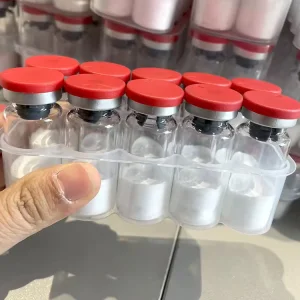
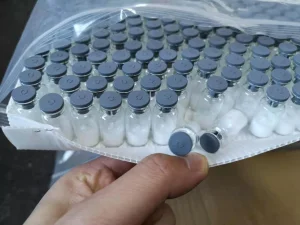
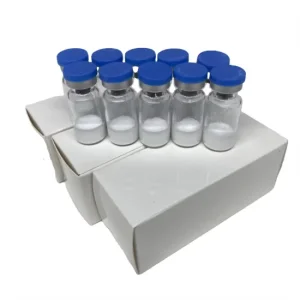
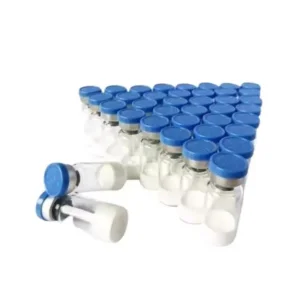
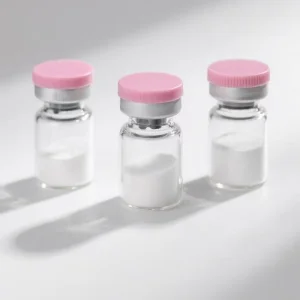
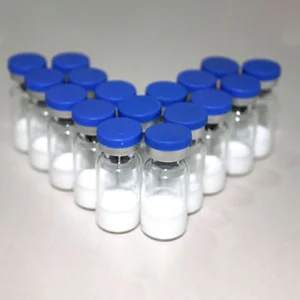
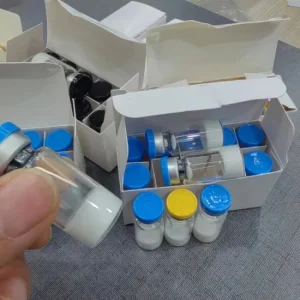
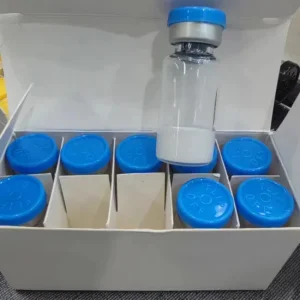
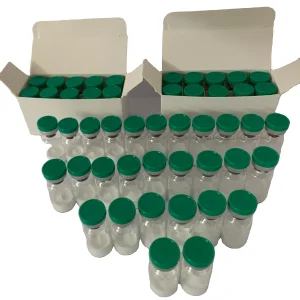
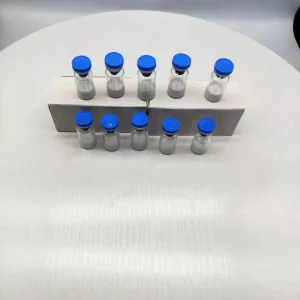
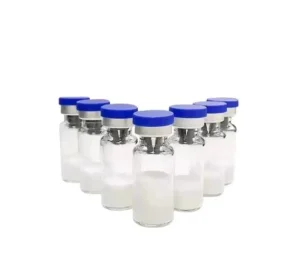
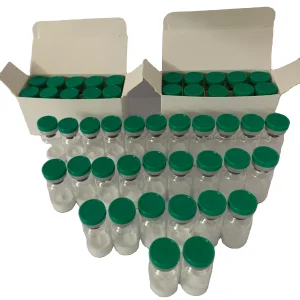
Yes. Commercial enterprise agreements accommodate customized fulfillment specifications. Standard packaging options include pharmaceutical-grade USP Type I borosilicate glass vials (2mg, 5mg, 10mg, and 50mg lyophilized units) with Teflon-coated butyl stoppers and flip-off aluminum crimp seals. For bulk raw chemical applications, we provide multi-gram and kilogram sealed containers within heat-sealed aluminum barrier pouches purged with high-purity argon or nitrogen to completely eliminate oxidative stress.
Every industrial shipment of CAS 62568-57-4 is accompanied by an audit-ready Batch Release Dossier. This package includes an authentic, signed Certificate of Analysis (CoA), High-Performance Liquid Chromatography (HPLC) chromatograms documenting purity and retention time, Electrospray Ionization Mass Spectrometry (ESI-MS) spectra verifying exact molecular mass, Karl Fischer moisture titration reports, and comprehensive SDS data. Complete technical documentation packages (including DMF open parts) are made available to qualified pharmaceutical development partners under CDA/NDA.
Explore complementary active research chemicals, biological growth factors, and metabolic analogues manufactured under stringent factory-controlled specifications.