Verified batch-manufactured peptides, fine chemicals, and active pharmaceutical reference materials with third-party analytical verification.
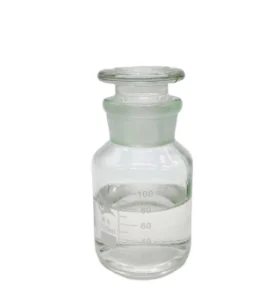
Understanding the synthesis kinetics, molecular profiling, and dual commercial utility of (±)-6-Phenyl-2,3,5,6-tetrahydroimidazo[2,1-b]thiazole hydrochloride across veterinary and biochemical sectors.
Tetramisole Hydrochloride is the stable, racemic mixture composed of equal parts of the D-isomer (dextramisole) and the L-isomer (levamisole). While veterinary formulations frequently deploy the racemate directly for broad-spectrum antihelmintic treatments due to its remarkable cost-effectiveness, it also represents the critical foundational precursor for the optical resolution of Levamisole HCl via chiral resolving agents like D-tartaric acid.
Beyond traditional animal husbandry, research biochemistry requires ultra-pure grade Tetramisole Hydrochloride as an exogenous inhibitor of non-specific alkaline phosphatases. It selectively suppresses liver, bone, kidney, and placenta isoforms without interfering with intestinal alkaline phosphatase, rendering it essential for sensitive immunohistochemical staining, in situ hybridization, and diagnostic assay formulations.
With global demand for commercial livestock proteins surging across Latin America, South Asia, and Africa, scalable antiparasitic treatments remain central to food security. Tetramisole HCl serves as an affordable therapeutic backbone against gastrointestinal roundworms and pulmonary lungworms, maintaining an annual compound growth rate exceeding 5.2% in bulk global active ingredient trade.
| Analytical Parameter | BP / EP Standard Limit | USP Pharmacopeial Grade | Batch Testing Release Criterion |
|---|---|---|---|
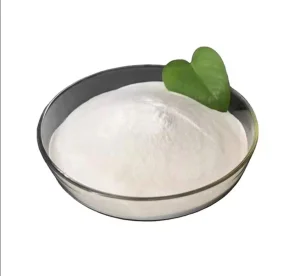
| Appearance / Organoleptic | White to pale cream crystalline powder | White or almost white powder | Conforms (Pure white crystal) |
| Assay Content (Dry Basis) | 99.0% – 101.0% | 98.5% – 101.5% | 99.82% (Potentiometric Titration) |
| Loss on Drying (105°C, 4h) | ≤ 0.5% | ≤ 0.5% | 0.18% max |
| Residue on Ignition (Sulfated Ash) | ≤ 0.1% | ≤ 0.1% | 0.04% |
| Heavy Metals (as Pb) | ≤ 20 ppm | ≤ 10 ppm | < 5 ppm (ICP-MS Method) |
| Single Known Related Impurity | ≤ 0.20% | ≤ 0.50% | < 0.08% (HPLC area normalization) |
| Total Unspecified Impurities | ≤ 0.50% | ≤ 1.00% | < 0.19% |
Comprehensive vertical integration enables superior purity-to-cost ratios, continuous-flow synthesis, and rigorous environmental compliance under national modern chemical mandates.
Unlike regional repackagers, Chinese primary synthesis centers control the full synthetic tree—from ethyleneimine and 2-chloroethylamine precursors through cyclization to imidazo[2,1-b]thiazole. Raw material security shields commercial buyers from sudden feedstock spikes.
Transitioning from antiquated batch crystallization to automated continuous-loop crystallizers delivers tight, predictable crystal morphology. Consistent particle size distribution (PSD) prevents clumping, vastly accelerating dissolution kinetics for finished formulation blending.
Facilities operate under strict zero-liquid-discharge (ZLD) criteria. Integrated solvent recovery loops recycle over 94% of non-aqueous mother liquors, sharply lowering carbon intensity while eliminating volatile organic compound (VOC) emissions during bulk drying.
Economies of scale coupled with distributed multi-megawatt co-generation power in chemical corridors ensure Chinese suppliers deliver true BP/EP pharmacopeial grade Tetramisole HCl at unit costs 20% to 35% lower than fragmented overseas facilities.
Examining veterinary, aquaculture, immunological, and fine-chemical downstream consumption pathways where crystal morphology and purity directly govern efficacy.
Tetramisole HCl acts as a depolarizing nicotinic acetylcholine receptor (nAChR) agonist. In targeted parasitic nematodes (including Haemonchus, Ostertagia, Trichostrongylus, and Dictyocaulus viviparus), it induces rapid muscle contraction followed by irreversible tonic neuromuscular paralysis, resulting in passive expulsion from the gastrointestinal or respiratory tract. It is formulated into oral drenches, feed pre-mixes, and large animal boluses.
In intensive aquaculture facilities, crustacean and nematode infections cause critical mortality rates and stunted growth in high-density finfish tanks. Low-residue, high-potency Tetramisole Hydrochloride is applied via controlled immersion baths or incorporated into extruded floating feeds, clearing parasitic loads without inducing hepatic toxicity or leaving persistent synthetic residue in harvest tissues.
For high-value pharmaceutical markets requiring pure L-(−)-Levamisole, industrial chemical complexes utilize bulk Tetramisole Hydrochloride as the primary substrate. Reaction with chiral resolving acids produces diastereomeric salts that are separated via fractional crystallization, followed by basification and re-hydrochlorination, producing Levamisole with enantiomeric excess exceeding 99.5% ee.
Stricter impurity profiling, nitrosamine surveillance, micro-particle sizing, and tightening pharmacopeia limits are reshaping enterprise supplier selection.
Regulatory authorities (EMA, US FDA) demand rigorous risk assessments regarding potential nitrosamine and mutagenic aziridine precursors. Leading producers now implement validated LC-MS/MS methods detecting trace nitrosamines well below 0.03 ppm limits.
Pharmacopeias (EP/BP) have recently revised thresholds for specific related substances, including 6-phenyl-2,3-dihydroimidazo[2,1-b]thiazole. Suppliers must demonstrate verified peak resolution on reverse-phase C18 HPLC columns with photodiode array detection.
Automated high-speed tablet compression and drench suspension stability require tailored bulk density (0.45 - 0.70 g/mL) and controlled micronization (D90 < 50μm). Customizable physical processing is replacing non-milled crystalline delivery.
Multinational veterinary drug formulators expect instant access to electronic Drug Master Files (e-DMF), stability data under ICH Q1A(R2) climatic zones IVa and IVb, and continuous batch traceability from intermediate to container release.
A systematic framework for quality managers and chemical procurement directors auditing bulk Tetramisole Hydrochloride suppliers.
Always demand primary chromatograms alongside numeric Certificates of Analysis. Key indicators include unambiguous baseline separation of adjacent degradation peaks, verifiable titration end-point recordings, and explicit verification that residual solvents (Class 2 and Class 3) adhere strictly to ICH Q3C limits.
Tetramisole HCl exhibits slight hygroscopicity under elevated ambient relative humidity. Premier export grade material must be packed in UN-certified 25kg fiber drums lined with dual polyethylene moisture-barrier food-grade liners, sealed with tamper-evident band clamps, and nitrogen-purged where multi-year shelf-life is required.
Due to historical global alerts regarding adulteration in illicit markets, legitimate chemical brokers and manufacturers enforce strict Know-Your-Customer (KYC) documentation, end-user declarations (EUD), and traceable batch coding on all inner and outer packaging to prevent supply diversion and guarantee authentic industrial provenance.
In-depth responses resolving search intent for formulation chemists, QA auditors, and international procurement officers.
Explore our companion catalog of peptide molecules, selective receptor modulators, and fine specialty active compounds.