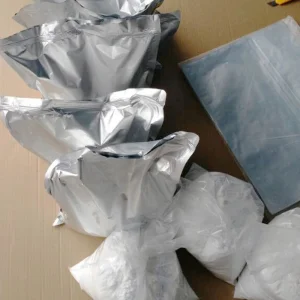
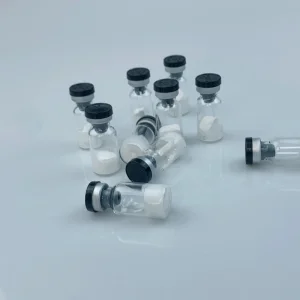
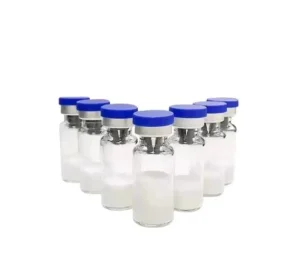
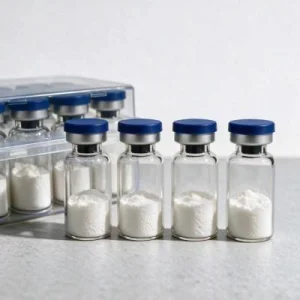
Explore our active manufacturing inventory. Every batch comes backed with multi-spectral confirmation, HPLC purity assays, and qualified export customs declarations for global pharmaceutical clients.
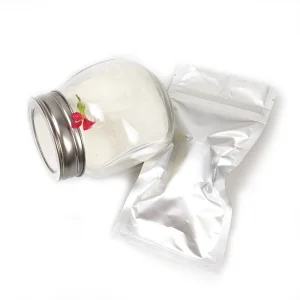

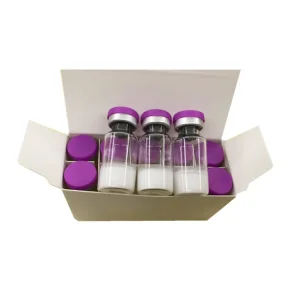
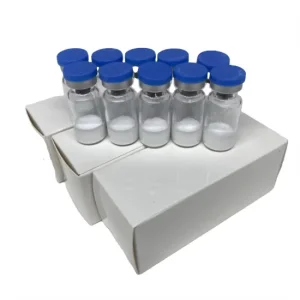
Mesterolone (chemically designated as 1α-methyl-5α-androstan-17β-ol-3-one; CAS Registry Number: 1424-00-6; Molecular Formula: C20H32O2; Molecular Weight: 304.47 g/mol) represents a distinctive synthetic oral dihydrotestosterone (DHT) derivative that has retained clinical and pharmacopeial relevance across more than five decades. Unlike conventional 17α-alkylated oral androgens, which introduce significant hepatotoxicity risks through biliary canalicular structural stress, Mesterolone incorporates a distinct 1α-methyl methylation. This stereochemical adaptation prevents rapid hepatic metabolic clearance via first-pass conjugation while concurrently retaining benign hepatic enzymatic markers (ALT, AST, and alkaline phosphatase profiles remain unperturbed during therapeutic regimens).
For industrial procurement directors, institutional compounding entities, and clinical formulation developers, the procurement of Mesterolone API requires acute attention to structural stereoisomerism. The bioactivity, target androgen receptor affinity, and exceptional non-aromatizable nature of the finished compound are directly determined by the stereospecific orientation of the 1-methyl carbon center. In standard non-optimized manufacturing syntheses, competitive epimerization often yields the undesirable 1β-epimer isomer, which diminishes thermodynamic receptor stabilization and complicates crystal lattice packing during downstream oral solid dosage (OSD) manufacturing. As an established direct-source chemical manufacturing entity, our synthesis protocols execute targeted asymmetric continuous catalytic hydrogenations that secure stereoisomeric enantiomeric excess (>99.5% 1α-configuration), preventing costly purification recalls and ensuring absolute compliance with current United States Pharmacopeia (USP) and European Pharmacopoeia (Ph. Eur.) monographs.
Every commercial batch released from our facility undergoes comprehensive chromatographic, spectroscopic, and elemental profiling. The following table represents the critical quality attributes (CQAs) verified on the Certificate of Analysis (COA) prior to commercial container sealing:
| Test Parameter | Standard Pharmacopeial Method | Acceptance Criteria | Batch Factory Result | Evaluation |
|---|---|---|---|---|
| Chemical Identification | FT-IR Spectroscopy / 1H-NMR Confirmation | Concordant with USP Mesterolone Reference Standard | Conforms strictly to Reference Spectrum | PASS |
| Assay Purity (Dried Basis) | High-Performance Liquid Chromatography (HPLC-UV) | 97.0% – 103.0% (w/w) | 99.45% – 99.78% | PASS |
| Specific Optical Rotation [α]D20 | Polarimetry (c = 1 in CHCl3 at 589 nm) | +16.0° to +19.0° | +17.8° | PASS |
| Melting Range | Capillary Melting Point Determination | 203.0 °C – 208.0 °C | 205.5 °C – 207.0 °C (Narrow band) | PASS |
| Related Substances (Individual) | Gradient Reversed-Phase HPLC | ≤ 0.5% individual specified impurity | < 0.08% (Max single impurity) | PASS |
| Total Impurities | HPLC Peak Area Normalization | ≤ 1.0% | < 0.22% | PASS |
| Loss on Drying (LOD) | Thermogravimetric Analysis (105 °C, constant weight) | ≤ 0.50% (w/w) | 0.14% | PASS |
| Heavy Metal Residues | Inductively Coupled Plasma Mass Spec (ICP-MS) | ≤ 10.0 ppm (Pb, As, Cd, Hg within ICH Q3D) | < 1.5 ppm cumulative | PASS |
| Residual Solvents | Headspace Gas Chromatography (HS-GC-FID) | Meets ICH Q3C Guidelines (Methanol, Acetone) | Non-detectable / Well below Class 2 limits | PASS |
The global Active Pharmaceutical Ingredient (API) supply ecosystem has transitioned toward vertically integrated chemical industrial clusters. Our Hebei-based production infrastructure provides institutional buyers with irreproducible supply chain resilience.
The competitive vulnerability of Western and non-integrated fine chemical plants lies in their reliance on external intermediates, notably 4-androstene-3,17-dione (4-AD) and phytosterol biological fermentation outputs. Our facilities maintain direct equity and continuous pipeline agreements with major steroidal fermentation complexes. By deriving our proprietary intermediates straight from natural sterols via standardized mycobacterial fermentation, we insulate procurement contracts from global intermediate shortages, guaranteeing raw material cost stability and uninterrupted multi-metric ton annual output capacity.
Operating within state-of-the-art chemical development zones provides automated access to centralized steam, high-throughput waste solvent distillation towers, and closed-loop hazardous reagent neutralization systems. This micro-ecosystem allows us to execute 1-methylation Grignard additions and specialized stereocatalysis at a fraction of Western batch operating costs. We pass these operational efficiencies directly to wholesale distributors, offering factory-direct prices that preserve maximum operating margins for downstream contract manufacturing organizations (CMOs).
Regulatory tightening across international environmental frameworks has shut down legacy batch-reaction chemical factories. Our modern manufacturing lines deploy advanced continuous-flow microchannel reactors for key organometallic synthesis steps. This eliminates thermal hotspot formation, limits runaway reaction hazards, accelerates kinetic heat dissipation, and drastically curtails volatile organic compound (VOC) emissions. Buyers receive completely green, cGMP-aligned API batches without regulatory-driven production shutdowns.
A rigorous review of structural biology, pharmacodynamics, and evolving clinical-grade compounding patterns governing Mesterolone worldwide.
A preeminent pharmacological characteristic of Mesterolone is its remarkably high relative binding affinity for human sex hormone-binding globulin (SHBG), exceeding that of endogenous DHT and testosterone by several-fold. In clinical endocrinology, excessive circulating SHBG sequesters endogenous testosterone into inactive bounded complexes, attenuating target tissue androgen signaling. When formulated into targeted therapies, Mesterolone displaces circulating bioavailable androgens from plasma proteins without downregulating hypothalamic-pituitary-gonadal (HPG) feedback loops, making it an indispensable focus of ongoing hypogonadism and age-related hormonal research.
Because Mesterolone is a saturated 5α-reduced steroid lacking a double bond between C4 and C5, it serves as an impossible catalytic substrate for the cytochrome P450 aromatase enzyme (CYP19A1). Consequently, its administration yields zero downstream metabolic conversion to estradiol or related estrogens. In advanced preclinical oncological oncology studies and anti-gynecomastia therapeutic compounding models, this distinct inability to induce fluid retention or tissue aromatization designates Mesterolone API as a premier pure androgen standard.
Historical clinical literature demonstrates that therapeutic dosages of Mesterolone can support peripheral and central androgenic tone without exerting severe gonadotropin suppression (FSH and LH preservation). Unlike standard testosterone esters, which trigger negative gonadal axis shut-off, controlled Mesterolone applications preserve seminiferous tubule cellular maturation. It is widely sourced by licensed compounding pharmacies across Latin America, Asia-Pacific, and European research institutions formulating therapies for male oligospermia, physical asthenia, and sub-clinical androgen deficits.
We do not merely supply bulk crystalline powders; we deliver integrated engineering, physical-solid optimization, and strict international compliance solutions.
Mesterolone exhibits low intrinsic aqueous solubility. To guarantee uniform dissolution rates and maximize pharmacokinetic bioavailability in solid tablet formulations, our cleanroom suites offer cryogenic air-jet micronization services. We calibrate particle distributions to tight customer specifications (e.g., D50 < 5 μm, D90 < 15 μm), eliminating tablet blend segregations and punch capping during ultra-high-speed rotary tableting.
Enterprise drug manufacturing partners require comprehensive documentation for national health authority filings. We provide open-part Drug Master Files (DMFs), Common Technical Document (CTD) format data modules, nitrosamine risk assessments, residual elemental impurity calculations conforming to ICH Q3D, and stability data reports generated under ICH climatic zone II/IVb conditions.
Navigating cross-border customs declarations for active hormonal intermediates demands dedicated logistics protocols. Our export division operates audited customs-clearance pathways across North America, the European Union, Southeast Asia, and South America. We provide inert-gas-purged, multi-barrier packaging (vacuum sealed aluminum foil bags within UN-approved fiber drums) with full temperature logging indicators.
For regional healthcare brands seeking finished pharmaceutical presentations rather than raw powders, our contract manufacturing facilities produce finished blister-packed Mesterolone tablets (standard 25 mg or 50 mg strengths). We perform full formulation validation, excipient-binder optimization, dissolution profiling, and custom serialization labeling aligned with anti-counterfeiting tracking frameworks.
Corporate procurement officers must apply objective, risk-mitigated qualification frameworks when approving chemical and API vendors. In an industry where unauthorized repackaging brokers frequently masquerade as primary synthesis laboratories, executing technical due diligence is vital to protect brand reputation, clinical efficacy, and regulatory compliance.
Prior to issuing purchase agreements for Mesterolone, internal QA teams should audit suppliers against three mandatory technical baselines:
Clear, direct answers regarding assay thresholds, order quantities, documentation, and international shipping protocols.
Our standard production lots maintain an HPLC assay purity of ≥99.0%, with our high-grade pharmaceutical batches consistently testing between 99.4% and 99.8% on a dried basis. Batch-to-batch variation is strictly controlled via automated continuous-flow synthesis parameters, ensuring total unknown impurities consistently remain below 0.10%.
Yes. Prior to invoicing or freight dispatch, we furnish customers with a full analytical batch dossier. This includes the lot-specific Certificate of Analysis (COA), raw HPLC integration chromatograms, Fourier-Transform Infrared (FT-IR) confirmation, and Loss on Drying (LOD) verification. Third-party testing data (e.g., from SGS or Intertek) can be arranged upon commercial agreement.
To assist R&D centers and compounding labs during initial formulation testing, our pilot MOQ begins at 100 grams. For bulk commercial purchasers and industrial contract manufacturing partners, standard palletized drum deliveries start at 10 kg, with supply agreements scaling up to multi-hundred kilogram lots per month.
Material is hermetically packed in double-layer pharmaceutical-grade low-density polyethylene (LDPE) food/pharma contact inner bags, purged with pharmaceutical-grade nitrogen gas to prevent oxidative degradation, and sealed within light-blocking, heavy-gauge aluminum foil pouches. Bulk quantities are housed inside robust, tamper-evident fiberboard drums.
Yes. We provide bespoke mechanical milling and fluid-energy air-jet micronization services. Clients can specify target D10, D50, and D90 parameters. A Laser Diffraction Particle Size Analysis report (Malvern Mastersizer) is provided with each micronized batch to verify compliant particle distribution curves.
Stock orders are typically packed and dispatched within 24 to 48 hours following payment confirmation. Depending on destination jurisdiction and freight class (Air Express vs. Dedicated Chemical Freight), global transit times typically range from 5 to 10 business days. We provide end-to-end tracking alongside export declarations and MSDS dossiers.
Complete your supply chain portfolio with our fully validated line of metabolic peptides, research APIs, and fine biochemical reference materials.