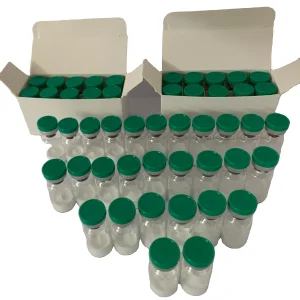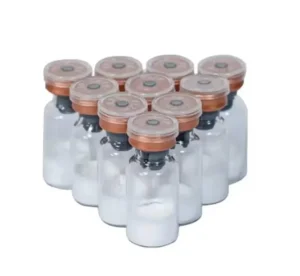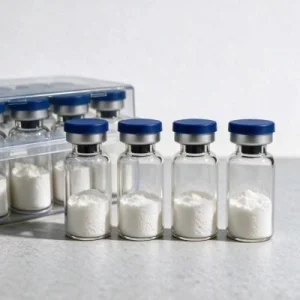
Verified batch-tested synthesis modules accessible directly from certified manufacturing facilities.
A technical guide for procurement heads, analytical chemists, and institutional purchasers navigating synthetic steroid APIs.
Metribolone (methyltrienolone; 17α-methyl-17β-hydroxyestra-4,9,11-trien-3-one, CAS 965-93-5) holds extreme affinity for the androgen receptor (AR). Enterprise procurement requires audited chemical synthesis facilities capable of managing high-potency active pharmaceutical ingredients (HPAPI). Institutional buyers face stringent quality barriers, requiring factories with closed-loop multi-step synthetic facilities to limit cross-contamination.
Factory-grade Metribolone synthesis revolves around total steroidal core functionalization starting from 19-nor intermediates. Key synthetic vulnerabilities include unwanted stereoisomers at C17 and dehydrogenation variances across the conjugated trienone chromophore system. High-performance factories utilize preparative reverse-phase HPLC and fractional recrystallization to eliminate epimers and achieve pharmaceutical-grade assays.
Because Metribolone exhibits unprecedented anabolic and androgenic potencies alongside pronounced hepatic stability, supply chains demand rigorous chain of custody documentation. Compliant factories enforce strict End-User Declarations (EUD), providing full Material Safety Data Sheets (MSDS) with validated toxicological exposure levels, occupational exposure bands (OEB 5), and international customs declaration harmonizations.
Enterprise procurement checklists must mandate granular analytical metrics to verify true factory manufacturing integrity.
| Analytical Parameter | Methodology / Instrumentation | Release Standard (Ph. Eur. / USP Reference) | Factory Significance |
|---|---|---|---|
| Identity Confirmation | 1H/13C-NMR & High-Res MS (ESI-TOF) | Conforms perfectly to standard spectrum; M+H+ 285.40 ± 0.05 | Prevents raw-material structural ambiguity and regioisomer contamination. |
| Chromatographic Assay | RP-HPLC (C18 Column, Isocratic/Gradient) | ≥99.0% area/area at λ = 340 nm | Verifies absence of unconjugated synthesis intermediates and oxidized residues. |
| Residual Solvents | Headspace Gas Chromatography (GC-HS) | Methanol < 3000 ppm, DCM < 600 ppm, DMF < 880 ppm | Eliminates neurotoxic Class 1 & Class 2 solvent carryover from production runs. |
| Loss on Drying (LOD) | Thermogravimetric Analysis / Karl Fischer | Total moisture & volatile matter ≤ 0.50% | Protects bulk powder from solid-state crystalline degradation during global transit. |
| Heavy Metal Limits | Inductively Coupled Plasma Mass Spectrometry (ICP-MS) | Pb, As, Cd, Hg < 0.1 ppm each; Total < 10 ppm | Confirms complete purging of organometallic catalysts utilized in steroid synthesis. |
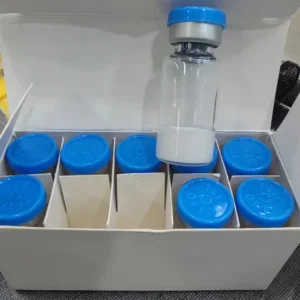
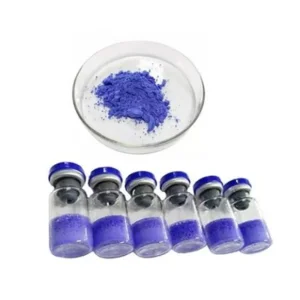
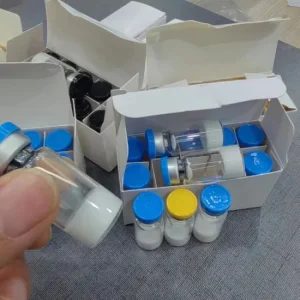
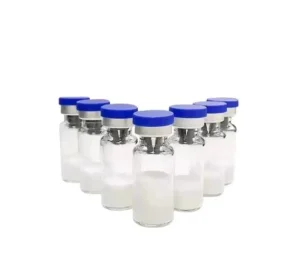
Strategic deployment of raw steroids, peptides, and customized bulk packaging across compliant bio-industrial hubs.
Every synthetic cycle begins with third-party analytical audits of cyclopentanoperhydrophenanthrene sterol scaffolds, ensuring no degradation or off-target stereocenter inversion occurs during manufacturing.
Batch processing within negative-pressure containment rooms, guaranteeing minimal human exposure and strictly controlling atmospheric cross-particulates under ISO Class 5 laminar airflow zones.
Finished materials are purged with high-purity nitrogen, heat-sealed into multi-layer fluorinated aluminum pouches or HDPE drums, and equipped with desiccant and irreversible oxygen-indicator strips.
Complete export declarations matching International Harmonized Tariff codes (HS Code 29372900), supported by certified proforma documentation, third-party laboratory seals, and complete chain-of-custody logging.
Direct technical and operational answers for pharmaceutical import specialists and chemical research facilities.
Metribolone (methyltrienolone) possesses a unique chemical structure featuring a triene core conjugated across carbons 4, 9, and 11, combined with a 17α-methyl substitution. This confers extraordinary binding affinity for androgen receptors (exceeding methyltestosterone significantly) with resistance to aromatization and 5α-reduction. Its handling requires enhanced HPAPI facility containment.
Every commercial production batch is accompanied by an authenticated Certificate of Analysis (COA) specifying CAS number, batch tracking code, raw data integration files from high-performance liquid chromatography (HPLC), proton NMR spectra, residual solvent headspace GC, and heavy-metal ICP-MS clearance logs.
Metribolone is sensitive to photolytic and oxidative aromatization of the trienone system. Factory exports are packed in double-sealed polyethylene inner bags under vacuum/nitrogen blanket, enclosed in heat-sealed composite aluminum foil bags with active desiccants. Shipments maintain temperature-controlled dry conditions.
Yes. We strongly support and facilitate independent verification by qualified laboratories (e.g., via Janoshik or ISO/IEC 17025 accredited analytical facilities). Retention samples from every batch are archived in dedicated climate chambers for up to 36 months to ensure comprehensive traceability.
Complete your institution's requisition with factory-direct peptide vials, reference blends, and active powders.