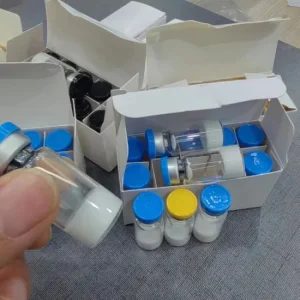
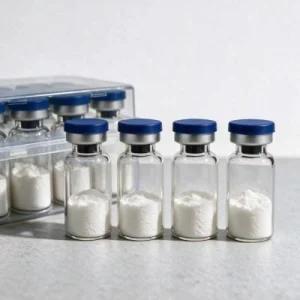
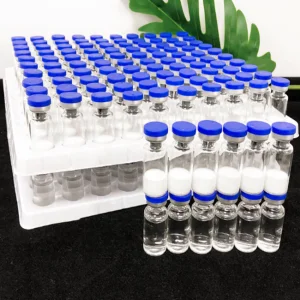
Explore certified batch-tested active compounds, synthesis precursors, and peptide standards validated through high-resolution analytical platforms.
A rigorous industrial perspective on the stereospecific esterification kinetics, impurity isolation, and thermodynamic stability characterizing pharmaceutical-grade Testosterone Isocaproate (CAS 15262-86-9).
Testosterone Isocaproate features a branched six-carbon ester chain (4-methylpentanoate) conjugated to the 17β-hydroxyl group of the cyclopentanoperhydrophenanthrene nucleus. This mid-length branched architecture offers a distinctive lipophilicity profile with a theoretical partition coefficient (logP) balanced precisely between short-acting propionate and extended enanthate/cypionate structures.
Our manufacturing route incorporates direct catalytic esterification using high-purity isocaproic anhydride or isocaproyl chloride under anhydrous aprotic conditions. Modern synthesis utilizes continuous flow micro-reactors to strictly moderate stoichiometric ratios, reducing localized exotherms and suppressing the formation of 3-enol ester artifacts and related di-ester impurities.
Every commercial batch conforms to rigorous pharmaceutical release parameters. High-Performance Liquid Chromatography (HPLC) coupled with single-quadrupole mass spectrometry guarantees baseline separation from free unesterified testosterone, isocaproic acid residuals, and oxidation degradation analogs, certifying absolute material traceability.
Unlocking extended pharmacokinetics and consistent bioavailability for specialized clinical therapeutics and advanced veterinary endocrinology.
Within compound formulation engineering (such as Sustanon matrix architectures), Testosterone Isocaproate serves as the critical transition vector. It fills the metabolic elimination gap between fast-clearing propionate and extended decanoate/cypionate esters, flattening plasma concentration volatility and avoiding disruptive physiological troughs.
Its branched aliphatic profile enhances dissolution profiles in carrier lipid vehicles (including Miglyol 812, USP sesame oil, and ethyl oleate). This enables formulators to maintain standard concentrations (60mg/mL to 100mg/mL) with diminished requirements for irritating co-solvents like benzyl benzoate, thereby upgrading patient injection tolerance.
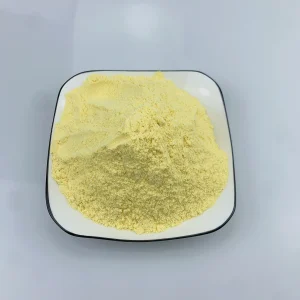
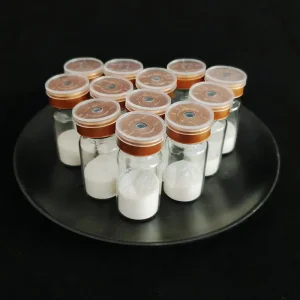
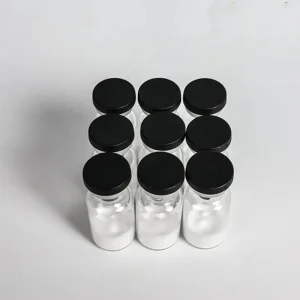
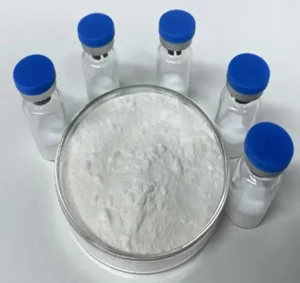
Engineered crystalline polymorphism controls melting behavior (ambient melting point: 20°C - 24°C depending on ambient crystallization parameters). Our clean crystallization protocols ensure minimal mother-liquor occlusion, yielding stable, flowable, white crystalline powders that resist premature oxidation and auto-ester hydrolysis during bulk container shipping.
Combining automated synthesis systems with closed-loop environmental controls to supply global markets with uninterrupted commercial API raw powders.
Fully automated Distributed Control Systems (DCS) continuously monitor pressure, temperature, and acyl reagent feeding rates during synthesis. This precision eliminates human variable error and achieves consistent multi-ton lot uniformity.
Operating under closed-loop circular ecological directives, our factory infrastructure recaptures and repurposes over 94% of operational organic extraction phases, dramatically lowering ecological footprints while insulating clients from regulatory supply shutdowns.
Direct vertical integration with primary sterol raw material fermenters (androstenedione and phytosterols) safeguards our manufacturing schedule against intermediate spot-market price spikes or precursor stock deficits.
Addressing international cross-border clearance challenges, rigorous quality documentation, and analytical audit compliance across global customs corridors.
Every consignor delivery is accompanied by comprehensive documentation: comprehensive Certificate of Analysis (COA), HPLC chromatograms, MS identity confirmation, and multi-solvent residual analysis ensuring effortless QA sign-off.
Leveraging specialized freight routes with pre-cleared documentation (declaration codes, correct HS classification 2937220000, and verified commercial invoices) to avoid administrative bottlenecks and port delays.
Pharmaceutical-grade multi-layer aluminum heat-sealed pouches enclosed in puncture-resistant fiber drums or covert reinforced cartons, vacuum-flushed with high-purity argon to safeguard against moisture and oxidative aging.
Flexible ordering schedules adapted for laboratory trial batches (100g, 500g, 1kg) directly scaling into pilot-run batches (10kg - 50kg) and ongoing commercial manufacturing supply contracts (100kg+).
Strategic manufacturing initiatives: continuous crystallizers, biocatalytic transesterification, and digital ledger quality assurance.
Transitioning from chemical acyl halides toward engineered lipase-mediated enzymatic synthesis. This pathway provides stereoselective ester bonding at the C17 position under neutral temperatures, eliminating acid degradation side-products completely.
Upgrading primary plant production lines with multi-stage microchannel reactors, slashing reaction hold times from 8 hours down to 45 seconds while ensuring exceptional heat transfer and unexcelled batch repeatability.
Implementing immutable digital batch IDs. By scanning secure QR vectors integrated directly on master cartons, lab teams immediately inspect unalterable HPLC graphs, water titration metrics, and primary synthesis timestamps.
Straight answers for procurement leads, compounding specialists, and regulatory review officers.
Testosterone Isocaproate has a branched 6-carbon aliphatic chain, whereas Enanthate is an unbranched 7-carbon chain and Cypionate is an 8-carbon cyclopentyl-substituted structure. The branching on Isocaproate creates distinct steric hindrance around the ester carbonyl, altering its cleavage kinetics relative to straight-chain esters and generating an intermediate half-life profile in intramuscular depot formulations.
Pure Testosterone Isocaproate features an ambient melting point between 20°C and 24°C. Depending on crystallization conditions and ambient room temperature, it may transition between a white crystalline solid and a transparent viscous oil. This behavior is natural for this ester and does not indicate batch degradation; purity must always be confirmed through HPLC assay.
Every commercial production batch undergoes release testing with calibrated High-Performance Liquid Chromatography (HPLC) to verify an assay result of 98.0%–102.0%. Residual solvents are controlled via Headspace Gas Chromatography (HS-GC) under ICH Q3C limits, and Inductively Coupled Plasma Mass Spectrometry (ICP-MS) verifies heavy metals remain below 10 ppm.
The material should be stored protected from light in airtight containers under dry conditions at 2°C to 8°C. For prolonged bulk storage, controlled room temperatures below 20°C in double-sealed polyethylene inner liners inside aluminum barrier containers prevent hydrolytic cleavage and oxidative discoloration.
Browse our verified research raw materials, high-demand peptides, and reference APIs manufactured under rigorous laboratory QC standards.