Direct supply line integration featuring full lot traceability, HPLC purity profiles, and third-party laboratory verification.
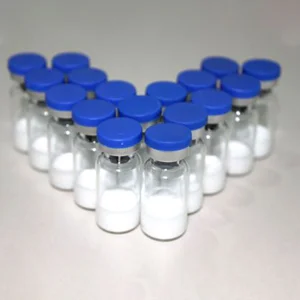

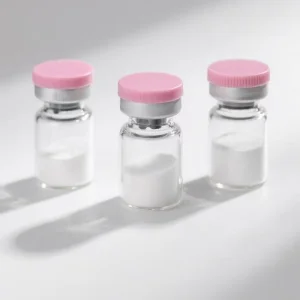

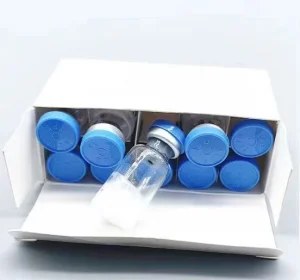
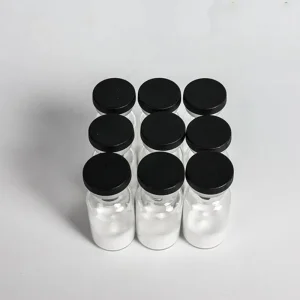
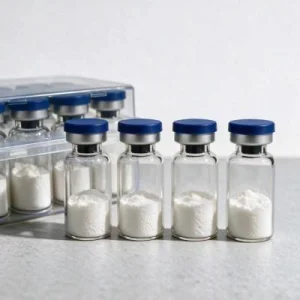
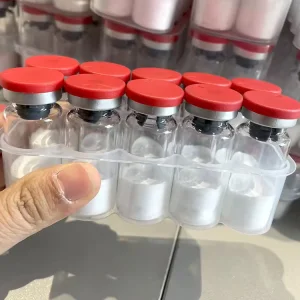
Comprehensive physical-chemical parameters and rigorous analytical validation frameworks designed for process development chemists and compliance auditors.
| Evaluation Parameter | Technical Criterion / Standard | Analytical Methodology |
|---|---|---|
| CAS Registry Number | 22374-89-6 | CAS Inventory Registry Validation |
| Chemical Name / Nomenclature | N-Ethyl-3-phenylbicyclo[2.2.1]heptan-2-amine hydrochloride | IUPAC Standard Documentation |
| Molecular Formula & Mass | C15H21N · HCl | 251.79 g/mol | HRMS (High-Resolution Mass Spectrometry) |
| Target Assay Purity | ≥ 98.5% to ≥ 99.5% (Anhydrous Basis) | Reverse-Phase HPLC (UV-VIS Detection @ 210/254nm) |
| Melting Point / Thermal Profile | 176°C - 181°C (Decomposition Profile) | Differential Scanning Calorimetry (DSC) |
| Residual Organic Solvents | Methanol < 3000ppm, Ethanol < 5000ppm, Toluene < 890ppm | Headspace Gas Chromatography (GC-MS / FID) |
| Heavy Metals Content | ≤ 10 ppm total (Pb, Cd, As, Hg compliant) | ICP-MS (Inductively Coupled Plasma Mass Spectrometry) |
Navigating the complex global supply chain of bicyclic amine derivatives and critical pharmaceutical building blocks through China's advanced manufacturing clusters.
Global procurement teams face escalating hurdles regarding raw chemical shortages and supply vulnerability. As a primary manufacturer in China, we control the fundamental upstream precursors—from norbornene frameworks to selective alkylation pathways—ensuring unhindered, year-round volume scalability for international CDMOs.
Utilizing microchannel continuous flow reaction technologies and optimized enantioselective reduction methods reduces hazardous byproduct waste and production cycles. This engineering precision provides significant unit-cost efficiency without degrading purity tolerances.
Secondary chemical broker markets are frequently undermined by substandard batches containing unaccounted impurities. We combat this through our dual-testing paradigm, issuing authenticated HPLC and 1H-NMR spectrum validation linked explicitly to every container seal.
Ensuring frictionless international trade through end-to-end regulatory dossiers, tailored documentation, and dedicated customs clearance pathways.
Every dispatch of CAS 22374-89-6 is supplemented by comprehensive analytical packages, including 16-section GHS-compliant Safety Data Sheets (SDS), full Certificates of Analysis (COA), IR/NMR spectrum verification, and residual elemental impurity profiles aligned with ICH Q3D standards.
Our regulatory affairs division supports global clientele in cross-border declarations, assisting with EU REACH compliance notifications, TSCA compliance declarations in North America, and rigorous HS Code tariff optimizations (Chapter 29 organic chemistry classifications).
To prevent hygroscopic degradation or molecular breakdown during international transit, materials are vacuum-sealed under dry nitrogen purging within multi-layer aluminum foil barrier pouches, double-lined inside UN-certified fiber drums with temperature data-logging integrations.
Exploring the functional utility of norbornane-derived frameworks across contemporary synthetic and bio-organic chemistry domains.
Serves as a rigid structural scaffold for monoamine neurotransmitter transporter modulation studies, receptor-binding assays, and pharmaceutical lead optimization.
The rigid bicyclo[2.2.1]heptane backbone functions as an effective chiral auxiliary in stereoselective organic syntheses, facilitating asymmetric alkylation and ligand design.
Supplied to institutional laboratories and analytical testing houses as an authenticated reference material for GC-MS, LC-MS/MS validation, and toxicology libraries.
Explored in specialized material sciences where sterically hindered tertiary or secondary amine architectures serve as photostabilizers or custom monomer modifiers.
Transforming fine chemical synthesis through automated biocatalysis, environmental lifecycle efficiency, and micro-reaction scaling.
Transitioning standard batch hydrogenation processes to fully automated plug-flow reactors. This elevates thermal transfer control, minimizes reaction side-chains, and ensures identical lot-to-lot purity profiles exceeding 99.5% with reduced carbon intensity.
Phasing out conventional chlorinated reaction mediums in favor of bio-based 2-Methyltetrahydrofuran (2-MeTHF) and supercritical CO2 extraction methods, reducing environmental E-factor indices and aligning with modern ESG mandates.
Implementing real-time digital COA verification linked directly to analytical machine telemetry. International buyers will be able to query cryptographic hashes confirming the raw spectral data of their specific batch directly from our quality database.
Clear, direct answers regarding minimum order quantities, regulatory compliance, quality verification, and global logistics execution.
CAS 22374-89-6 designates N-Ethyl-3-phenylbicyclo[2.2.1]heptan-2-amine hydrochloride (fencamfamine hydrochloride intermediate/salt form). As a specialty chemical manufacturer based in China, we synthesize this compound strictly for qualified laboratory analysis, research applications, and controlled chemical synthesis in accordance with destination country regulatory parameters.
Every lot is delivered with a complete Certificate of Analysis (COA) containing exact HPLC purity percentages, High-Resolution Mass Spectrometry (HRMS) identification, 1H/13C-NMR data, water content analysis (Karl Fischer titration), and residual solvent gas chromatography results.
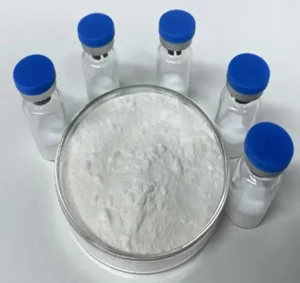
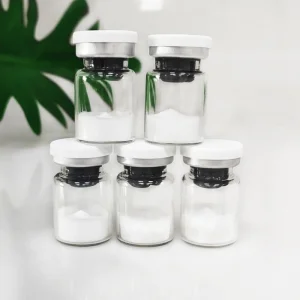
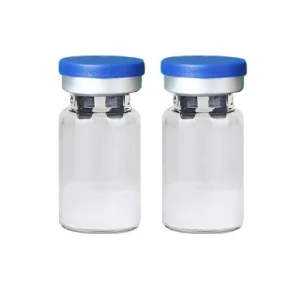
Yes. We support custom packaging options starting from gram-scale amber glass vials (1g, 5g, 25g, 100g) up to multi-kilogram quantities packed inside multi-layered fluorinated polyethylene bottles, aluminum foil vacuum barriers, and UN-rated drums.
In-stock catalog specifications ship within 24 to 48 hours following proforma confirmation. Custom multi-kilogram or pilot synthesis campaigns typically operate on a 2 to 4-week delivery timeline depending on target chiral enantiomeric specifications.
Absolutely. We routinely collaborate with international third-party analytical laboratories (including SGS, Eurofins, and qualified university testing facilities) to facilitate independent verification before contract sign-off.
High-demand manufacturing outputs from our Shijiazhuang and Hebei synthesis workshops, packaged under cGMP-compliant protocols.