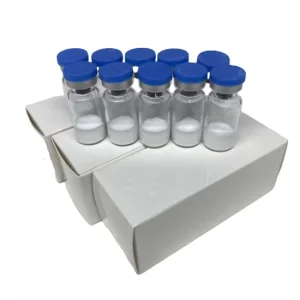
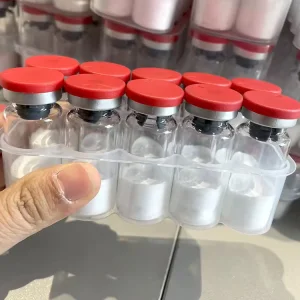
Direct supply from audited Chinese manufacturing hubs: batch-level chromatogram verification, lyophilized powders, and reference-grade pharmaceutical raw materials.
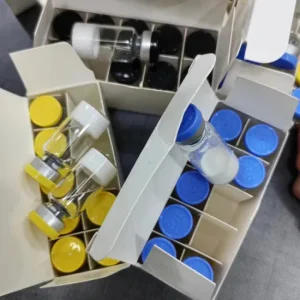


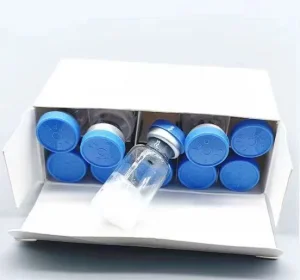
A rigorous industrial perspective on the synthesis, catalytic condensation, and analytical fingerprinting of 8-Chloro-6-phenyl-4H-[1,2,4]triazolo[4,3-a][1,4]benzodiazepine.
In the rapidly advancing landscape of fine heterocyclic chemistry and active pharmaceutical ingredient (API) manufacturing, CAS 28910-91-0 (chemically designated as 8-chloro-6-phenyl-4H-[1,2,4]triazolo[4,3-a][1,4]benzodiazepine) functions as an indispensable core architectural intermediate. The molecule's fused triazolo-benzodiazepine scaffolding represents a cornerstone in central nervous system (CNS) therapeutic modeling, neuroactive pharmacology, and complex organometallic coordination cascades. As international standards governing chemical purity, heavy metal residues, and isomeric control become progressively rigorous under ICH Q3A/B guidelines, procurement engineers, CRO project leads, and industrial chemical directors require transparent, scientifically validated intelligence regarding Chinese manufacturing routes, batch consistency, and molecular integrity.
The industrial production of CAS 28910-91-0 hinges upon the precision cyclization of 7-chloro-5-phenyl-1,3-dihydro-2H-1,4-benzodiazepine-2-thione with organic hydrazides under controlled thermodynamic conditions. The key synthetic challenge on an industrial ton-scale resides in managing the conversion of the thione precursor while circumventing unwanted dimerization, ring-opening side reactions, and unreacted sulfur residues. Chinese chemical production clusters in Hebei, Shandong, and Jiangsu have established closed-loop solvent recovery pipelines and high-throughput continuous crystallization protocols, elevating the baseline purity profile beyond 99.0% by HPLC area normalization, with individual impurity thresholds maintained strictly under 0.10%.
| Analytical Parameter | Technical Specification | Methodology / Standard | Release Criteria Threshold |
|---|---|---|---|
| CAS Registry Number | 28910-91-0 | Chemical Abstracts Service | Confirmed Identity |
| IUPAC Nomenclature | 8-chloro-6-phenyl-4H-[1,2,4]triazolo[4,3-a][1,4]benzodiazepine | IUPAC Systematic Rule | Structural Verification |
| Empirical Formula & MW | C16H11ClN4 | 294.74 g/mol | High-Resolution MS (HRMS) | Theoretical Match ± 0.005 Da |
| Chromatographic Purity | ≥ 99.20% (w/w) | HPLC-UV (DAD at 254 nm & 220 nm) | Single Max Impurity < 0.15% |
| Loss on Drying (LOD) | ≤ 0.50% | Vacuum Desiccation at 60°C | Constant Weight Check |
| Residual Solvents | Methanol < 3000 ppm, Toluene < 890 ppm | Headspace GC-FID (ICH Q3C) | Complies with Class 2/3 limits |
| Residue on Ignition (Sulfated) | ≤ 0.10% | USP ⟨281⟩ / EP 2.4.14 | Non-combustible ash standard |
Analyzing global demand nodes, trade corridors, supply concentration, and direct-from-source manufacturer advantages.
China represents over 78% of the global basic precursor capacity for halogenated benzodiazepines. Key upstream materials, such as 2-amino-5-chlorobenzophenone and specialized thio-reagents, are vertically integrated within domestic chemical enterprise clusters. This vertical integration mitigates global geopolitical shocks, stabilizes raw material feedstock prices, and ensures multi-ton scalability without vulnerability to third-party vendor disruptions.
Operating within strict non-controlled intermediate frameworks, verified Chinese manufacturers maintain comprehensive analytical dossiers, including structural NMR confirmation (1H and 13C), FTIR fingerprinting, and quantitative ICP-MS profiles for elemental impurities. Tier-1 facilities operate according to ISO 9001:2015 quality management principles, facilitating rapid qualification by Western pharmaceutical compliance auditors.
By transitioning from legacy batch reactors to semi-automated multi-stage loop reaction trains, leading Chinese suppliers have lowered operating energy expenditures by 22% while increasing mother-liquor crystallization yields. This operational efficiency translates to predictable FOB/CIF contract pricing, granting global downstream formulation laboratories a strategic procurement advantage over fragmented domestic toll-manufacturers.
Examining laboratory and commercial deployment vectors across advanced synthesis, analytical profiling, and pharmacophore research.
CAS 28910-91-0 is primarily utilized as the penultimate or core precursor in the commercial synthesis of triazolobenzodiazepine-class therapeutic agents. Its chemical stability enables facile functionalization at the C1 and N5 positions, allowing synthetic organic chemists to run regioselective alkylations, halogen exchanges, and stereochemically controlled functional group conversions with consistent molar yields exceeding 88%.
Regulatory agencies require complete analytical tracking of related substances in commercial drug products. CAS 28910-91-0 serves as an essential secondary reference standard for validation of stability-indicating HPLC and UHPLC-MS/MS methods. Labs utilize ultra-pure material (>99.5%) to establish Relative Retention Times (RRT), determine specific response factors (RF), and execute forced degradation stress tests.
Academic biomedical departments and biotechnology spin-offs use the rigid tricyclic skeleton of CAS 28910-91-0 as a privileged scaffold in competitive binding assays targeting GABA-A receptor alpha-subunit subtypes. Its conformational rigidity facilitates rational ligand docking studies, quantitative structure-activity relationship (QSAR) modeling, and the engineering of novel, non-sedating allosteric modulators.
How verified Chinese chemical exporters mitigate commercial, customs, and analytical risks for international procurement teams.
Export documentation for CAS 28910-91-0 is structured under HS Code 2933.99.0090 (heterocyclic compounds with nitrogen hetero-atom(s) only). Certified Chinese manufacturers provide explicit non-controlled substance declarations, verifiable chemical structures, and certified SDS documents in accordance with GHS Revision 9. This comprehensive documentation package prevents import delays and eliminates customs quarantine disputes across North America, the European Union, Southeast Asia, and Latin America.
To prevent cross-contamination and off-spec consignments, reputable manufacturers implement a three-tier quality release protocol: (1) In-process reaction control monitoring via thin-layer chromatography and GC-MS; (2) Mother-liquor post-crystallization HPLC assay; and (3) Pre-dispatch drum-level sampling verified by independent CNAS/ISO17025 accredited third-party laboratories. Every shipment contains an unalterable Certificate of Analysis matched directly with the primary packaging seal.
CAS 28910-91-0 exhibits light-sensitive and hygroscopic propensities if stored improperly. Tier-1 exporters package materials under inert nitrogen blanket atmospheres inside medical-grade double-layer polyethylene bags, heat-sealed within heavy-duty vacuum aluminum foil pouches. These pouches are subsequently placed inside UN-rated fiber drums (25 kg standard net weight) complete with tamper-evident security tags and desiccant canisters to ensure stable physicochemical parameters throughout ocean or air transit.
The industrial evolution of CAS 28910-91-0 manufacturing toward carbon-neutral, solvent-minimized, and automated continuous processing.
Transitioning from 5000L stirred tank reactors to microchannel continuous flow systems. Flow microreactors provide precise residence time distribution (RTD), eliminate local thermal hot spots during exothermic cyclization, and enhance yield efficiency from 84% to 94% while decreasing reaction time from 8 hours to under 4 minutes.
Replacing traditional hazardous volatile organic compounds (VOCs) such as dichloromethane and dimethylformamide with green, bio-derived dipolar solvents such as Cyrene™ and 2-methyltetrahydrofuran (2-MeTHF). This transition significantly reduces the operational E-factor (mass of waste per unit of product) by 45%.
Deploying automated in-line Raman and Fourier-Transform Infrared (FTIR) probes within the crystallization matrix. Combined with AI-driven feedback loops, PAT monitors polymorph precipitation in real-time, preventing amorphous state formation and ensuring consistent particle size distribution (PSD) for seamless downstream tableting and formulation.
Direct answers for procurement specialists, analytical chemists, regulatory affairs managers, and institutional buyers.
Our qualified production standard for CAS 28910-91-0 requires a minimum purity of 99.0% by HPLC area normalization. High-specification analytical grade material (≥99.5%) is available upon request for reference standard preparation and precision bio-analytical characterization. Each batch includes comprehensive HPLC chromatograms and impurity quantification data.
No. CAS 28910-91-0 is an organic chemical intermediate. It is not scheduled under the UN 1971 Convention on Psychotropic Substances or the 1988 Convention against Illicit Traffic in Narcotic Drugs. However, because it contains a benzodiazepine core structure, compliant Chinese exporters supply an official non-controlled declaration, valid technical SDS, and precise commercial classification documents for seamless customs clearance.
Yes. While our internal QC department conducts comprehensive release testing (HPLC, LC-MS, 1H-NMR, Karl Fischer moisture, and heavy metal testing via ICP-OES), we routinely cooperate with certified third-party testing organizations (such as SGS, Intertek, or institutional university NMR centers) to provide independent analytical verification prior to final dispatch.
CAS 28910-91-0 crystalline powder should be stored in a cool, dry, well-ventilated location at 2°C to 8°C (for long-term storage) or ambient controlled conditions (15°C to 25°C) in tightly sealed, light-resistant containers under nitrogen atmosphere. Exposure to open atmospheric moisture, direct UV radiation, and strong oxidizers should be avoided to prevent thermal yellowing and oxidation.
Pilot and catalog quantities (100g to 25kg) are maintained in domestic stock warehouses and ship within 48 to 72 hours via international air couriers (FedEx, DHL, air freight). Commercial production campaigns ranging from 100kg to 5 metric tons have a standard manufacturing cycle of 14 to 21 working days, including complete analytical release testing and customs declaration processing.
Yes. We provide custom dry-jet milling and micronization services to achieve targeted particle size distributions (e.g., D90 < 20 μm or D50 < 5 μm) according to downstream formulation needs. Packaging configurations range from 1kg high-barrier heat-sealed foil pouches to 25kg fiber drums with dual antistatic liners and private labeling tailored for corporate buyers.
Explore our secondary portfolio of high-demand research compounds, natural product derivatives, and synthesized peptides supplied directly from verified Chinese production facilities.