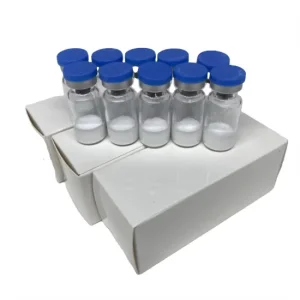
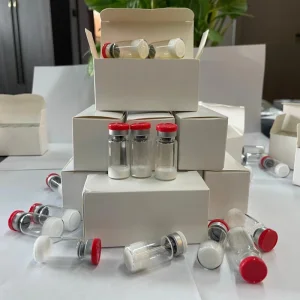
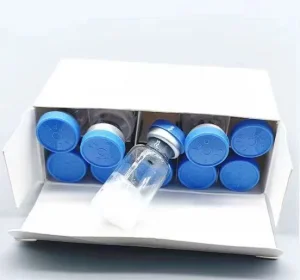
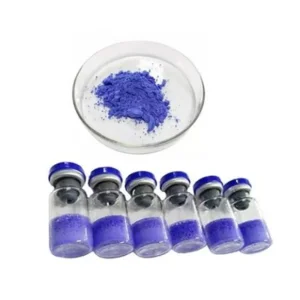
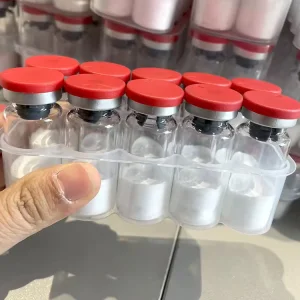
Immediate commercial allocations and laboratory-grade reference materials backed by HPLC, LC-MS, and complete batch documentation for international buyers.
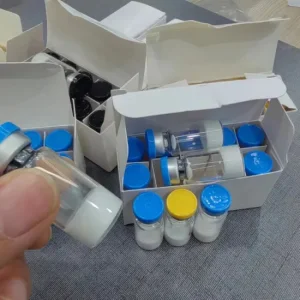
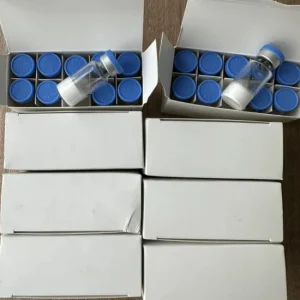
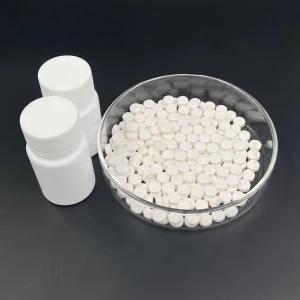

CAS 71368-80-4 represents Vardenafil (4-[2-ethoxy-5-(4-ethylpiperazin-1-yl)sulfonylphenyl]-9-methyl-7-propyl-3,5,6,8-tetrazabicyclo[4.3.0]nona-3,7,9-trien-2-one), a selective, potent competitive inhibitor of cyclic guanosine monophosphate (cGMP)-specific phosphodiesterase type 5 (PDE5). Below are the empirical physical-chemical constants validated by modern spectroscopic analyses.
| Analytical Parameter | Specification Criterion | Observed Analytical Method | Compliance Status |
|---|---|---|---|
| IUPAC Nomenclature | 2-[2-ethoxy-5-(4-ethylpiperazin-1-yl)sulfonylphenyl]-5-methyl-7-propyl-3H-imidazo[5,1-f][1,2,4]triazin-4-one | Structure Confirmation (1H-NMR, 13C-NMR) | Validated |
| Molecular Formula | C23H32N6O4S | High-Resolution HRMS / Elemental Analysis | Conforms |
| CAS Registry Number | 71368-80-4 (Free Base) / 224785-91-5 (Monohydrochloride Trihydrate) | Chemical Abstracts System Verification | Registered |
| Physical State & Appearance | Off-white to pale crystalline micro-powder, non-hygroscopic under RH <60% | Visual Inspection / Differential Scanning Calorimetry (DSC) | Conforms |
| Melting Point Range | 187.0°C to 191.5°C (Decomposition noted above 215°C) | Capillary Thermal Analysis / DSC Exotherm Peak | Pass |
| Solubility Characteristics | Sparingly soluble in water (0.11 mg/mL at 25°C); Soluble in ethanol, DCM, DMF, and 0.1M HCl | Thermodynamic Shake-Flask Method & UV-Vis Quantitation | Documented |
| Residual Solvents (ICH Q3C) | Ethanol < 5,000 ppm, Dichloromethane < 600 ppm, Triethylamine < 320 ppm | Headspace Gas Chromatography - Flame Ionization (HS-GC-FID) | Compliant |
| Heavy Metals & Catalyst Residue | Total heavy metals < 10 ppm; Palladium (Pd) < 2 ppm; Iron (Fe) < 5 ppm | Inductively Coupled Plasma Mass Spectrometry (ICP-MS) | Pass |
China's state-of-the-art chemical manufacturing infrastructure utilizes an optimized multi-step convergent approach to synthesize CAS 71368-80-4, mitigating mutagenic nitrosamine risks and controlling related heterocyclic side-products.
The process originates from the condensation of 2-ethoxybenzonitrile derivatives with hydrazine hydrate, forming the amidrazone precursor. Subsequent cyclization with butyryl chloride yields the 2-(2-ethoxyphenyl)-5-methyl-7-propyl-3H-imidazo[5,1-f][1,2,4]triazin-4-one intermediate. Advanced process analytical technology (PAT) monitors reaction completion to avoid under-cyclized side chains.
Treatment of the core intermediate with chlorosulfonic acid (ClSO3H) introduces a sulfonyl chloride moiety cleanly at the para-position relative to the ethoxy group. By strictly managing temperature curves between 0°C and 15°C, Chinese manufacturing facilities achieve >97% regioselectivity, eliminating unwanted meta-isomer impurities that are notoriously difficult to purge downstream.
The sulfonyl chloride undergoes coupling with high-purity anhydrous N-ethylpiperazine in the presence of an acid scavenger such as diisopropylethylamine (DIPEA). Continuous flow tubular reactors are increasingly utilized by leading Tier-1 China factories, resulting in ultra-fast heat dissipation, minimized contact with aqueous byproducts, and isolated crude yields exceeding 92%.
Downstream purification involves controlled solvent-antisolvent recrystallization (acetone/water or ethyl acetate/hexane systems). Real-time X-Ray Powder Diffraction (XRPD) monitoring guarantees the uniform yield of Form I stable crystalline base, eliminating metastable amorphous fractions that could impair bulk dissolution profiles and solid formulation shelf-lives.
In accordance with FDA and EMA nitrosamine guidance documents, our partner manufacturing sites utilize secondary-amine scavengers and nitrite-free aqueous washing protocols. Gas Chromatography-Tandem Mass Spectrometry (GC-MS/MS) confirms that N-nitrosodiethylamine (NDEA) and N-nitroso-N-ethylpiperazine concentrations remain below detection limits (<0.03 ppm).
Modern China chemical facilities have significantly reduced E-factor metrics through closed-loop solvent regeneration systems. Over 91% of mother-liquor organic phase solvents (ethanol, ethyl acetate) are recovered through automated fractional distillation towers, lowering the manufacturing carbon footprint while stabilizing bulk export costs for global distributors.
The worldwide demand for high-affinity PDE5 inhibitors has diversified well beyond conventional urological therapeutics. Today, CAS 71368-80-4 serves as a critical pharmaceutical chemical engine spanning pulmonary hypertension therapies, microvascular endothelial research, and combination clinical pipelines.
The global PDE5 intermediate market is projected to expand at an estimated CAGR of 5.8% through 2032. China currently supplies over 68% of the global volume of upstream raw chemicals and crystallized Vardenafil free base to formulation plants located across Europe, North America, Southeast Asia, and Latin America.
With key formulation and polymorph patents expired in primary global jurisdictions, generic pharmaceutical producers require massive, continuous access to uniform batch material. Chinese manufacturers offer unmatched cost-per-kilogram benefits due to domestic backward integration into basic feedstocks (benzonitrile and piperazine rings).
Modern Chinese suppliers of CAS 71368-80-4 comply with rigorous data integrity benchmarks, including ISO 9001:2015, cGMP adherence for intermediate manufacturing, automated DCS execution systems, and full electronic audit trails that guarantee complete transparency during client audits.
In response to post-pandemic international logistics volatility, major suppliers maintain dedicated bonded warehousing reserves in Shijiazhuang, Shanghai, and Qingdao. This strategic buffer insulates overseas procurement teams from geopolitical freight disruptions and port bottlenecks.
Understanding the diverse molecular interactions and pharmaceutical behavior of CAS 71368-80-4 enables formulators to unlock optimized bioavailability and targeted release mechanisms across therapeutic sectors.
The free base CAS 71368-80-4 is the direct chemical precursor to Vardenafil HCl (CAS 224785-91-5). Salt-formation reactions are conducted by stoichiometric treatment with aqueous hydrochloric acid in an isopropanol-water matrix. Control over crystallization cooling rates dictates the formation of the trihydrate crystal lattice, essential for meeting pharmacopeial dissolution specifications.
Due to its lipophilicity and molecular weight, Vardenafil base exhibits distinct permeability characteristics across biological membranes. Researchers utilize the base form in developing orally disintegrating tablets (ODTs) and sublingual wafer platforms, using complexation techniques with beta-cyclodextrin derivatives to mask taste and accelerate transmucosal absorption.
Beyond urology, high-potency PDE5 inhibition mediates vasodilation in pulmonary vascular beds by preventing cGMP degradation in smooth muscle cells. Preclinical and generic clinical teams frequently require certified CAS 71368-80-4 reference compounds to formulate low-dose, high-precision inhalable micronized powders and microemulsion delivery systems.
In biological assays, Vardenafil exhibits an IC50 of 0.7 nM against PDE5, with remarkable selectivity ratios (>1000-fold vs PDE1-PDE4, PDE7-PDE11; ~3.5-fold vs PDE6). CAS 71368-80-4 is universally acquired by university laboratories and CROs as a gold-standard benchmarking ligand for crystallographic structural studies of phosphodiesterase catalytic pockets.
To bypass first-pass hepatic metabolism (which limits oral bioavailability of Vardenafil to approximately 15%), innovative pharmaceutical delivery platforms incorporate CAS 71368-80-4 into solid lipid nanoparticles (SLNs), nanostructured lipid carriers (NLCs), and ethosomal dermal patches designed for prolonged zero-order therapeutic release profiles.
Contract testing laboratories and pharmaceutical quality control divisions utilize our analytical-grade batch lots of CAS 71368-80-4 as certified secondary working standards. Supplied with high-resolution NMR, quantitative qNMR purity calculations, and thermogravimetric loss-on-drying curves, these standards empower precise chromatographic method validation.
To maintain zero-defect supply chains, all exports of CAS 71368-80-4 undergo multi-stage analytical gating overseen by qualified QA specialists, eliminating cross-border custom holds and raw-material rejections.
Every incoming drum of 2-ethoxybenzonitrile and N-ethylpiperazine is sampled according to ANSI/ASQ Z1.4 standards. FT-IR fingerprint identification and gas chromatography assay checks ensure starting materials are 100% devoid of isomeric contaminants before charging into manufacturing autoclaves.
High-Performance Liquid Chromatography (HPLC) with photodiode array (PDA) detection samples the reaction mass at intermediate milestones. Strict limit-of-detection controls prevent unreacted sulfonyl chloride from progressing into downstream filtration bays.
Final dried powders are analyzed for chromatographic purity (HPLC assay >99.0%), total moisture by Karl Fischer titration (<0.5%), heavy metal content via ICP-MS, and sulfated ash (<0.1%). Official Certificates of Analysis (COAs) itemize known process impurities A through G.
Retain samples are maintained in climate-controlled ICH stability chambers under accelerated conditions (40°C ± 2°C / 75% RH ± 5% RH) and long-term conditions (25°C ± 2°C / 60% RH ± 5% RH). Re-test dates of 36 months are backed by rigorous real-time chromatographic degradation data.
Shipments are accompanied by verified GHS-compliant Safety Data Sheets (SDS in 12 languages), Non-Hazardous chemical customs declaration certifications, BSE/TSE-free declarations, and technical Drug Master File (DMF) open-part documentation on request for commercial drug sponsors.
We provide tailored commercial contract structures, flexible multi-currency settlement options, and multi-tier protective packaging that safeguards chemical purity across long-haul marine, air, and rail transit routes.
Materials are packaged under nitrogen-blanketed cleanroom environments (ISO Class 7). Standard offerings range from 100g and 1kg resealable triple-layer antistatic aluminum foil pouches to 25kg UN-approved fiber drums fitted with food/pharma-grade double polyethylene inner liners and tamper-evident security wire seals.
While CAS 71368-80-4 base exhibits favorable ambient stability, trans-equatorial cargo is susceptible to extreme humidity swings. We provide optional desiccated packaging with molecular sieve inserts and automated RFID USB temperature/humidity data loggers for continuous end-to-end monitoring during transit.
Enterprise clients benefit from dedicated bilingual procurement managers, guaranteed price-lock contracts spanning 12-month delivery schedules, rapid 24-hour turnaround for sample requests, and seamless technical liaison directly with chemical synthesis laboratory heads.
Critical answers regarding CAS 71368-80-4 specifications, storage requirements, legal handling, and supply agreements for research chemists and B2B purchasing executives.
CAS 71368-80-4 designates Vardenafil Free Base (molecular weight 488.60 g/mol, neutral lipophilic state). In contrast, CAS 224785-91-5 denotes Vardenafil Monohydrochloride Trihydrate (molecular weight 579.11 g/mol). The free base is primarily utilized as the synthetic building block, intermediate, in lipid-based non-aqueous formulations, and for analytical profiling, whereas the hydrochloride trihydrate salt is the conventional active pharmaceutical ingredient (API) utilized in standard hydrophilic commercial tablet compression.
Every shipment includes an authentic batch-specific COA listing: (1) Visual appearance and color verification; (2) Identity confirmation by 1H-NMR spectrum and Infrared (FT-IR) spectroscopy; (3) Chromatographic purity via HPLC area-percent and quantitative assay; (4) Impurity profiling identifying related heterocyclic compounds; (5) Water determination via Karl Fischer coulometer; (6) Residual solvent testing by HS-GC-FID; and (7) Heavy metal analysis via ICP-MS. Raw chromatograms and LC-MS spectra are provided on request.
The free base should be stored in a cool, dark, and dry environment at controlled room temperatures between 15°C and 25°C (or refrigerated at 2°C–8°C for extended archival retention exceeding 24 months). The material must remain inside tightly sealed original airtight containers protected from direct sunlight, UV degradation, and excessive moisture. Under these validated storage conditions, the retest shelf life is a minimum of 36 months from the date of manufacture.
CAS 71368-80-4 is categorized under Harmonized System (HS) Tariff Code 2933.59.95 / 2933.59.90 (heterocyclic compounds containing a pyrimidine or piperazine ring). Our export department prepares full non-restricted customs declarations, accurate commercial invoices, detailed packing lists, and certified SDS documents compliant with OSHA HazCom 2012 and EU REACH (EC 1907/2006) regulations, enabling swift global transit without administrative delays.
Yes. Our multi-purpose pilot facilities support custom scale-up projects. Whether your laboratory needs a 50-gram certified reference batch with custom isotopic labeling (e.g., Deuterated Vardenafil-d5) or commercial metric-ton manufacturing campaigns under continuous-flow processing, our chemical synthesis engineers provide turnkey feasibility assessments, route optimization, and transparent timeline delivery.
Complementary laboratory standards, metabolic peptide analogues, and oncology intermediates supplied directly from our modern Chinese synthesis facilities.