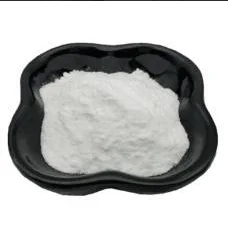
Direct manufacturer supply chain delivering verified analytical purity, continuous batch serialization, and international regulatory readiness.
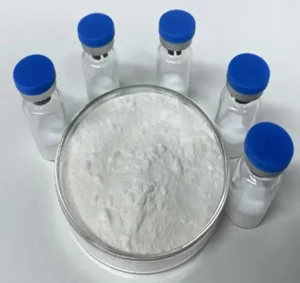
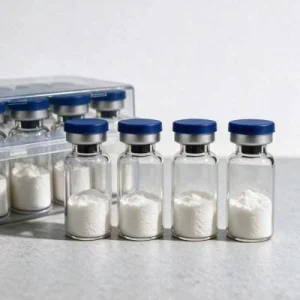
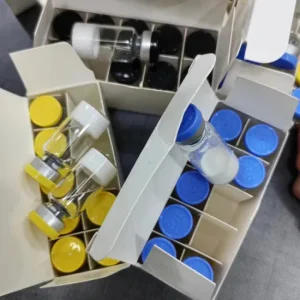
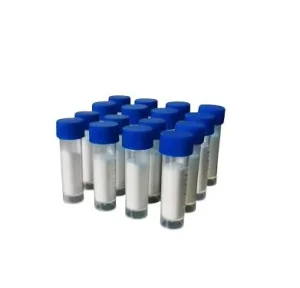
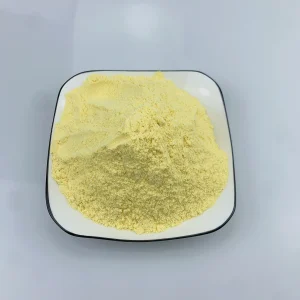

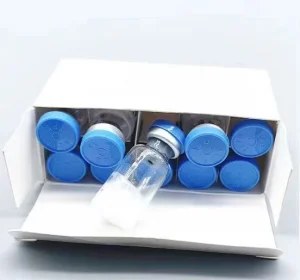
Analyzing the global shift toward automated high-efficiency steroidal ester synthesis, stringent pharmacopeial harmonizations, and upstream botanical precursor stability.
The global manufacturing backbone of Testosterone Enanthate relies fundamentally on the microbiological conversion of phytosterols derived from soy and tall oil into 4-androstene-3,17-dione (4-AD). Chinese manufacturing clusters maintain a commanding strategic advantage by integrating multi-ton fermentation capacity directly with dedicated chemical esterification units, insulating global contract drug manufacturers from precursor price shocks and botanical shortages.
Modern pharmaceutical buyers mandate strict alignment between USP, Ph. Eur., and ChP monographs. Critical analytical parameters have evolved beyond basic melting points: procurement protocols now demand hyphenated high-resolution mass spectrometry (HRMS) validation, enantiomeric separation of related substances, and trace residual solvent quantitation conforming to ICH Q3C (R8) guidelines for Class 2 and Class 3 hydrocarbons.
Commercial consumption models reflect strong secular tailwinds. Beyond conventional hypogonadism clinical regimes, significant global demand is driven by gender-affirming hormone therapies (GAHT), oncology-related wasting protocols, and pediatric endocrine treatments. These therapeutic streams necessitate long-acting subcutaneous and intramuscular sustained-release formulations manufactured in cleanroom environments of Class C/ISO 7 standards.
Validation benchmarks according to the International Council for Harmonisation (ICH) Q6A specifications for active pharmaceutical substances.
| Analytical Parameter | Monograph Standard (USP / Ph. Eur.) | High-Purity Production Acceptance Criteria | Testing Methodology |
|---|---|---|---|
| Chemical Structure & Formula | C26H40O3 (MW: 400.60 g/mol) | Conforms fully to synthetic reference standard | FTIR (ATR) / Proton NMR (500 MHz) |
| Assay Purity (Dried Basis) | 97.0% – 103.0% | 98.5% – 101.5% (High Assay Benchmark) | Reversed-Phase HPLC-UV (240 nm) |
| Melting Point Range | 34°C – 39°C | 36.5°C – 38.5°C | Automated Capillary Melting Apparatus |
| Specific Optical Rotation | +77° to +82° (in dioxane) | +78.5° to +80.5° | Polarimetry (Sodium D Line, 20°C) |
| Individual Unspecified Impurities | NMT 0.20% | NMT 0.08% | Gradient RP-HPLC (Peak Area Normalization) |
| Total Related Substances | NMT 1.00% | NMT 0.45% | HPLC / Mass Spectrometry Quadrupole |
| Residual Solvents (ICH Q3C) | Meets Class 2 / Class 3 Limits | Ethanol < 1,000 ppm, Hexane < 50 ppm | Headspace Gas Chromatography (GC-FID) |
| Heavy Metals (Elemental) | ICH Q3D Elemental Impurities | Cd < 0.5 ppm, Pb < 0.5 ppm, As < 1.5 ppm | ICP-MS (Inductively Coupled Plasma) |
Advancing steroidal manufacturing from traditional high-footprint batch reactors to electrified micro-flow systems and enzymatically catalyzed esterification protocols.
Traditional batch reaction of testosterone with enanthic anhydride often induces local overheating, yielding polymorphic inconsistencies and coloration degradation. Next-generation facilities deploy micro-structured continuous flow reactors. The precise heat transfer coefficients achieve complete stoichiometric conversion within milliseconds, substantially reducing thermal degradation products while keeping energy expenditure 40% lower.
Eliminating strong inorganic acid catalysts, emerging biotechnology protocols utilize immobilized lipases (e.g., Candida antarctica lipase B) for regioselective acylation of the 17β-hydroxyl group. This biocatalytic pathway suppresses side reactions at the 3-keto-4-ene conjugation system, completely avoiding acidic byproduct scavenging and yielding crystallization-ready bulk powders with minimal wash cycles.
Implementing inline NIR (Near-Infrared) and Focused Beam Reflectance Measurement (FBRM) within crystallization crystallizers enables real-time crystal size distribution (CSD) management. By stabilizing crystal habit and particle distribution, downstream finished-dosage drug formulators experience consistent dissolution kinetics and predictable oil-carrier suspension rheology.
Matching raw material chemical stability, micronization profiles, and polymorphic states to target final dosage formulations.
Formulated predominantly in vegetable oil carriers (such as sesame oil, castor oil, or ethyl oleate), Testosterone Enanthate acts as a slow-release prodrug. Upon depot deposition, serum esterases cleave the 17β-heptanoate ester to sustain physiologic androgen concentrations over 10 to 14 days, preventing the acute hormonal surges associated with short-chain propionate derivatives.
Next-generation clinical protocols are shifting from bulky intramuscular syringes toward pre-filled, low-volume auto-injectors. This transition requires API powders possessing ultra-low bioburden and rigorous dissolution kinetics in medium-chain triglycerides (MCT), allowing concentrated, low-viscosity subcutaneous self-administration with minimal patient injection site discomfort.
Sterile compounding pharmacies in North America and Western Europe source non-sterile bulk API to formulate customized micro-dosed preparations for severe pediatric hypopituitarism and chronic cachexia in oncology environments. Strict control over endotoxins (< 0.5 EU/mg) is mandatory to guarantee safety prior to terminal filtration.
Strategic supply frameworks mitigating regulatory vulnerability, shipment latency, and cross-border documentary hurdles.
Qualified manufacturers maintain active Drug Master Files (DMF) registered with both the US FDA and European EDQM (CEP certification). Turnkey registration dossiers formatted according to CTD Module 3 provide institutional purchasers with complete analytical validation, stability testing data (accelerated and long-term according to ICH Q1A), and comprehensive synthesis pathway disclosures.
Because Testosterone Enanthate possesses a comparatively low melting point (34°C–39°C), elevated summer shipping temperatures risk partial liquefaction and polymorphic aggregation. Enterprise export operations utilize climate-controlled, phase-change passive thermal packaging and real-time GPS dataloggers that record continuous temperature, humidity, and shock conditions during intercontinental air and sea transit.
Testosterone compounds are globally monitored under national and international controlled substance schedules (e.g., Schedule III in the United States). Industrial exporters support transparent legal procurement through pre-verified bilateral import/export authorizations, end-user declaration audits, and unbroken custody tracking that completely protects procurement departments from border seizures or compliance audits.
Detailed clarifications on purity guarantees, stability storage, impurity profiles, and compliance standards.
Polymorphic stability is guaranteed by controlled anti-solvent crystallization in cleanroom suites equipped with continuous temperature gradient sensors. By tightly managing solvent supersaturation ratios and cooling curves, we eliminate amorphous clusters and ensure reproducible crystalline morphology, directly facilitating uniform dissolution kinetics during carrier oil compounding.
Unesterified free testosterone represents the primary hydrolytic degradation product. Our QC laboratory employs a validated gradient reversed-phase HPLC method with a photodiode array (PDA) detector that separates free testosterone from the esterified peak with a resolution factor greater than 2.5. Finished lots are released only when unesterified free steroid levels remain strictly under 0.10%.
Given the 34°C–39°C melting threshold, standard fiber drums are insufficient during summer months. Bulk powders are sealed in multi-layer pharmaceutical-grade polyethylene bags enclosed in vacuum aluminum foil barriers, packed within insulated expanded polystyrene (EPS) or vacuum insulation panel (VIP) containers accompanied by calibrated phase-change cooling elements to keep core temperatures strictly between 2°C and 8°C throughout transit.
Yes. In addition to our internal QA-released Certificate of Analysis (COA), every batch is backed by third-party testing reports from independent ISO/IEC 17025 accredited laboratories. These dossiers incorporate full-spectrum proton (1H) and carbon (13C) NMR spectra, High-Performance Liquid Chromatography (HPLC) chromatograms with baseline integration, and Inductively Coupled Plasma Mass Spectrometry (ICP-MS) heavy metal analysis.
Consistently certified purity standards meeting international pharmaceutical, research, and formulation specifications.