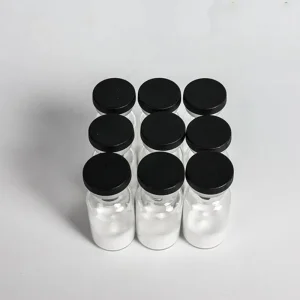
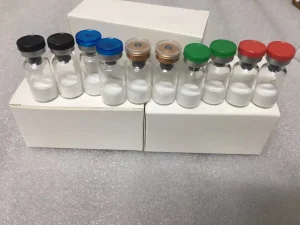
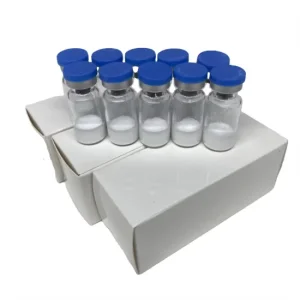
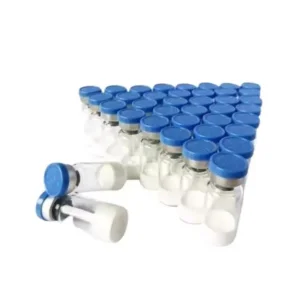
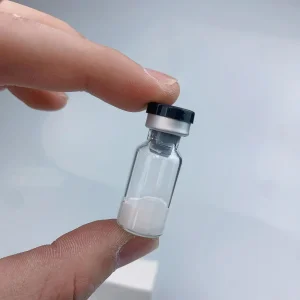
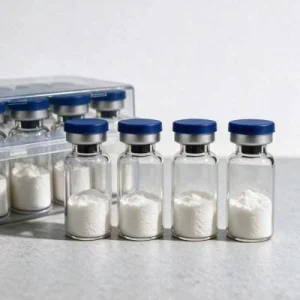
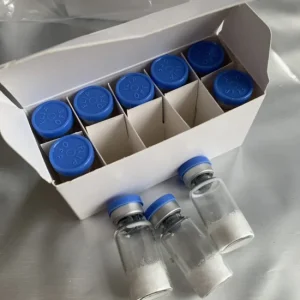
Direct supply from Hebei production workshops with complete HPLC verification, lot traceability, and export-compliant cold chain packaging.
An authoritative analysis of chemical manufacturing standards for Xylazine Hydrochloride (CAS 23076-35-9), structural identification, and current regulatory mechanisms governing veterinary active pharmaceutical ingredients (APIs).
Xylazine Hydrochloride, chemically designated as 2-(2,6-dimethylphenylamino)-4H-5,6-dihydro-1,3-thiazine hydrochloride, is a non-narcotic, centrally acting alpha-2 ($\alpha_2$) adrenergic receptor agonist extensively utilized in veterinary medicine as a potent sedative, analgesic, and central muscle relaxant. For chemical synthesis engineers, contract manufacturing organizations (CMOs), and international procurement auditors, identifying certified China Xylazine Hydrochloride manufacturers and factories demands rigorous technical scrutiny beyond commercial pricing. China's fine chemical sector hosts premier synthesis facilities operating specialized cGMP workshops capable of providing ton-scale quantities while adhering to strict Pharmacopeial standards (USP, EP, BP, and ChP).
Industrial synthesis of veterinary-grade Xylazine Hydrochloride typically proceeds through the nucleophilic reaction between 2,6-dimethylphenyl isothiocyanate and 3-amino-1-propanol, yielding a stable thiourea intermediate. Subsequent cyclization catalyzed by concentrated hydrochloric acid or thionyl chloride facilitates ring closure to generate the 5,6-dihydro-4H-1,3-thiazine nucleus. The crude base is purified via multi-stage recrystallization before forming the hydrochloride salt using anhydrous hydrogen chloride gas in an alcohol-ether matrix.
Leading Chinese chemical factories utilize continuous flow microchannel reactors for key exothermic reaction steps. This modern approach provides significant advantages over traditional batch vessels:
In accordance with global veterinary pharmacopeias, analytical release protocols for active pharmaceutical ingredients require multi-instrumental validation before product release. The table below delineates typical release benchmarks verified via high-performance liquid chromatography (HPLC), gas chromatography-mass spectrometry (GC-MS), and infrared spectrophotometry (FTIR).
| Analytical Parameter | USP / EP Pharmacopeial Standard | Factory Primary Lot Specification | Methodology / Analytical Instrument |
|---|---|---|---|
| Chemical Structure & CAS | CAS: 23076-35-9 / C12H16N2S·HCl |
Matches reference chemical monograph | FTIR / Proton 1H-NMR Analysis |
| Appearance | White to practically white crystalline powder | Crystalline white powder, odorless | Visual / Sensory Inspection |
| HPLC Assay (Dry Basis) | 98.0% – 102.0% | 99.5% – 99.8% | Reverse-Phase HPLC (UV @ 254 nm) |
| Melting Range | 164.0°C to 168.0°C | 165.5°C to 167.0°C (with decomposition) | Capillary Melting Point Apparatus |
| pH (1 in 100 Solution) | 4.0 to 6.0 | 4.5 to 5.2 | Potentiometric pH Meter |
| Loss on Drying | ≤ 0.5% | ≤ 0.22% | Thermogravimetric Drying @ 105°C |
| Residue on Ignition | ≤ 0.1% | ≤ 0.04% | Muffle Furnace Ashing @ 600°C |
| Residual Solvents (ICH Q3C) | Meets ICH Class 2 & Class 3 limits | Methanol < 50 ppm, Ethanol < 100 ppm | Headspace Gas Chromatography (GC-FID) |
Evaluating the macroeconomic advantages, integrated petrochemical infrastructure, and operational reliability of Chinese active ingredient manufacturing facilities.
Chinese factories are located within advanced provincial chemical zones (such as Hebei, Shandong, and Jiangsu), directly adjacent to core petrochemical feedstocks. Access to local aniline precursors, carbon disulfide, and specialized organic intermediates buffers production from international commodity supply disruptions.
Tier-1 Chinese factories operate state-of-the-art pilot plants and cleanroom workshops (Class 100,000 / ISO Class 8) equipped with validated clean-in-place (CIP) and sterilize-in-place (SIP) systems. Manufacturing data trails comply fully with 21 CFR Part 11 electronic data collection guidelines.
Flexible production lines support both standard multi-ton commercial contracts and customized pilot synthesis from gram to kilogram scale for academic, clinical, and bioequivalence research trials, backed by transparent volume-tier pricing.
Navigating global narcotics control scheduling, anti-diversion protocols, and documented customs clearance procedures across regulated international markets.
In response to international regulatory monitoring concerning dual-use risks and adulteration concerns, ethical Chinese manufacturers enforce mandatory End-User Declaration (EUD) checks. Consignments require authenticated buyer credentials validating legitimate veterinary, zoological, or laboratory use.
Exporters provide Drug Master Files (DMF) categorized into open (applicant) and closed (restricted) parts. Full stability testing reports under ICH Q1A guidelines (accelerated at 40°C/75% RH and real-time long-term at 25°C/60% RH) assist overseas formulation registrations.
Export packaging incorporates UN-certified moisture-proof fiber drums with dual anti-static polyethylene heat-sealed inner liners and nitrogen blanket purging. High-security, tamper-evident seals and laser-etched 2D data matrix barcodes ensure end-to-end provenance integrity.
Compliance specialists coordinate complete export paperwork under HS Code 2934.99, handling verified chemical safety data sheets (SDS / GHS 16-sections), phytosanitary certificates, and cross-border transport clearances via air freight or ocean logistics.
Targeted therapeutic applications, pharmacokinetics, and balanced multi-modal veterinary anesthesia regimens.
Widely administered to facilitate short clinical, diagnostic, and dental procedures in horses. When administered intravenously, sedation and visceral analgesia onset occurs within 3–5 minutes. Frequently combined with ketamine, butorphanol, or guaifenesin for smooth anesthetic induction.
Cattle display heightened sensitivity to Xylazine Hydrochloride, requiring approximately 1/10th of the equine dosage per kilogram of body weight. It provides reliable recumbency and visceral pain management for dehorning, wound repair, cesarean delivery, and handling.
Employed in zoological operations, wildlife biology, and game reserve management for the safe dart immobilization of cervids, captive megafauna, and exotic ungulates. Clinical sedation can be reversed promptly using competitive alpha-2 antagonists such as Tolazoline or Yohimbine.
How domestic manufacturers are shifting toward automated process analytical technology (PAT) and carbon-conscious synthetic chemistry.
Modern Chinese workshops implement continuous distillation and membrane separation recovery units, reclaiming over 92% of aliphatic and aromatic processing solvents. This significantly curtails VOC emissions and mitigates environmental impacts in full alignment with national ecological directives.
Online FTIR probes and automated chromatographic sampling monitor the disappearance of starting materials in real time. This automated oversight reduces operational variation, maximizes batch yield, and ensures consistent quality across production cycles.
Modern factories incorporate anti-diversion QR serialized batch labeling, allowing global buyers and regulatory officials to scan physical shipping drums and trace product authenticity back to the original quality assurance documentation.
Explore our complete production series of lab-tested peptides and specialized raw materials manufactured for B2B global distribution.
Expert insights addressing quality assurance, testing protocols, regulatory documentation, and logistical safety.
Every commercial release includes an authenticated, batch-specific Certificate of Analysis (COA) documenting raw data results against predefined pharmacopeial monographs (USP, EP, or BP). Upon request, clients receive complete analytical packets, including:
1. High-Performance Liquid Chromatography (HPLC) chromatograms with baseline integration and individual impurity breakdowns.
2. Fourier-Transform Infrared Spectroscopy (FTIR) spectrum overlay compared against standard reference material.
3. Headspace Gas Chromatography (GC) residual solvent profiles complying with ICH Q3C guidelines.
4. Heavy metal analysis determined via Inductively Coupled Plasma Mass Spectrometry (ICP-MS).
While Xylazine Hydrochloride remains an unscheduled veterinary medicine in many jurisdictions, several markets (such as select states within the US and international regions) have instituted emergency scheduling or heightened oversight due to illicit diversion risks.
Certified factories enforce a rigorous compliance verification framework. Material is released exclusively to verified veterinary manufacturers, registered laboratory distributors, and licensed institutions after receiving an authenticated End-User Declaration (EUD) and verified import permits. Our logistical channels adhere strictly to international customs clearance and reporting protocols.
Standard packaging configurations are designed to maintain physical and chemical stability during international transit:
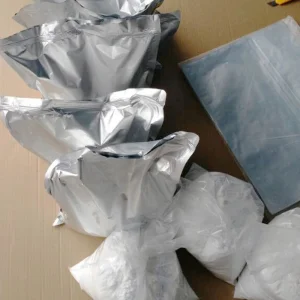
Pilot/R&D Scale: 500 g to 5 kg heat-sealed multi-layer aluminum barrier foil pouches with internal food/pharma-grade polyethylene liners.
Commercial Bulk Scale: 25 kg net weight UN-rated fiber drums containing double pharmaceutical-grade polyethylene bags, desiccant sachets, and inert nitrogen backfill to protect against ambient moisture.
Standard production MOQs generally start at 1 kg for reference batches, while regular commercial supply agreements operate at 25 kg to 1,000 kg intervals.
Xylazine Hydrochloride displays solid crystalline stability under standard conditions. Formal ICH stability testing indicates a typical shelf life of 36 to 60 months when stored properly:
Keep containers sealed in a cool, dry area away from direct sunlight, maintaining temperatures between 15°C and 30°C. Controlled relative humidity (≤60% RH) prevents hygroscopic clumping. Re-testing is recommended if the drum seal has been broken or exposed to temperatures exceeding 40°C during transoceanic shipping.
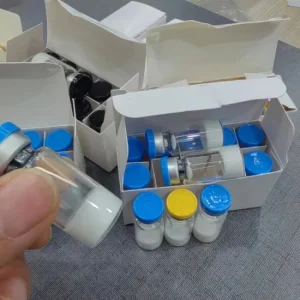
Yes. Selected partner facilities maintain aseptic fill-finish processing suites equipped with terminal steam sterilization and laminar flow filling stations. Contract manufacturing capabilities include 20 mg/mL, 100 mg/mL, and customized concentration veterinary injectable solutions packaged in multi-dose 20 mL, 50 mL, or 100 mL type I borosilicate glass vials under client-specified private labeling.