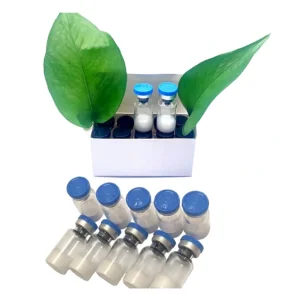
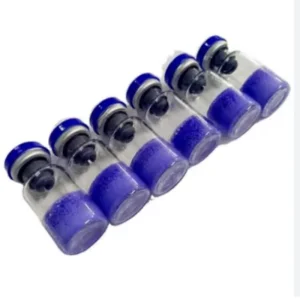
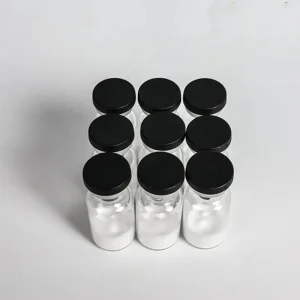
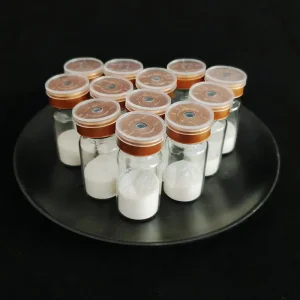
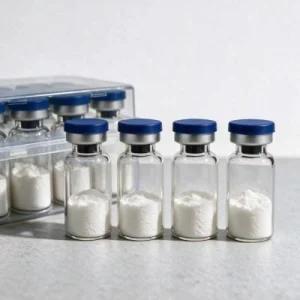
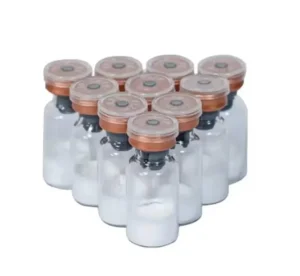
Explore immediate-dispatch compounds manufactured in accordance with strict QA/QC standards, batch-tested via HPLC/MS with comprehensive spectroscopic documentation.
A rigorous examination of 1-(1,3-benzodioxol-5-yl)propan-1-one (CAS 28281-49-4): from structural synthesis to physical-chemical constants required by certified fine chemical laboratories.
3,4-(Methylenedioxy)propiophenone—also known systematically in IUPAC terminology as 1-(1,3-benzodioxol-5-yl)propan-1-one (Molecular Formula: C10H10O3; Molecular Weight: 178.18 g/mol)—represents a crucial aromatic bicyclic building block within modern organo-chemical synthesis, fine fragrance design, and active pharmaceutical ingredient (API) research. Featuring an integrated 1,3-dioxole ring fused to a benzene nucleus conjugated directly with an ethyl ketone moiety, the molecule serves as an indispensable scaffold for selective nucleophilic additions, catalytic amination pathways, and complex heterocyclic cyclization protocols.
In high-grade industrial production, maintaining consistent structural conformation is paramount. Even marginal deviation in reaction temperatures or stoichiometry can induce unwanted oxidative cleavage of the methylenedioxy acetal bridge or lead to alpha-halogenation impurities during downstream derivation. Advanced manufacturing protocols enforce tight kinetic control over the acylating step to isolate high-purity crystalline solid forms without leaving heavy metal chelates or sulfur residuals.
| Analytical Parameter | Certified Factory Benchmark | Testing Methodology | Quality Impact & Compliance Notes |
|---|---|---|---|
| Chemical Name | 1-(1,3-Benzodioxol-5-yl)propan-1-one | IUPAC Standard / CAS Index | CAS Registry Number: 28281-49-4 |
| Assay Purity (GC/HPLC) | ≥ 99.2% (Area Normalization) | GC-FID / Reverse-Phase HPLC | Critical for zero-side-reaction synthetic cascades |
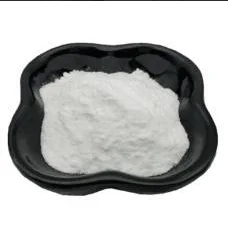
| Physical Appearance | White to Off-White Crystalline Powder / Low-Melt Solid | Visual Inspection / Colorimetry | Free of dark particulate or polymeric oxidation resin |
| Melting Point Range | 38.0 °C – 41.5 °C | Automated Melting Point Apparatus (Capillary) | Tight melting curve confirms absolute polymorphic uniformity |
| Moisture Content (Karl Fischer) | ≤ 0.30% | Coulometric KF Titration (USP ⟨921⟩) | Prevents hydrolytic degradation during extended warehousing |
| Residual Solvents | Meets USP ⟨467⟩ / ICH Q3C Limits | Headspace Gas Chromatography (HS-GC) | Ethanol ≤ 5000 ppm, Methanol ≤ 3000 ppm, Hexane ≤ 290 ppm |
| Heavy Metals (Pb, Cd, As, Hg) | ≤ 5.0 ppm Combined | ICP-MS (Inductively Coupled Plasma) | Complies with global clean-synthesis standards |
Enterprise chemical procurement heads face complex hurdles: multi-continental shipping logistics, varying national customs schedules, inventory volatility, and stringent traceability.
Every commercial batch is accompanied by primary spectroscopic evidence, including 1H-NMR, 13C-NMR, FT-IR, and high-resolution GC-MS. Procurement departments receive identical twin samples alongside batch-specific certificates for rapid in-house QA release without quarantine delays.
Given the melting point threshold of 3,4-(Methylenedioxy)propiophenone (approx. 39°C), shipments transiting equatorial trade lanes require climate-controlled packaging or insulated multi-barrier fiber drums with inert nitrogen headspaces to prevent thermal agglomeration and ambient moisture absorption.
We supply exact Harmonized System (HS) classifications, authenticated Non-Regulated Declaration Statements, Material Safety Data Sheets (MSDS compliant with GHS Rev 9), and certified Certificates of Origin (COO), facilitating seamless customs clearance across the EU, North America, and APAC.
B2B Supply Assurance: Factory contracts incorporate minimum inventory guarantees backed by secondary safety stock in bonded logistics hubs, shielding multinational contract research organizations (CROs) from cross-border supply chain shocks.
Synthesizing 3,4-(methylenedioxy)phenyl ketones has historically faced sustainability constraints. Discover modern continuous micro-reactor frameworks replacing legacy stoichiometric protocols.
Historically, synthetic routes toward 3,4-(methylenedioxy)propiophenone relied heavily on classical Friedel-Crafts acylation of 1,3-benzodioxole (methylenedioxybenzene) with propionyl chloride in the presence of anhydrous aluminum chloride (AlCl3). While yields could approach moderate commercial viability, the reaction produced massive stoichiometric quantities of corrosive acidic effluent, aluminum hydroxide sludges, and variable ring-opening side-reactions.
Modern top-tier manufacturing facilities have phased out obsolete reagents in favor of clean catalytic systems. Utilizing heterogeneous solid Lewis acids (such as ion-exchanged zeolite catalysts or sulfated zirconia) alongside propionic anhydride enables cleaner acylation with greater than 96% regioselectivity at the 5-position of the benzodioxole skeleton. Unreacted acylating agents are recycled via continuous vacuum fractional distillation, radically lowering the cumulative E-Factor (kg of waste per kg of finished product).
Continuous flow chemistry represents the foremost technological leap in proprietary fine chemical synthesis. By routing liquid-phase reactants through micro-structured silicon carbide (SiC) or Hastelloy reactors, heat exchange capacities exceed 20,000 W/(m2·K). The benefits are decisive:
Utilizing high-stability heterogeneous catalyst beds prevents transitional metal dispersion into product streams, eliminating downstream micro-filtration bottlenecks.
Closed-loop microreactor loops with integral cryogenic condensed solvent recovery decrease volatile organic carbon (VOC) emissions by over 88% compared to standard open agitator kettles.
Real-time continuous process verification via fiber-optic in-situ Raman and near-infrared (NIR) probes guarantees that every liter departing the reaction zone meets pre-programmed purity thresholds.
Global trade in fine organic intermediates mandates unambiguous alignment with international conventions, regional chemical inventories, and stringent export control compliance.
Given structural analogies within the methylenedioxyphenyl and substituted propiophenone chemical families, cross-border buyers must navigate evolving multi-jurisdictional control schedules with complete operational transparency. Hebei Miaoou Technology Co., Ltd. enforces an uncompromising regulatory audit structure, confirming that all commercial activities concerning 3,4-(Methylenedioxy)propiophenone strictly serve authenticated laboratory R&D, academic study, perfume design, and lawful pharmaceutical contract manufacturing.
Our regulatory affairs department actively interfaces with global standards, including:
Every synthetic run is audited through an electronic batch record system compliant with 21 CFR Part 11, ensuring unalterable historical logs of reaction parameters, personnel, and instrument calibrations.
We support independent third-party analytical audits (e.g., SGS, Eurofins, Intertek) prior to release, offering pre-shipment lot verification from sealed warehouse pallets.
Strategic intermediate hubs facilitate regional localized distribution, expediting transit while maintaining full regulatory chain-of-custody documentation.
A multi-year developmental horizon positioning next-generation chemical intermediates at the convergence of green engineering, renewable feedstocks, and AI-driven kinetics.
The chemical industry is on the verge of a transformational transition toward climate-neutral production paradigms. Our research division, collaborating with leading academic material laboratories, is actively pursuing a three-phase technological roadmap for 3,4-(Methylenedioxy)propiophenone and associated aromatic scaffolds:
Transitioning from petroleum-derived propionic acid derivatives to bio-fermentative propionic acid sources synthesized from agricultural byproducts. Concurrently, industrial reaction media are migrating away from chlorinated solvents (such as DCM and dichloroethane) toward bio-based ethereal solvents like 2-Methyltetrahydrofuran (2-MeTHF) and Cyclopentyl methyl ether (CPME), drastically reducing lifecycle carbon intensity.
Developing engineered transaminases and ketoreductases capable of converting 3,4-(Methylenedioxy)propiophenone into high-value chiral intermediates with enantiomeric excesses exceeding 99.5% ee in a single biocatalytic step. This replaces multi-step metal-catalyzed chiral hydrogenations, completely eliminating trace catalyst carryover.
Integrating machine-learning kinetic optimization algorithms into our continuous-flow production grid. Real-time feedback loops analyze instantaneous mass spectrometry and UV-Vis spectrophotometric data, dynamically adjusting flow velocities, temperature profiles, and stoichiometry to optimize yield and mitigate impurity emergence in real-time.
Clear, direct answers addressing technical specifications, order minimums, international delivery handling, and analytical authentication for B2B buyers.
Complete your supply procurement with our fully cataloged laboratory inventory, prepared under monitored environments with individual lot traceability.