
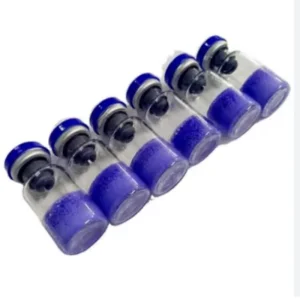
Explore verified analytical-grade standards and active pharmaceutical raw materials supplied directly from our centralized fine-chemical production facilities.
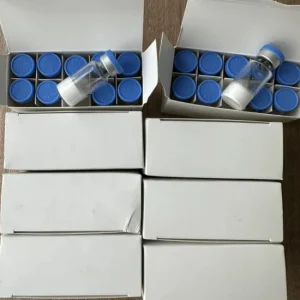
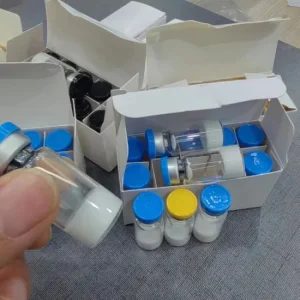
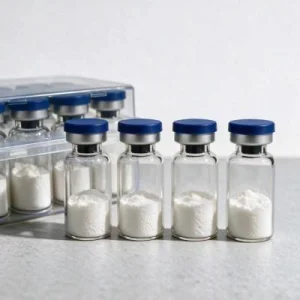
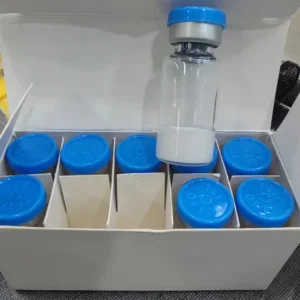
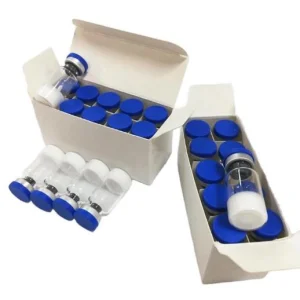
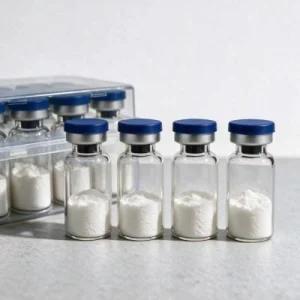
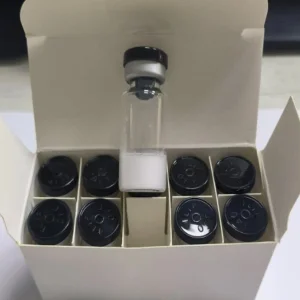
A comprehensive examination of synthetic pathway optimizations, crystallization parameters, regulatory documentation compliance, and global industrial procurement practices.
Stanozolol (CAS 10418-03-8, molecular formula C21H32N2O) is a unique 17α-alkylated steroid featuring a fused pyrazole ring at the [3,2-c] position of the androstane nucleus. Synthetic scalability demands rigid stereospecific control during condensation, multi-stage recrystallization, and residual solvent purification to inhibit polymorphic degradation.
Institutional procurement directors face stringent vendor qualification hurdles. Tier-1 enterprise laboratories require continuous batch consistency, complete structural assignment (1H/13C-NMR), ultra-low heavy metal thresholds (<10ppm), and full ICH Q3C residual solvent compliance to pass QA release protocols.
Our analytical release protocol integrates high-performance liquid chromatography coupled with UV/Diode-Array Detection (HPLC-DAD), high-resolution mass spectrometry (HRMS), and loss-on-drying evaluation. Every dispatched shipment features a dual-verified, lot-specific Certificate of Analysis.
Leveraging deep chemical synthesis clusters in Hebei and regional production ecosystems to deliver volume scalability, technical documentation rigor, and competitive B2B economics.
China accounts for a substantial proportion of global steroidal steroid core precursors (including 4-androstenedione and phytosterols). Direct backward integration into primary synthesis intermediates safeguards raw material pricing stability and buffers enterprise clients against international market volatility.
From pilot gram-scale characterization to multi-kilogram industrial runs, our glass-lined reactors and automated closed-loop crystallization suites maintain homogeneous crystal morphology (micronized or crystalline), ensuring consistent dissolution rates across client formulation lines.
We eliminate the supply opacity common in secondary brokerage markets. Enterprise buyers obtain direct access to primary batch chromatograms, raw integration datasets, melting point curves (235°C–242°C), and verified optical rotation parameters without redaction.
Navigating global regulatory landscapes requires meticulous chemical classification, proactive customs clearance strategies, and dedicated technical client servicing.
Import compliance is non-negotiable for legitimate scientific institutions. Every dispatch is accompanied by standardized 16-section Safety Data Sheets (GHS SDS), precise HS code harmonized classifications (HS 293729), certified declarations of non-animal origin, and custom export packing declarations to guarantee smooth clearance through US FDA/CBP, European EMA, and Asian regional border inspections.
Pharmaceutical APIs and reference standards require strict preservation against moisture absorption, photolytic degradation, and thermal fluctuation. We employ multi-layer amber vacuum-sealed glass containers, inert nitrogen flushing, and military-grade aluminum foil barrier pouches housed in UN-certified fiber drums to preserve chemical stability throughout transit.
Procurement teams operate across disparate time zones. Our technical sales team, supported by experienced chemical engineers in Shijiazhuang and Hong Kong financial liaison points, delivers immediate communication turnaround (under 24 business hours), expedited sample dispatches, and responsive pre-audit technical consultations.
To eliminate buyer risk, we contractually support blind verification re-tests at accredited independent testing facilities (e.g., SGS, Eurofins, or client-nominated ISO 17025 certified analytical laboratories) prior to final batch liquidation, guaranteeing alignment between analytical claims and commercial reality.
Reference analytical thresholds routinely evaluated across our quality release suites in accordance with USP / EP analytical benchmarks.
| Analytical Parameter | USP/EP Reference Standard | Factory In-House Release Specification | Verification Methodology |
|---|---|---|---|
| Chemical Name | 17β-hydroxy-17α-methyl-5α-androst-2-eno[3,2-c]pyrazole | Conforms to Reference Standard | 1H / 13C Nuclear Magnetic Resonance (NMR) |
| CAS Registry Number | 10418-03-8 | 10418-03-8 | Regulatory Database Cross-Check |
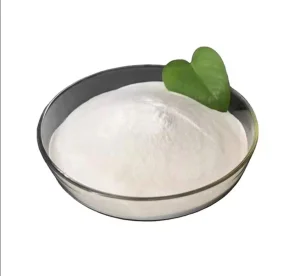
| Appearance | White to light-cream crystalline powder | Pure crystalline white powder | Visual Inspection / Light Microscopy |
| Chromatographic Purity | ≥98.0% | ≥99.2% (HPLC-DAD) | Reverse-Phase HPLC (C18 Column, Gradient) |
| Melting Point Range | 235°C to 242°C | 237.5°C to 240.5°C (Decomposition) | Automated Capillary Melting System |
| Specific Optical Rotation | +34.0° to +40.0° | +35.5° to +38.5° (c=1 in chloroform) | Precision Optical Polarimeter |
| Loss on Drying (LOD) | ≤1.0% | ≤0.45% | Vacuum Drying Chamber (105°C, 3 Hours) |
| Heavy Metals Residue | ≤20 ppm | ≤10 ppm | Inductively Coupled Plasma Mass Spec (ICP-MS) |
| Residual Solvents (ICH Q3C) | Class 2/3 limits | Meets strict ICH limits (Ethanol, Ethyl Acetate) | Headspace Gas Chromatography (HS-GC-FID) |
Supplying validated chemical reference standards strictly for research laboratories, academic investigations, and industrial synthesis optimization.
Applied in biomedical pharmacology to evaluate non-aromatizing androgen receptor (AR) dynamics, co-activator recruitment cascades, and downstream genomic transcription factors in cell-culture models without estrogenic metabolite interference.
Utilized in musculoskeletal research to investigate stimulation kinetics of procollagen synthesis, transforming growth factor-beta (TGF-β) upregulation, and extracellular matrix deposition in primary human fibroblast cultures.
Essential for WADA-accredited and anti-doping forensic laboratories establishing reference retention times, fragmentation patterns (LC-MS/MS), and long-term urinary metabolite profiling (e.g., 3'-hydroxy-stanozolol and 16β-hydroxy-stanozolol glucuronides).
Analyzing key structural shifts reshaping global active chemical compound manufacturing, compliance standards, and automated supply chains.
Modern synthesis facilities are progressively phasing out hazardous organometallic oxidation reagents in favor of enzyme-catalyzed dehydrogenation and solvent-free condensation routes, reducing hazardous effluent and aligning with international ESG procurement standards.
The transition from legacy batch reactors to micro-channel continuous flow reactors allows instantaneous heat exchange and automated stoichiometric control, eliminating secondary isomer contaminants and narrowing polymorph distributions.
Cross-border customs and anti-counterfeiting crackdowns demand immutable supply chain verification. Leading producers now embed tamper-proof QR tracking and encrypted digital batch certificates directly linked to central HPLC analytical repositories.
Order high-purity peptides, synthetic building blocks, and reference materials with full batch testing records and export-grade custom packaging.
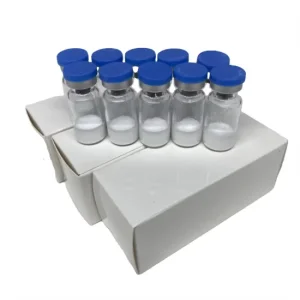
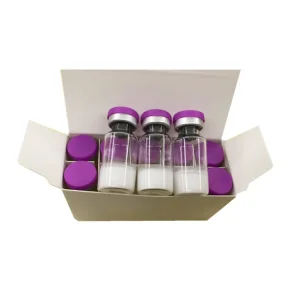
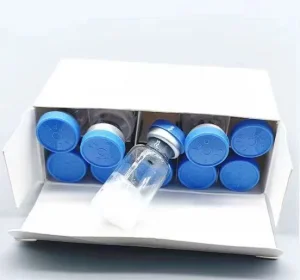
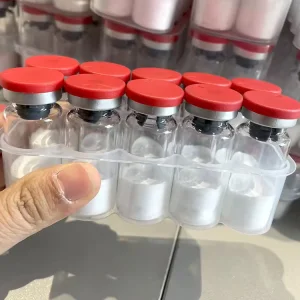
Critical clarifications regarding batch release testing, customs documentation, storage parameters, and order fulfillment workflows.
Every commercial delivery includes an exhaustive, batch-traceable Certificate of Analysis (COA). Standard dossiers present full-wavelength Reverse-Phase HPLC chromatograms with peak retention tables, High-Resolution Electrospray Ionization Mass Spectrometry (HRMS) confirming the 328.5 g/mol monoisotopic mass, 1H-NMR spectra, Loss on Drying (LOD) percentages, and ICP-MS heavy metals assay quantification.
Crystallization takes place in dedicated stainless steel (316L) and glass-lined closed reactors under computer-controlled thermal gradient profiles. By precisely timing solvent anti-solvent ratios (typically ethanol/water matrices) and cooling curves, we produce a single, homogeneous polymorph form exhibiting predictable melting behavior (237°C–241°C) and consistent dissolution kinetics.
Stanozolol powder should be stored in tightly sealed, light-resistant containers away from direct UV exposure and excessive humidity. Standard factory packaging features heat-sealed double food/pharma grade polyethylene inner liners, encased in vacuum aluminum foil bags with active desiccant packs, secured inside rigid exterior fiber drums. Storage between 2°C and 8°C or controlled room temperature (20°C–25°C) preserves integrity over a 24-month retest interval.
Yes. Depending on downstream application requirements (e.g., solid oral dose testing, analytical standard preparation, or suspension formulation studies), we provide both standard crystalline powder and customized jet-milled micronized powder (D90 < 20μm or D50 < 5μm) complete with laser diffraction particle size distribution (PSD) analytical reports.
We work with international institutional clients via documented telegraphic transfer (T/T), confirmed irrevocable Letters of Credit (L/C) for multi-ton contracts, and secure corporate escrow solutions. Prior to contract validation, buying entities must provide valid organizational credentials and formal end-user declarations (EUD) confirming scientific, laboratory, or authorized industrial manufacturing intent.
