Representative analytical-grade reference molecules, targeted PARP inhibitors, and neuro-active signaling peptides manufactured under stringent quality oversight for North American biochemical screening programs.

A rigorous examination of 21 CFR compliance, Investigational New Drug (IND) pathways, FDA warning letter precedents, and legitimate Research Use Only (RUO) laboratory procurement.
Selective Androgen Receptor Modulators (SARMs), including Ostarine (MK-2866/Enobosarm), Ligandrol (LGD-4033), Testolone (RAD-140), and Cardarine (GW-501516, a PPARδ agonist frequently categorized alongside SARMs), represent chemically sophisticated investigational pharmacophores. In the United States, the Food and Drug Administration (FDA) has classified these chemical entities as unapproved new drugs. Under Section 201(ff) of the Federal Food, Drug, and Cosmetic Act (FD&C Act), substances undergoing clinical evaluation under active Investigational New Drug (IND) applications cannot be lawful dietary ingredients. As a result, the commercial importation of SARMs into the United States is legally viable only when consigned under strictly substantiated "Research Use Only" (RUO) declarations for in-vitro assay development, non-clinical toxicology screening, and academic biological inquiry.
Historical investigations published by the American Medical Association (JAMA) demonstrated that over 50% of retail internet products marketed as SARMs either lacked the advertised active pharmaceutical ingredient, were substantially under-dosed, or contained undeclared synthetic byproducts and cross-contaminants. Consequently, United States life-science buyers—including Contract Research Organizations (CROs), bio-analytical testing laboratories, university chemistry departments, and pharmaceutical start-ups—have completely decoupled themselves from opaque grey-market distributors. American procurement directors now demand primary-manufacturer provenance from verified synthesis facilities in China capable of providing raw spectroscopic data, comprehensive chromatographic traces, and traceable chain-of-custody documentation.
Procuring raw SARMs powders and bio-reference materials requires navigating rigorous pharmaceutical analytical parameters. Below is the non-negotiable testing matrix established for global research trade.
| Analytical Parameter | Methodology / Instrumentation | Institutional Acceptance Criteria | Significance for U.S. Laboratory Buyers |
|---|---|---|---|
| Chemical Identity | Proton & Carbon NMR (1H-NMR, 13C-NMR) at 400/600 MHz | Chemical shifts (δ) match theoretical reference structure without unassigned extraneous peaks | Prevents structural misidentification, positional isomerism, and accidental analog substitution. |
| Chromatographic Purity | Reverse-Phase High-Performance Liquid Chromatography (RP-HPLC with DAD) | ≥99.0% area normalization (Single individual unknown impurity ≤0.5%) | Assures baseline assay reproducibility in quantitative cellular receptor-binding assays. |
| Molecular Mass Verification | Electrospray Ionization LC-MS / High-Resolution TOF-MS | Exact monoisotopic mass matches nominal [M+H]+ / [M-H]- within ±5 ppm | Confirms intact core structure and absence of fragment adducts or polymeric degradation artifacts. |
| Residual Solvents | Headspace Gas Chromatography with Flame Ionization (HS-GC-FID) | USP <467> / ICH Q3C limits (DCM <600 ppm, DMF <880 ppm, Acetonitrile <410 ppm) | Prevents cytotoxic interference in live-cell culture and mammalian cell line viability experiments. |
| Heavy Metal Contamination | Inductively Coupled Plasma Mass Spectrometry (ICP-MS) | USP <232> / <233> (Lead <0.5 ppm, Arsenic <1.5 ppm, Cadmium <0.5 ppm, Mercury <3.0 ppm) | Eliminates catalyst residue carryover (e.g., Palladium, Platinum) derived from synthetic coupling steps. |
| Moisture Content & Ash | Karl Fischer Coulometric Titration & Residue on Ignition | Karl Fischer water ≤1.0%; Total sulfated ash ≤0.1% w/w | Ensures exact stoichiometry and precise net mass calculations during laboratory stock reagent formulation. |
Executing an unbroken, audit-proof supply chain from synthesis workshops in Hebei, Jiangsu, and Hubei to laboratory receiving docks across California, Massachusetts, North Carolina, and Texas.
International chemical logistics often collapse due to misdeclared Harmonized System codes. Our dedicated export documentation architecture utilizes precise Chapter 29 classifications (e.g., 2933.29 for heterocyclic compounds with nitrogen hetero-atoms, or 2937.19 for peptide hormones). Every consignment is accompanied by TSCA (Toxic Substances Control Act) Section 5 R&D exemption declarations, non-hazardous chemical classification dossiers, and bilingual Commercial Invoices specifying Research Use Only intent to ensure lawful clearance through U.S. Customs and Border Protection (CBP).
B2B institutional buyers require transparency in financial accounting and procurement audits. We eliminate the vulnerabilities of consumer payment apps by providing formal commercial Proforma Invoices (PI), acceptance of institutional wire transfers (SWIFT/IBAN), and structured escrow mechanisms for pilot validation orders. Every commercial transaction generates an immutable documentation chain linking purchase orders, manufacturing batch logs, Certificate of Analysis (COA) numbers, and airway bill manifests.
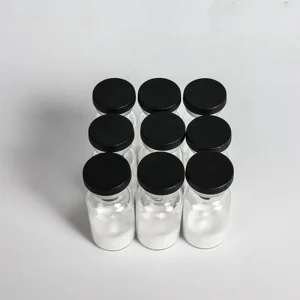
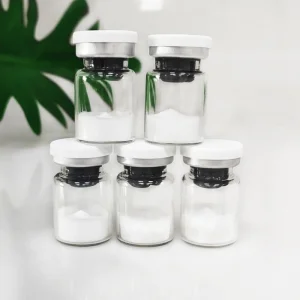
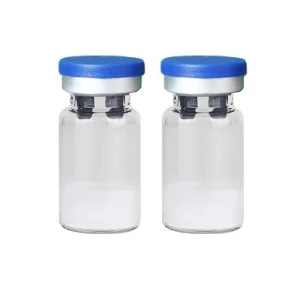
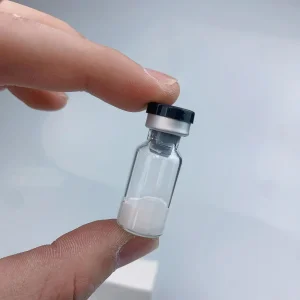
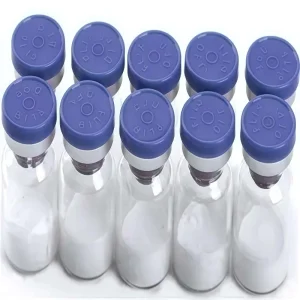
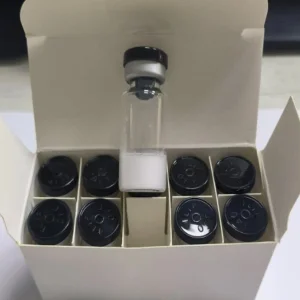
Lyophilized peptides and small-molecule SARMs can suffer physical or chemical degradation if exposed to elevated temperatures, ambient moisture, or UV radiation during trans-Pacific air transit. Our export protocols integrate moisture-impermeable medical-grade foil barrier pouches, inert argon gas headspace purging for bulk powders, amber borosilicate Type I glass vials with Teflon-coated butyl stoppers, and monitored cold-pack packaging ensuring thermal stability throughout multimodal transit.
Continuous investment in synthetic organic chemistry enhances optical purity, minimizes genotoxic impurities, and lowers carbon footprints across manufacturing lines.
Early-generation SARMs synthesis suffered from enantiomeric contamination due to imperfect asymmetric induction during epoxide ring openings or amine alkylations. Our updated synthetic roadmap incorporates chiral auxiliary-directed asymmetric organocatalysis, achieving chiral enantiomeric excess (ee) exceeding 99.5%. This eliminates biologically inactive or potentially toxic stereoisomers prior to final recrystallization.
Traditional large-scale batch reactors present uneven thermal gradients, leading to localized hotspot degradation and trace formation of alkyl halide byproducts. By transitioning key exothermic bromination, cyanation, and amide coupling steps to continuous flow microchannel reactors, reaction kinetics are precisely controlled with residence times measured in seconds, drastically improving batch-to-batch homogeneity.
In accordance with global environmental sustainability mandates, our synthesis facilities are actively phasing out Class 1 and Class 2 hazardous organic solvents like Dichloromethane (DCM) and N,N-Dimethylformamide (DMF). Replacement systems utilizing 2-Methyltetrahydrofuran (2-MeTHF), Cyrene, and cyclopentyl methyl ether (CPME) yield negligible bio-burden and simplify downstream purification and crystallization.
Looking toward the future of endocrine and oncology pharmacology, our R&D laboratories are expanding beyond conventional receptor agonists/antagonists into Proteolysis Targeting Chimeras (PROTACs). By tethering validated SARM pharmacophore ligands to E3 ubiquitin ligase recruiters (such as VHL and CRBN), we enable U.S. academic investigators to study targeted androgen receptor degradation in castration-resistant prostate cancer models.
Ensuring complete peace of mind for North American procurement officers through independent laboratory testing and ironclad material guarantees.
We welcome and facilitate blind verification through recognized ISO/IEC 17025 accredited analytical laboratories in the United States and Europe (including Janoshik Analytical, MZ Biolabs, and Colmaric Analyticals). Each batch release includes a commitment to cross-validate analytical results against your domestic assay findings.
Every commercial sample or bulk drum ships with a full analytical dossier: UV-VIS absorption spectra, High-Performance Liquid Chromatograms with integrated peak tables, LC-MS ion fragmentation patterns, and Karl Fischer moisture percentages tied to a unique drum-level barcode.
In the event that an independent spectroscopic audit demonstrates material variance from our stated Certificate of Analysis (purity <99.0% or unidentified chemical impurities >0.5%), we provide unconditional batch replacement or full credit refund, backed by dedicated English-speaking technical service representatives.
Complete secondary portfolio available for laboratory synthesis orders, peptide mapping, and biochemical screening. All products maintain complete analytical traceability.
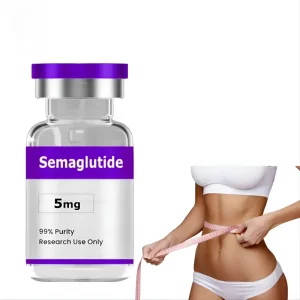
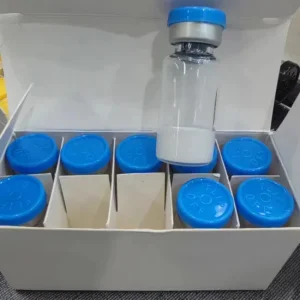
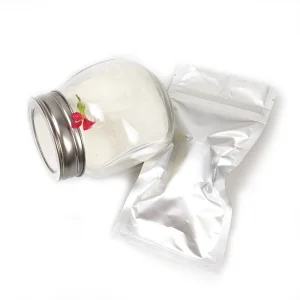
Authoritative guidance on regulatory compliance, chemical stability, custom synthesis parameters, and trans-Pacific delivery protocols.
Under United States federal law and FDA regulations, SARMs are classified as unapproved investigational new drugs. They cannot be introduced into interstate commerce for human consumption, dietary supplement formulation, or veterinary therapy. Importation into the U.S. is legally permitted exclusively for bona fide scientific research, in-vitro binding assays, cell-culture testing, and chemical characterization under "Research Use Only" (RUO) designations. Consignments must be addressed to qualified research institutions, corporate entities, or verified analytical facilities with appropriate TSCA Section 5 R&D declarations.
Our dedicated synthesis suites enforce strict clean-in-place (CIP) and steam-in-place (SIP) validated decontamination protocols between chemical production campaigns. Enantiomeric integrity is safeguarded using high-resolution chiral chromatographic columns and polarimetry checks. Furthermore, we mandate isolated HVAC air handling with negative pressure containment and HEPA filtration to eliminate any risk of airborne cross-contamination between small molecule APIs, SARMs, and high-potency peptide hormones.
Yes. We consider generic text-only Certificates of Analysis invalid for professional scientific diligence. With every commercial lot, our QC laboratory provides the complete analytical data package, including high-resolution RP-HPLC chromatograms with full peak integration tables, 1H-NMR spectra with multiplet chemical shifts, LC-MS total ion chromatograms, and headspace gas chromatography (HS-GC) residual solvent quantification matching ICH guidelines.
We work with international logistics providers experienced in chemical forwarding under DDP (Delivered Duty Paid) and CIP (Carriage and Insurance Paid) Incoterms 2020. Shipments carry compliant 10-digit Harmonized Tariff Schedule (HTS) codes, Safety Data Sheets (SDS) adhering to OSHA Hazard Communication Standard 2012 / GHS standards, and complete packing manifests to ensure prompt U.S. Customs and Border Protection clearance without ambiguous classifications.
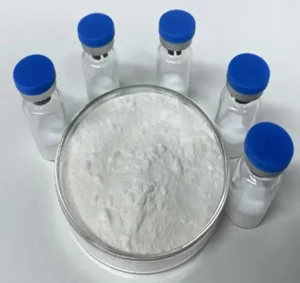
Bulk raw powder orders are sealed inside double anti-static food/pharma grade polyethylene bags, vacuum heat-sealed within heavy-gauge aluminum barrier pouches containing silica desiccants, and purged with pharmaceutical-grade argon to eliminate moisture and atmospheric oxygen. Exterior shipping containers utilize UN-certified tamper-evident fiber drums or heavy-wall corrugated shippers to withstand physical transit shocks.
We encourage independent verification. If an institutional client submits an unopened sample to an accredited third-party testing facility within 30 days of receipt and the HPLC assay indicates purity below contract specifications (≥99.0%) or detects unlisted synthesis impurities, our policy guarantees immediate free batch re-synthesis, replacement shipment, or full commercial credit refund.

