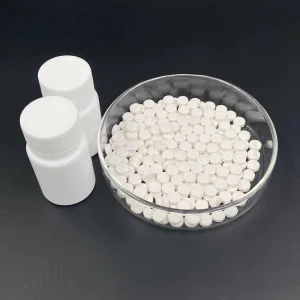
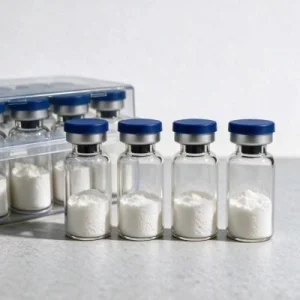
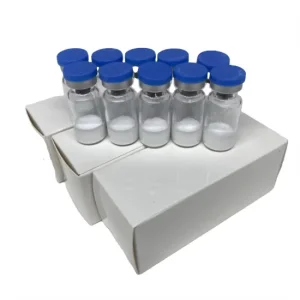
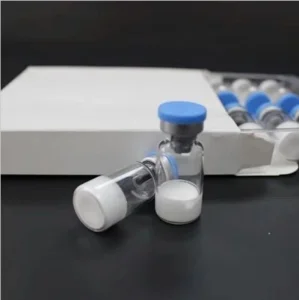
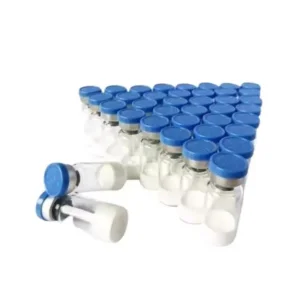
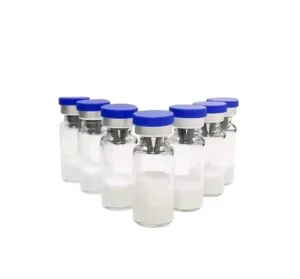
Verified purity analytical profiles, HPLC release documentation, and sterile-filtered lyophilization batches ready for immediate enterprise logistics distribution.
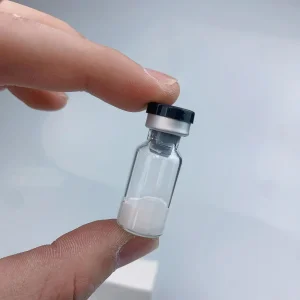
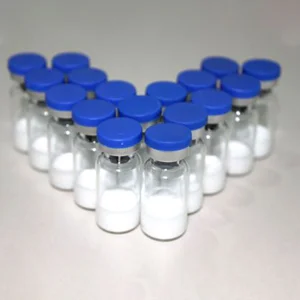
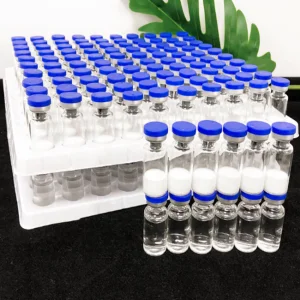
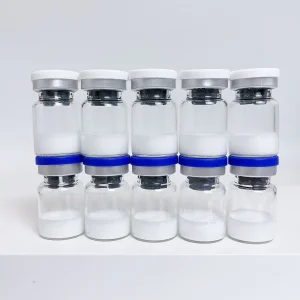
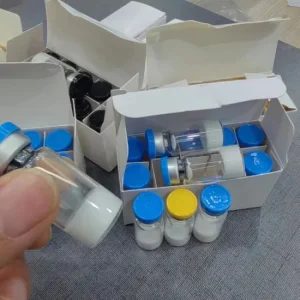
A rigorous examination of 2-(dimethylamino)ethyl 4-(butylamino)benzoate (Tetracaine base), its salt derivatives, pharmacodynamic profile, and synthesis criteria for international laboratory applications.
CAS 94-24-6 designates the chemical entity 2-(dimethylamino)ethyl 4-(butylamino)benzoate, commonly referred to in biomedical literature as Tetracaine or Amethocaine. Belongs structurally to the amino-ester class of local anesthetics, synthesized by the esterification of 4-(butylamino)benzoic acid with 2-(dimethylamino)ethanol. With a molecular formula of C15H24N2O2 and a molecular weight of 264.36 g/mol, the base compound forms crystalline white prisms or pale off-white powder, exhibiting exceptional solubility in lipid solvents, ethanol, and diethyl ether, while maintaining controlled solubility in neutral aqueous solutions.
The molecular pharmacology of CAS 94-24-6 relies on reversible, concentration-dependent blockade of voltage-gated sodium channels (Nav channels) located within neuronal axonal membranes. By binding stereoselectively to the local anesthetic receptor site inside the pore cavity of the alpha subunit, the molecule stabilizes the inactive confirmation of the channel, preventing transient sodium influx. Its prolonged duration of action and elevated potency—approximating 4 to 8 times that of procaine and lidocaine—stem from the hydrophobic butyl group attached to the aromatic nitrogen, driving rapid lipophilic partitioning into peripheral lipid bi-layers.
CAS 94-24-6 (Free Base) functions as the indispensable primary intermediate for synthesizing its hydrochloride salt (CAS 136-47-0). Tetracaine Base exhibits a melting point window of 41.0°C to 46.0°C, rendering precise temperature maintenance imperative throughout post-crystallization packaging and ocean transit. Through continuous differential scanning calorimetry (DSC) and powder X-ray diffraction (PXRD), our manufacturing unit guarantees the production of stable polymorphic Form I crystals, mitigating risks of spontaneous amorphization or agglomeration during international sea freight.
| Analytical Parameter | USP / EP Reference Standard | Industrial High-Purity Grade | Methodology / Analytical Equipment | Quality Verification |
|---|---|---|---|---|
| Chemical Identification | Conforms to Reference Standard | 100% Match with Primary Reference | FT-IR Spectroscopy & 1H-NMR (400 MHz) | Batch Verified |
| HPLC Assay (Dry Basis) | 98.0% – 102.0% | ≥ 99.50% (Area Normalization) | Reverse-Phase HPLC (C18, UV 310 nm) | Ultra Clean |
| Individual Impurity A (4-BABA) | ≤ 0.50% | ≤ 0.05% | Gradient RP-HPLC (Agilent 1260 Infinity II) | Negligible |
| Total Impurity Load | ≤ 1.00% | ≤ 0.20% | High Performance Liquid Chromatography | Trace Level |
| Residual Solvents (ICH Q3C) | Complies with Class 2/3 Guidelines | Below Detectable Limits (Methanol < 50 ppm) | Headspace Gas Chromatography (GC-FID) | Zero Toxins |
| Heavy Metals / Residue on Ignition | ≤ 0.10% Ash | ≤ 0.02% (Sulfated Ash < 0.01%) | Inductively Coupled Plasma (ICP-MS) | Pharma Level |
Harnessing automated distributed control loops, automated continuous synthesis, and green solvent closed-loop systems to eliminate supply volatility for global purchasers.
Transitioning from vintage batch vessels to continuous microchannel reactors for the transesterification phase. Enables microsecond temperature control, eliminating thermal hotspots and preventing hydrolytic side-cleavage.
Equipped with Process Analytical Technology (PAT), in-line Raman and Near-Infrared (NIR) probes continuously sample reactant conversions in real time, instantly recalibrating stoichiometric feeds for 99.8% raw yield consistency.
Environmental responsibility meets economic scale: our zero-discharge condensation towers recapture over 98.6% of process solvents, mitigating VOC emissions while shielding downstream B2B buyers from cost surges.
Final crystal crystallization occurs within Class 100,000 cleanrooms using controlled temperature ramp curves. This guarantees homogenous crystal diameter distributions, eliminating clumping during transport.
Pioneering integration vectors for CAS 94-24-6 in bio-degradable transdermal micro-arrays, targeted liposomal drug encapsulation, and clean catalytic synthesis routes.
Novel delivery paradigms focus on encapsulating CAS 94-24-6 within poly(lactic-co-glycolic acid) (PLGA) and solid lipid nanoparticles (SLNs). This formulation architecture extends the biological half-life from hours to multi-day continuous release, mitigating plasma spike toxicities while unlocking new potential in long-acting veterinary and surgical localized analgesia models.
The cosmetic science and dermatological therapeutic sectors are undergoing a paradigm shift from traditional syringes to painless dissolvable microneedle patches. By integrating micro-milled CAS 94-24-6 with cross-linked hyaluronic acid, our R&D partners achieve instantaneous stratum corneum penetration with targeted localized anesthetic onset in under 90 seconds.
Our long-term R&D roadmap includes implementing immobilised lipase enzyme catalysts for the ester linkage synthesis of CAS 94-24-6. This bio-catalytic methodology operates under ambient thermodynamic conditions (35°C–40°C), eliminating harsh organotin or sulfuric acid catalysts and slashing carbon emissions by 42% per metric ton synthesized.
Navigating global regulatory landscapes, risk hedging against feedstock price surges, and establishing secure dual-channel distribution routes.
Global availability of CAS 94-24-6 heavily relies on access to 4-aminobenzoic acid (PABA), n-butyl halides, and N,N-dimethylethanolamine (DMEA). Our vertically integrated precursor procurement ecosystem in Hebei maintains permanent strategic reserves of vital raw chemical inputs, preventing unexpected supply halts caused by petrochemical upstream price shocks.
Because CAS 94-24-6 base possesses a low melting point (41°C–46°C), traditional equatorial maritime transport risks partial liquefaction and cake compaction. We pack bulk drums using specialized high-barrier thermo-insulating thermal blankets and offer active reefer container services (15°C–25°C) to ensure pristine dry particulate flow upon unloading.
Importing fine active chemicals demands immaculate compliance. Every consignment is paired with a verified Certificate of Analysis (COA), safety data sheets (SDS) formatted to GHS Rev. 8 guidelines, non-controlled substance certificates, and validated HS Code declarations (2922.49 / 2922.50) to expedite border clearance through EU, US, and APAC customs.
Comprehensive analytical documentation, toxicological screening, and complete audit trail provenance supporting global corporate audits.
Every batch of CAS 94-24-6 undergoes screening for secondary amine nitrosation by-products. High-resolution LC-MS/MS detects trace NDMA, NDEA, and allied N-nitroso impurities below stringent 0.03 ppm safety thresholds.
Triple quadrupole ICP-MS analysis ensures zero residual catalyst contamination. Class 1 (As, Cd, Hg, Pb) and Class 2A heavy metals are verified far beneath international toxicological permissible daily exposure (PDE) limits.
From initial raw chemical intake to final drum palletization, an enterprise ERP logs every processing timestamp, operator signoff, HPLC chromatogram, and temperature monitoring record for immediate auditor retrieval.
Our dedicated regulatory support team provides tailored Drug Master File (DMF) technical packages, stability study protocols (Zone IVb testing), and localized technical consulting across English, Spanish, and European jurisdictions.
Clear, direct answers for QA directors, procurement officers, and lead chemical investigators.
CAS 94-24-6 designates Tetracaine in its Free Base chemical form (molecular weight 264.36 g/mol). It exhibits low aqueous solubility but excellent solubility in non-polar organic solvents, oils, and lipophilic bases, making it optimal for lipid formulations, transdermal ointments, and chemical synthesis. Conversely, CAS 136-47-0 is Tetracaine Hydrochloride, a hydrophilic salt form readily soluble in water (1:7.5), engineered primarily for injectable and aqueous ophthalmic formulations.
As an amino-ester derivative, the ester bond linking the aromatic 4-(butylamino)benzoate core to the 2-(dimethylamino)ethanol side chain represents the primary liability for hydrolytic cleavage. Under aqueous, humid, or acidic/basic conditions, it hydrolyzes into 4-(butylamino)benzoic acid and 2-(dimethylamino)ethanol. Packaging in hermetically sealed multi-layer foil pouches with active desiccant and nitrogen gas purging prevents this hydrolytic cascade.
Because the free base has a low melting threshold (41.0°C–46.0°C), maritime transit across hot corridors requires specialized thermal mitigation. We deploy insulated thermal cargo pallet blankets, secondary barrier linings, desiccants, and optional temperature-regulated reefer containers (15°C–22°C) equipped with digital continuous USB data loggers for temperature audit trails.
Every commercial delivery includes a comprehensive Batch Certificate of Analysis (COA) detailing quantitative HPLC assay percentages, high-resolution HPLC chromatograms showing peak areas for all related substances, FT-IR identity matches, melting point determinations, loss on drying (LOD), heavy metals residue assays, and headspace GC residual solvent analytics.
To accommodate both initial laboratory research formulations and full-scale industrial manufacturing, our MOQs begin at 100 grams for pilot qualification lots, scaling effortlessly to 25 kg fiber drums, metric-ton multi-pallet assignments, and long-term annual blanket supply arrangements supported by over 50 metric tons of annual plant capacity.
Tetracaine Free Base is classified worldwide as an ester-type local anesthetic and is not a scheduled narcotic or psychotropic substance under international UN drug conventions. While export declarations are processed under standardized non-controlled chemical HS codes (2922.49 / 2922.50), importing entities must ensure compliance with their national chemical regulatory frameworks (e.g., TSCA, REACH).
Yes. In addition to our standard crystalline powder, our manufacturing infrastructure provides customized fluid-energy jet milling to achieve fine D50 particle sizes (down to <10 μm) for topical micro-emulsions and specialized ophthalmic suspensions, as well as customized packaging configurations under cleanroom isolators.
When stored in original, unopened high-barrier foil packaging with nitrogen flushing at temperatures between 2°C and 8°C (protected from light and moisture), CAS 94-24-6 demonstrates a re-test period of 36 months. Room temperature storage (below 25°C) is acceptable for short-term handling, provided relative humidity remains below 60%.
Explore our integrated synthesis portfolio featuring metabolic regulators, receptor antagonists, cellular longevity cofactors, and advanced peptide sequences.