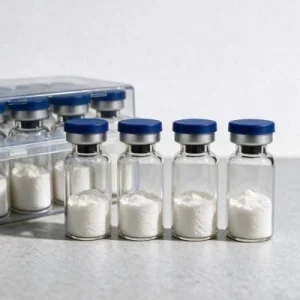
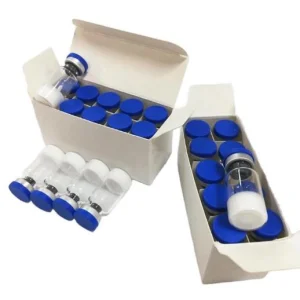
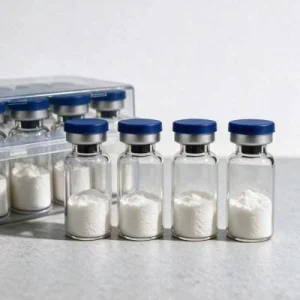
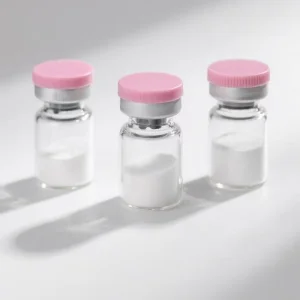
Verified laboratory-grade synthetic molecules, functional peptides, and specialized APIs configured for strict empirical analysis and pharmaceutical formulation development.

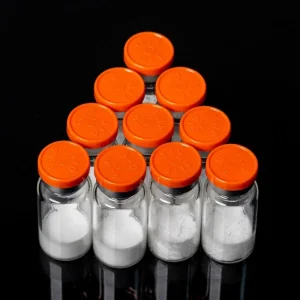
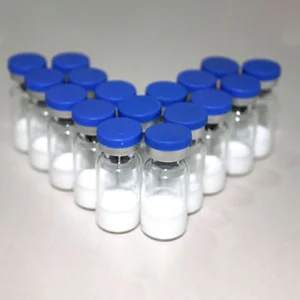
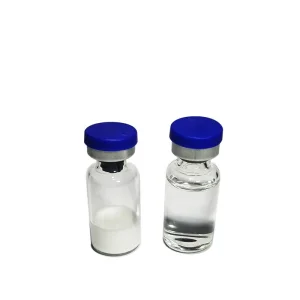
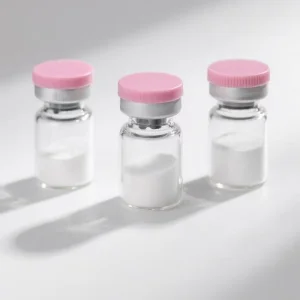
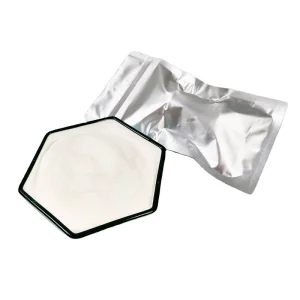

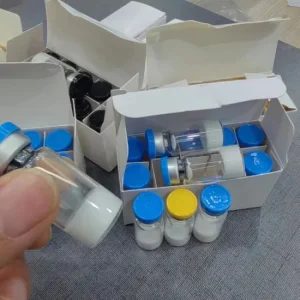
A comprehensive examination of chemical identity, non-steroidal androgen receptor affinity, and the transition from academic discovery to global contract research integration.
RAD 140, systematically designated as 2-chloro-4-[[(1R,2S)-1-[5-(4-cyanophenyl)-1,3,4-oxadiazol-2-yl]-2-hydroxypropyl]amino]-3-methylbenzonitrile, operates as an orally bioavailable, non-steroidal Selective Androgen Receptor Modulator (SARM). Designed to overcome the non-selective systemic exposure characteristic of conventional androgenic anabolic steroids (AAS), RAD 140 demonstrates a high selective affinity for the androgen receptor (Ki ≈ 7 nM). The molecule exhibits marked tissue selectivity, preferentially activating androgenic pathways in skeletal muscle and bone tissue while displaying minimal agonistic activity in accessory sex organs such as the prostate and seminal vesicles.
The industrial production of high-grade RAD 140 requires multi-step organic synthesis that demands stringent stoichiometric control to avoid chiral deviations and unreacted cyano-substituted intermediates. As international demand expands within academic institutes, contract research organizations (CROs), and biotechnology firms, the primary barrier to reproducible outcomes lies in supply chain heterogeneity. Reputable manufacturing protocols mandate robust chromatographic separation followed by crystallization techniques that effectively eliminate toxic reagents such as heavy metal coupling catalysts and organochlorine residues.
Internationally, RAD 140 is governed as an investigational new compound strictly designated for in vitro, ex vivo, and approved preclinical laboratory research. Enterprise distributors and institutional procurement offices rely on clear structural certification, comprehensive Safety Data Sheets (SDS), and traceable Certificates of Analysis (COA) to remain aligned with evolving multi-jurisdictional compliance frameworks. Material integrity remains critical to establishing uniform baseline pharmacological controls across longitudinal investigations.
Addressing structural characterization challenges, batch contamination vectors, and analytical validation protocols necessary for compliant enterprise procurement.
High-Performance Liquid Chromatography (HPLC) remains the industrial baseline for establishing RAD 140 purity metrics. Employing reversed-phase C18 analytical columns with gradient acetonitrile/water mobile phases containing 0.1% trifluoroacetic acid (TFA), validated methods isolate trace byproducts. A genuine research supply profile demands total area normalization exceeding 99.0%, with no single unknown impurity exceeding 0.10%.
Electrospray Ionization Liquid Chromatography-Mass Spectrometry (LC-ESI-MS) definitively proves monoisotopic identity (Exact Mass: 393.12 g/mol), confirming the precise [M+H]+ and [M+Na]+ adduct peaks. Furthermore, because the pharmacodynamic potency of RAD 140 is governed by stereochemistry at its chiral carbons, advanced production plants utilize circular dichroism and chiral HPLC to avoid the presence of biologically inactive or counter-productive stereoisomers.
Industrial scale-up utilizes inductively coupled plasma mass spectrometry (ICP-MS) to quantify potential elemental impurities (lead, arsenic, cadmium, mercury) down to parts-per-billion (<10 ppb) thresholds. Headspace Gas Chromatography (GC-HS) further guarantees that class 1 and class 2 residual process solvents (e.g., dichloromethane, hexane, tetrahydrofuran) remain substantially below standard ICH guidelines.
| Analytical Parameter | Acceptance Criteria | Methodology | QC Significance |
|---|---|---|---|
| Appearance | White to off-white crystalline solid | Visual Inspection | Absence of degradation or bulk oxidation |
| Identity (Structure) | Conforms to reference standard spectrum | 1H-NMR, 13C-NMR & LC-MS | Verification of target molecular backbone |
| Chromatographic Purity | ≥99.0% (Single Max Impurity ≤0.5%) | RP-HPLC (UV detection at 254 nm) | Elimination of synthesis intermediates |
| Assay (Dry Basis) | 98.0% – 102.0% | Quantitative Titrimetry / HPLC | Precise empirical batch stoichiometry |
| Loss on Drying (LOD) | ≤0.50% w/w | Gravimetric analysis (105°C) | Prevention of hydrolytic degradation |
| Heavy Metals (Pb, As, Cd, Hg) | Total ≤10 ppm (Individual <1 ppm) | ICP-MS Validation | Cellular viability preservation in assays |
Understanding regional compliance challenges, automated inventory tracking, and emerging clinical paradigms for the non-steroidal receptor modulator industry.
Within academic oncology research laboratories across North America and Europe, RAD 140 serves as a prominent candidate in studying cachexia (severe muscle loss associated with chronic diseases) and advanced androgen receptor-positive (AR+) breast cancer models. Because it acts as an AR agonist in target tissues without converting to estrogen via aromatase, it provides clean investigative vectors for measuring cellular apoptosis and muscle transcription cascades.
Recent neurochemical models explore the intrinsic neuroprotective efficacy of selective androgen activation. Preclinical rodent studies demonstrate that RAD 140 protects cultured neurons against kainate-induced apoptotic cell death. These ongoing inquiries highlight the potential for non-steroidal modulators to cross the blood-brain barrier without provoking systemic steroidal side effects, charting new ground in neurodegenerative therapeutic research.
Institutional procurement directors face persistent challenges with regulatory changes, transport documentation, and custom formulations. Modern chemical suppliers resolve these through bonded cold-chain logistics, blind drop-ship verification for retail brands, batch-specific digital COA databases accessible via QR codes, and integrated contract manufacturing (OEM/ODM) offering tailored particle milling and inert atmosphere packaging.
Direct, verified answers to the regulatory, chemical, and logistics questions most commonly submitted by industrial clients and procurement coordinators.
RAD 140 powder exhibits optimal long-term thermodynamic stability when stored in an airtight container protected from direct UV exposure, moisture, and elevated temperatures. For long-term archiving (>12 months), enterprise facilities store the pure lyophilized or crystalline material at controlled temperatures between -20°C and 4°C under desiccated conditions. When properly maintained in an inert atmosphere, the compound typically maintains chemical assay stability within ±0.2% over a 24-month period.
A rigorous procurement protocol requires a fully traceable Certificate of Analysis (COA) specifying the exact batch number, manufacturing date, and retest date. Crucially, the COA must be supported by an original High-Performance Liquid Chromatography (HPLC) chromatogram detailing retention times and peak areas, a Liquid Chromatography-Mass Spectrometry (LC-MS) read-out confirming molecular weight, and Proton Nuclear Magnetic Resonance (1H-NMR) spectrum for structural confirmation. Independent third-party laboratory verification should be available upon request.
Sub-standard syntheses often suffer from incomplete cyclization of the oxadiazole ring or residual precursor molecules like 2-chloro-4-aminobenzonitrile derivatives. Additionally, unreacted halogenated coupling agents and lingering polar solvents can compromise cellular assays. Premium chemical suppliers employ extensive solvent-crystallization protocols and flash column purification to suppress these residual side-products to below quantifiable detection limits.
Unlike testosterone and traditional synthetic anabolic compounds, RAD 140 does not undergo 5α-reduction to dihydrotestosterone (DHT), avoiding excessive androgenic stimulation in non-target epidermal and prostatic tissues. Furthermore, its chemical structure lacks the steroid ring motif, preventing substrate recognition by the cytochrome P450 aromatase enzyme, thus negating estrogenic signaling pathways entirely in metabolic models.
Explore our catalog of batch-certified metabolic regulators, tissue repair modulators, and high-purity peptides ready for immediate international dispatch.