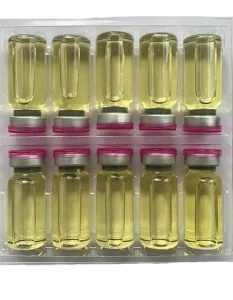
Direct batch procurement of active synthetic steroids, bio-peptides, and research chemical intermediates.
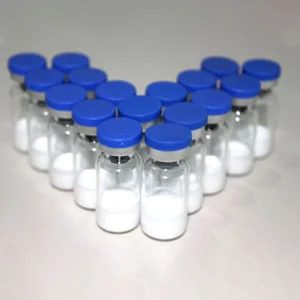
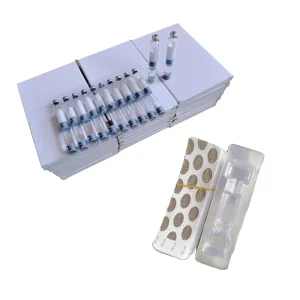
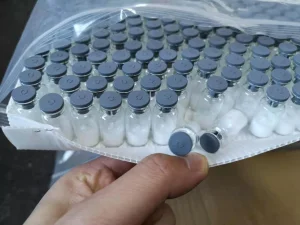
A heterocyclic steroid derivative marked by oxygen heteroatom substitution in the phenanthrene ring, demanding strict synthetic controls.
Oxandrolone, scientifically designated as (1S,3aS,3bR,5aS,7S,9aS,9bR,11aS)-1-hydroxy-1,9a-dimethylhexadecahydro-3H-cyclopenta[5,6]naphtho[1,2-c]furan-3-one, features a singular molecular modification: the carbon-2 atom within the A-ring of the steroidal nucleus is substituted by an oxygen atom, forming an internal cyclic lactone (2-oxa system).
This distinct heteroatom ring structure, accompanied by a 17α-methyl moiety, protects the compound from rapid Phase I hepatic oxidation while preserving strong androgen receptor binding affinity with a disproportionately low androgenic-to-anabolic activity ratio. Because lactone rings are intrinsically sensitive to alkaline ring-opening hydrolysis, factory production must guarantee strictly neutral to slightly acidic downstream crystallization environments.
When global pharmaceutical companies and clinical laboratories procure CAS 846-46-0 raw material from Chinese chemical factories, adherence to strict Pharmacopeial parameters is mandatory to prevent batch rejection during customs entrance and analytical release.
| Critical Parameter | Analytical Method | Acceptance Limit |
|---|---|---|
| Identification | FTIR & 1H-NMR Spectra | Conforms to Reference Standard |
| Assay (Anhydrous) | HPLC (Reverse Phase, UV 210 nm) | 97.0% – 102.0% w/w |
| Melting Range | Capillary Melting Point | 235 °C to 238 °C |
| Specific Optical Rotation | Polarimetry (c=1, Chloroform) | -18.0° to -24.0° |
| Heavy Metal Impurities | ICP-MS Method | ≤ 10 ppm |
| Residual Solvents | GC-Headspace (USP <467>) | Below ICH Option 1 Limits |
Enterprise procurement departments face significant operational risks when navigating quality variance, regulatory compliance, and cross-border chemical logistics.
A recurring vulnerability in the bulk API market is the presence of unreacted seco-acid intermediates and oxidized sterol derivatives. Low-tier processing plants frequently cut crystallization stages, yielding powders that report >98% by non-selective titration but fall below 92% under high-resolution HPLC-DAD. International buyers require authentic chromatograms with defined relative retention times (RRT) for known impurities.
CAS 846-46-0 occupies a regulated status across numerous jurisdictions, classified under Harmonized Tariff Schedule (HTS) 2937.29. Sourcing managers must partner directly with Chinese manufacturers capable of generating auditable export declarations, full material safety data sheets (MSDS/SDS) compliant with GHS Revision 9, and verified Certificates of Origin to avoid catastrophic freight impoundments.
Solid-dosage contract development and manufacturing organizations (CDMOs) necessitate micro-fine API grades. Unmicronized Oxandrolone displays erratic dissolution profiles due to its strong lipophilicity and low water solubility. Tier-1 Chinese suppliers provide jet-milled micronization where D90 < 15 μm, enabling predictable excipient blending and uniform compression behavior.
A multi-stage chemical synthesis conversion utilizing natural phytosterols to build the complex 2-oxa-androstane nucleus.
The manufacturing process begins with microbial degradation of natural plant sterols (soy and pine phytosterols) to yield androst-4-ene-3,17-dione (4-AD) or 9α-hydroxy-4-AD. Through precise Grignard methylation at the C-17 carbonyl position, industrial facilities obtain 17α-methyltestosterone or Mestanolone (17α-methyl-5α-dihydrotestosterone).
Chinese fine chemical industrial parks in Hebei, Jiangsu, and Hubei deploy large-scale 3000L glass-lined reactors to control reaction exotherms during Grignard additions, ensuring that stereoselective orientation at C-17 exceeds 99.5% β-hydroxyl / α-methyl alignment.
The pivotal synthetic transition involves oxidative ring cleavage of Mestanolone. Factories utilize lead tetraacetate/osmium tetroxide catalytic regimes or industrial ozonolysis to selectively break the C1-C2 bond, producing the intermediate 17β-hydroxy-17α-methyl-1-oxo-2,3-secoandrostan-3-oic acid.
The resultant seco-acid undergoes mild sodium borohydride (NaBH4) reduction of the C-1 aldehyde to a primary alcohol, followed by acid-catalyzed internal esterification (lactonization). This generates the signature 2-oxa-5α-androstan-3-one ring system of CAS 846-46-0 with minimal degradation of the tertiary 17-hydroxyl center.
Microbial side-chain cleavage of phytosterols yields high-grade 4-AD steroidal backbones.
Selective 17-alkylation via methylmagnesium chloride under strict anhydrous conditions.
Controlled ozonolysis followed by selective reduction to form the stable 2-oxa lactone cycle.
Multi-stage solvent recrystallization in methanol-water, followed by sterile air jet milling.
Advanced spectral and chromatographic validation regimes guaranteeing reproducible batch performance.
Every industrial production batch is tested on an Agilent 1260/1290 Infinity II system. Purity determination utilizes a C18 reverse-phase column (4.6 mm × 250 mm, 5 μm) with an acetonitrile-water mobile phase gradient. Limits for known synthesis impurities (such as unlactonized seco-acid and dehydrated analogs) are restricted to ≤0.10% each, with total secondary peaks strictly below 0.50%.
Identity verification transcends standard infrared matching. High-resolution electrospray ionization mass spectrometry (ESI-HRMS) must reveal the exact protonated precursor ion $[M+H]^+$ at $m/z\ 307.22$, confirming molecular formula $C_{19}H_{30}O_3$. Furthermore, 400 MHz 1H-NMR and 13C-NMR spectroscopy confirm absence of C-5 epimeric anomalies, verifying genuine 5α-trans stereochemistry across the ring junction.
Because the synthesis utilizes volatile organic media and potential heavy metal oxidants, Chinese GMP-aligned manufacturers perform headspace gas chromatography (GC-HS) for Class 2/3 solvents (methanol, ethyl acetate, methylene chloride). Inductively coupled plasma mass spectrometry (ICP-MS) screens for trace heavy elements (Lead, Arsenic, Cadmium, Mercury < 0.5 ppm), delivering absolute pharmacological security.
Transitioning from traditional batch reactions to continuous-flow green chemistry and automated digital manufacturing.
Traditional industrial synthesis utilizes large-volume batch oxidation to cleave the steroid ring, presenting thermal runaway hazards and local degradation. Chinese manufacturing labs are migrating toward microchannel continuous flow chemical reactors. By maintaining microsecond heat dissipation and precise residence times, continuous ozonolysis increases A-ring cleavage yields by 14% while lowering oxidative solvent waste by 40%.
A transformative development on the 2026–2028 roadmap is the integration of engineered Baeyer-Villiger monooxygenases (BVMOs). These bio-catalytic enzymes selectively insert oxygen directly into steroidal ketones under ambient aqueous conditions, eliminating harsh metallic oxidants and significantly reducing hazardous wastewater generation in compliance with China's National Green Factory initiatives.
A global breakdown of legal frameworks governing CAS 846-46-0 importation, handling, and supply chain accountability.
In the United States, Oxandrolone is cataloged as a Schedule III controlled substance under the Anabolic Steroids Control Act. Importers must hold valid DEA Form 222 or DEA 357 manufacturing quotas. Synthetic chemical suppliers in China must furnish compliant Drug Master Files (DMF) or complete Open-Part regulatory packages to support FDA IND/ANDA filing protocols.
Consignments entering the European Economic Area require strict adherence to ECHA REACH registration criteria for quantities exceeding 1 metric ton annually. Qualified laboratory buyers must supply end-user statements confirming compliance with Good Manufacturing Practice (GMP) guidelines under Directive 2001/83/EC, ensuring complete traceability through Qualified Persons (QP).
China's National Medical Products Administration (NMPA) maintains stringent export clearance licensing for synthetic steroidal hormones under dual-use chemical export control catalogs. Responsible Chinese manufacturers handle pre-shipment inspections, customs declared tariff codes (HS 2937.29), and direct consular notarization for enterprise procurement clients.
Engineered cold-barrier packaging, bonded warehousing options, and multi-tier quality guarantees for institutional orders.
Triple-barrier hermetically sealed aluminum foil bags packed inside reinforced fiber drums with internal desiccant canisters and temperature data loggers to monitor ocean/air transport conditions.
Every commercial lot supports blind re-testing by independent accredited analytical institutions (SGS, Intertek, or client-nominated ISO 17025 laboratories) before final invoice settlement.
Flexible commercial agreements supporting USD, EUR, and CNH escrow accounts, backed by formal Proforma Invoices and comprehensive freight-forwarder Bill of Lading documentation.
Dedicated documentation teams deliver prompt turnaround for batch-specific COAs, safety datasheets, technical declarations, and custom packaging configurations within one business day.
In-depth responses to critical analytical, regulatory, and logistics queries asked by global pharmaceutical procurement teams.
The unique Chemical Abstracts Service registry designation is CAS 846-46-0. Scientifically, it is designated as 17β-hydroxy-17α-methyl-2-oxa-5α-androstan-3-one and known commercially in medicinal reference libraries as Oxandrolone, Anavar, or Protivar.
The cyclic lactone ring is susceptible to basic hydrolysis, yielding inactive seco-acid salts. Leading Chinese factories execute all post-reduction handling, charcoal filtration, and crystallization steps at strictly controlled pH levels between 5.5 and 6.8. Final vacuum tray drying is conducted below 45 °C under nitrogen purging to prevent moisture-induced lactone ring opening.
Each production consignment is accompanied by a formal Certificate of Analysis (COA) containing raw HPLC chromatograms with integration tables, FTIR spectral overlays matching pharmacopeial references, 1H/13C-NMR data, loss on drying (≤0.5%), residue on ignition (≤0.1%), heavy metals report via ICP-MS, and residual solvent quantification via GC-HS.
Standard laboratory trial quantities start at 100g to 500g in heat-sealed multi-layer aluminum vacuum pouches. Industrial production orders are supplied in 1 kg, 5 kg, 10 kg, and 25 kg tamper-evident polyethylene-lined fiber drums, customized to buyer labeling guidelines.
Chinese API exporters provide full export customs declarations under HS Code 2937.29. Depending on the destination territory, shipments are coordinated through specialized chemical logistics partners utilizing bonded freight channels or point-to-point courier solutions with pre-cleared documentation to ensure frictionless transit.
The validated re-test period is 36 months from manufacturing date when stored in original unopened containers. Recommended storage is a controlled room temperature of 15 °C to 25 °C (with excursions permitted between 2 °C and 30 °C), shielded from direct light, excessive moisture, and strong alkaline atmospheres.
Comprehensive portfolio of high-demand metabolic agonists, analytical standards, and specialized active ingredients.
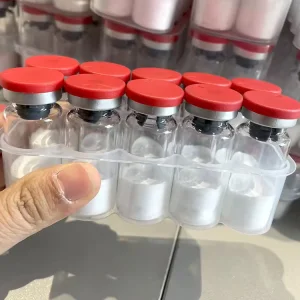
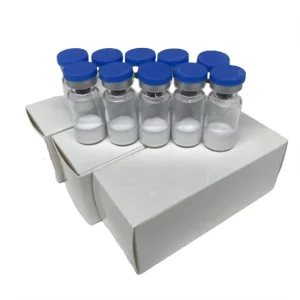
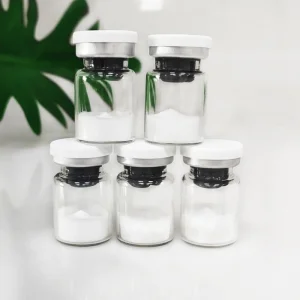
Connect directly with our chemical engineering and export documentation team to request current batch COAs, pilot batch samples, or commercial volume price schedules.