Verified laboratory standards, targeted active peptides, and high-purity chemical intermediates manufactured under stringent ISO/GMP-equivalent quality release protocols.
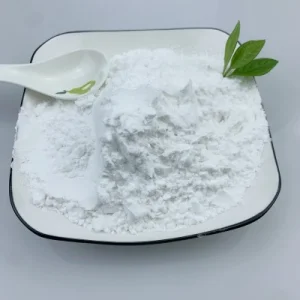
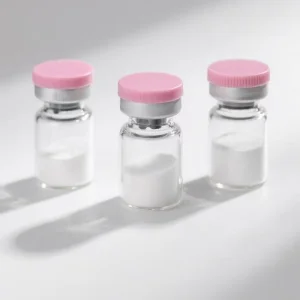
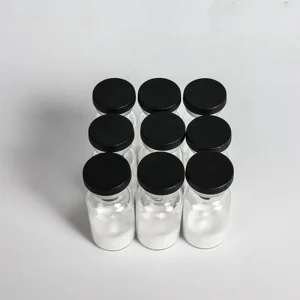
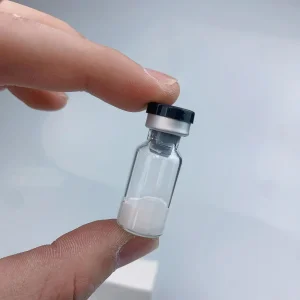
An exhaustive process chemistry analysis of tert-butyl 4-(phenylamino)piperidine-1-carboxylate (CAS 125541-22-2) for advanced API research and commercial synthesis pipelines.
CAS 125541-22-2, chemically designated as tert-butyl 4-(phenylamino)piperidine-1-carboxylate (molecular formula C16H24N2O2, MW 276.37 g/mol), represents a foundational heterocyclic building block within modern nitrogen-heterocycle medicinal chemistry. The molecular architecture strategically pairs an amine-functionalized piperidine ring with a chemically stable, acid-labile tert-butoxycarbonyl (Boc) protecting group. This structural conformation provides exceptional orthogonality during multi-step organic synthesis, making it an indispensable intermediate in the development of targeted central nervous system (CNS) agents, advanced analgesics, and specialized receptor ligands.
Industrial synthesis of high-tier 125541-22-2 demands rigorous process chemistry to avoid impurity carryover. Historically, pathways utilizing reductive amination of 1-Boc-4-piperidone with aniline suffered from persistent secondary amine imbalances, unreacted carbonyl residues, and excessive solvent burdens. Miaoou’s modern synthesis roadmap introduces continuous catalytic hydrogenation and proprietary palladium-free Buchwald-Hartwig amination protocols. By optimizing the thermodynamic parameters, temperature gradients, and heterogeneous catalytic matrices, we achieve crude reaction purities exceeding 98.5%, which are subsequently elevated above 99.5% via selective crystallization techniques.
| Analytical Parameter | Acceptance Criteria | Typical Industrial Batch Result | Verification Method |
|---|---|---|---|
| Chemical Appearance | Off-white to pure crystalline powder | Pure White Crystalline Powder | Visual Inspection (USP <630>) |
| Chromatographic Purity (HPLC) | ≥ 99.00% (Area Normalization) | 99.68% - 99.85% | RP-HPLC (C18, UV 254nm / 210nm) |
| Identity Confirmation | Conforms to molecular structure | Fully Conforms to Reference Standard | 1H-NMR, 13C-NMR, FT-IR & HR-MS |
| Individual Related Impurities | ≤ 0.15% | < 0.05% (Below Detection Limit) | High-Resolution LC-MS/MS |
| Loss on Drying (LOD) | ≤ 0.50% w/w | 0.18% w/w | Gravimetric Vacuum Oven (40°C, 4h) |
| Residual Solvents (ICH Q3C) | Below ICH Thresholds (Methanol, DCM, Tol.) | Passed (Class 2 & 3 Controlled) | Headspace Gas Chromatography (GC-FID) |
| Heavy Metal Residues (ICH Q3D) | Total < 10 ppm, Pd < 5 ppm | < 1 ppm (Trace Level) | ICP-MS Inductively Coupled Plasma |
The pharmaceutical industry's heightened focus on genotoxic and mutagenic impurities (specifically alkylating by-products and nitrosamine precursors) has completely redefined the procurement standards for raw amine intermediates. Our technical operations employ comprehensive nitrosamine risk assessments (NRA) on all commercial CAS 125541-22-2 batches. By completely sequestering secondary amines from nitrosating agents in acidic media and utilizing dedicated continuous-flow processing loops, Miaoou eliminates NDMA/NDEA contamination risks down to parts-per-billion (ppb) detection thresholds.
How our automated, continuous-flow synthesis facilities protect international pharmaceutical manufacturers from batch failures, price volatility, and geopolitical supply chain bottlenecks.
Moving beyond conventional stirred-tank reactors (STR), our manufacturing line incorporates modular micro-reactor platforms for CAS 125541-22-2 synthesis. Continuous-flow chemistry delivers millisecond-level mixing precision, superior heat exchange efficiency, and tight control over transient reaction intermediates, practically eliminating runaway exotherms and thermal degradation impurities.
Every batch parameter—from raw material stoichiometric feeding to inert atmosphere crystallization—is managed through Distributed Control Systems (DCS). With continuous automated data logging under 21 CFR Part 11 principles, our facility eliminates operator variance, guarantees cross-batch reproducibility, and provides an unbroken digital trail for client regulatory filings.
Sustainable fine-chemical production is essential to long-term corporate governance. Our plant incorporates Zero Liquid Discharge (ZLD) effluent infrastructure, closed-loop solvent reclamation units with >95% recovery rates, and regenerative thermal oxidizers (RTO) for VOC containment, ensuring continuous production without fear of environmental shutdown orders.
Addressing the systemic challenges encountered by Western pharmaceutical directors, biotech CROs, and industrial procurement executives in chemical supply continuity.
The international intermediate market is saturated with trading brokers who commingle outputs from unverified secondary suppliers. This leads to critical batch-to-batch variation, varying crystallization forms, and unexpected catalytic poisoning in downstream synthesis. Miaoou serves exclusively as a primary synthesizing manufacturer: every shipment of 125541-22-2 originates from identical dedicated reactor lines with locked operational parameters, eliminating upstream synthesis drift.
Contract Research Organizations (CROs) frequently face substantial friction when scaling promising candidates from gram-scale discovery batches to multi-hundred kilogram pilot campaigns. Our dual-tiered pilot and metric-ton infrastructure bridges this divide. We supply laboratory-scale grams with complete analytical certification for early qualification, and seamlessly transition into metric-ton bulk drums under identical impurity profiles without requiring method re-validation.
Navigating complex international customs frameworks, chemical substance registries, and legal compliance across North America, the European Union, and the Asia-Pacific region.
Fully documented chemical identity profiles conforming to EU REACH registrations and US EPA TSCA exemption protocols for R&D and commercial intermediate synthesis.
End-to-end logistics with precise HS code classification, professional customs declaration declarations, certified SDS (GHS Rev. 9), and bonded export corridors.
Direct access to process chemistry specialists who assist client QA/QC teams with analytical method transfer, validation assays, and impurity identification.
Multi-layer climate-controlled packaging designed to prevent moisture absorption, photolytic degradation, and thermal destabilization throughout international transit.
Pioneering green synthesis, biocatalysis, and continuous predictive optimization for nitrogen-heterocyclic pharmaceutical building blocks.
Systematic replacement of hazardous halogenated solvents and volatile aromatics with bio-derived alternatives (such as 2-MeTHF and Cyrene) in our crystallization cascades, lowering process mass intensity (PMI) by 38% while improving crystalline uniformity.
Developing robust transaminase and imine reductase enzyme cascades capable of performing direct amination under ambient aqueous conditions, eliminating heavy-metal catalyst dependence and achieving zero trace-metal burdens in downstream API synthesis.
Integrating online real-time spectroscopic feedback (PAT - Process Analytical Technology via in-line Raman and UV-Vis probes) connected to machine-learning control algorithms that dynamically adjust flow rates and residence times to safeguard purity standards automatically.
Direct answers to the most rigorous analytical, operational, and commercial questions posed by laboratory buyers, QC chemists, and supply-chain auditors.
The tert-butoxycarbonyl (Boc) moiety serves as an orthogonal, base-stable protecting group on the piperidine nitrogen. During subsequent functionalization of the secondary phenylamino group (such as N-alkylation, acylation, or cyclization), the ring nitrogen remains completely shielded. Following reaction completion, the Boc group is selectively cleaved under mild acidic conditions (such as trifluoroacetic acid or anhydrous HCl in dioxane) yielding the unprotected cyclic piperidine amine with quantitative recovery.
When transition-metal catalysts are employed in cross-coupling pathways, our downstream refining incorporates functionalized silica-supported thiol metal scavengers and multi-stage recrystallization passes. All batches are subjected to inductively coupled plasma mass spectrometry (ICP-MS) testing conforming to ICH Q3D elemental impurity limits, guaranteeing residual palladium levels remain strictly below 5 ppm (typically < 1 ppm), ensuring compliance for pharmaceutical intermediates.
Every delivery includes an exhaustive Certificate of Analysis (COA) containing the verified batch number, structural characterization (1H-NMR, 13C-NMR, HR-MS, FT-IR), raw reverse-phase HPLC chromatograms confirming purity ≥99.5%, Headspace GC data for residual solvents (ICH Q3C), loss on drying (LOD), Karl Fischer water titration, and ash content determinations.
CAS 125541-22-2 should be stored in hermetically sealed, light-resistant containers under dry, well-ventilated conditions at 2°C to 8°C (or controlled ambient 20°C for short duration). Under our nitrogen-purged, multi-barrier packaging (vacuum sealed polyethylene double inner bag enclosed in an anti-static aluminum foil barrier within a high-density fiber drum), the material maintains a verified retest shelf life of 24 months without physical or chemical degradation.
With over 15 years of chemical export operations, our logistics department manages comprehensive global trade protocols. We provide fully compliant, internationally recognized Harmonized System (HS) classifications, multi-language GHS-compliant Safety Data Sheets (SDS), commercial invoices, packing lists, and non-dangerous goods declarations where applicable. Furthermore, we offer complete tracking and support until final delivery at the client’s facility.
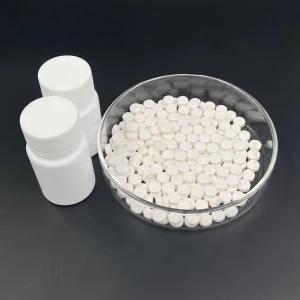
Yes. In addition to our standardized high-density crystalline powder, our manufacturing operations feature specialized controlled crystallization and jet-milling equipment. We can fine-tune crystal habit, bulk density, and particle size distribution (D10, D50, D90) according to client formulation specifications to optimize flowability, dissolution rates, and processing characteristics.
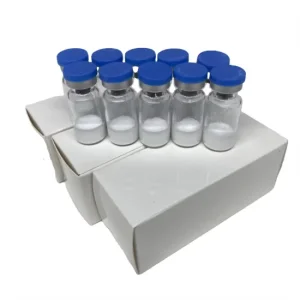
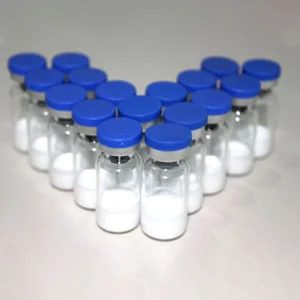
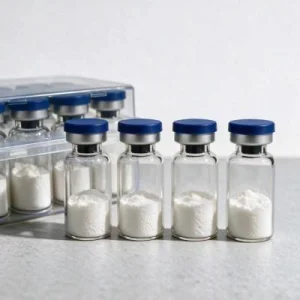
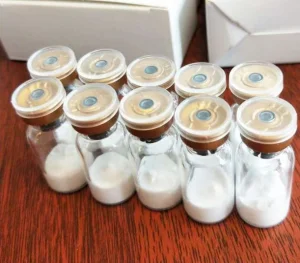
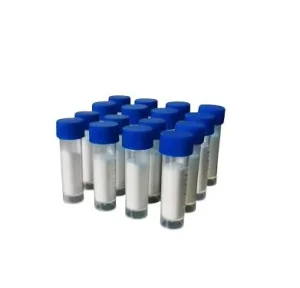
High-purity lyophilized research peptides, specialized metabolic analogs, and precision therapeutic formulations for scientific qualification and advanced synthesis.
Connect directly with our senior process chemistry team for analytical validation packages, comprehensive COAs, custom metric-ton quotations, or specialized pharmaceutical intermediate synthesis. All inquiries receive technical review and commercial feedback within 24 business hours.

