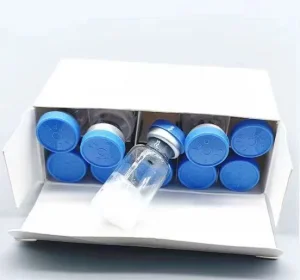
Procure reference-grade research APIs, amino acid conjugates, and bioactive standards manufactured under strict analytical quality control and verified via batch HPLC/MS spectrometry.
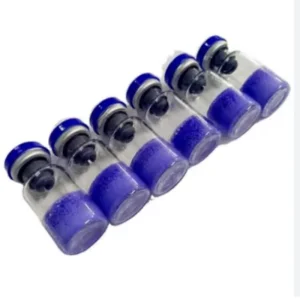
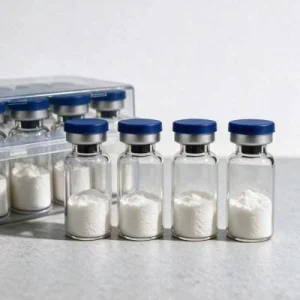
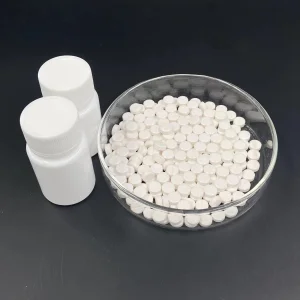
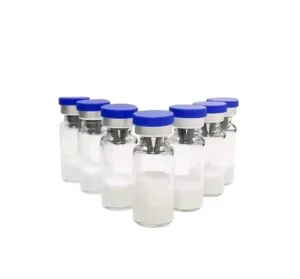
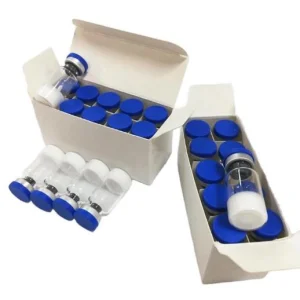
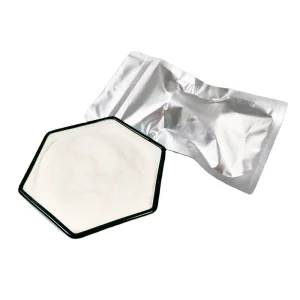
Procaine Base (2-(diethylamino)ethyl 4-aminobenzoate, CAS 59-46-1) serves as an indispensable local anesthetic agent of the amino ester class and a key active pharmaceutical precursor. Below is the validated physicochemical profile certified by top-tier Chinese synthesis facilities.
| Analytical Parameter | Monograph Standard (USP / EP / BP) | China Factory Release Benchmark | Test Methodology |
|---|---|---|---|
| Chemical Nomenclature | 2-(Diethylamino)ethyl 4-aminobenzoate | CAS 59-46-1 / Procaine Base | Structure Verification (FT-IR / 1H-NMR) |
| Molecular Formula & Weight | C13H20N2O2 | 236.31 g/mol | Conforms to Reference Standard | High-Resolution MS (ESI-TOF) |
| Assay (Purity) | 99.0% - 101.0% (dried basis) | ≥99.50% (Single peak integration) | HPLC (UV Detection @ 290 nm) |
| Physical Appearance | White crystalline powder or granular crystals | Ultra-pure white crystal; odorless | Visual / Sensory Inspection |
| Melting Range | 61.0°C to 63.5°C | 61.5°C – 62.8°C sharp transition | Capillary Melting Apparatus / DSC |
| Related Impurity A (4-Aminobenzoic Acid) | ≤ 0.10% | < 0.02% (ND or Trace) | Reverse-Phase HPLC |
| Total Unknown Impurities | ≤ 0.50% | ≤ 0.15% cumulative | Area Normalization HPLC |
| Residual Solvents (ICH Q3C) | Class 2 (Toluene ≤ 890 ppm; Methanol ≤ 3000 ppm) | Class 3 only (Ethanol < 500 ppm; Ethyl Acetate < 200 ppm) | Headspace Gas Chromatography (GC-FID) |
| Heavy Metals / Residue on Ignition | ≤ 10 ppm / ≤ 0.1% | < 5 ppm / < 0.05% | ICP-MS / Muffle Furnace 600°C |
China's fine-chemical infrastructure offers unmatched vertical synthesis integration, multi-ton volume elasticity, and advanced process optimization for Procaine Base and its related salts.
Domestic Chinese synthesis routes leverage dedicated upstream synthesis of 4-aminobenzoic acid (PABA) and 2-diethylaminoethanol (DEAE). By avoiding third-party precursor bottlenecks, Chinese manufacturers maintain uninterrupted year-round synthesis cycles with predictable pricing structures.
Leading tier-1 facilities have phased out obsolete batch vessels in favor of continuous micro-channel transesterification and catalytic hydrogenation. This process drastically narrows the polymorph variation, suppresses thermal dimerization, and maximizes product assay consistency above 99.5%.
Modernized Chinese manufacturing clusters operate inside national-level chemical parks equipped with continuous VOC recapture, catalytic thermal oxidation, and industrial effluent scrubbing. Full compliance with ICH Q7 and closed-loop crystallization ensures environmental reliability.
A rigorous examination of shifting regulatory frameworks, the longevity of amino ester local anesthetics, and global supply resilience strategies.
While amide anesthetics (such as Lidocaine and Bupivacaine) dominate cardiac and extensive regional anesthesia, Procaine (CAS 59-46-1) maintains an essential clinical position. Rapid hydrolysis by plasma pseudocholinesterase results in exceptionally low systemic toxicity and prevents accumulation in hepatic-impaired patients.
Global regulatory bodies (US FDA, EMA, NMPA) enforce zero-tolerance protocols for mutagenic impurities. Enterprise buyers now mandate that Procaine manufacturers conduct comprehensive Nitrosamine Risk Assessments (CPCA categorizations) with verified limits below 0.03 ppm across secondary amine pathways.
Western contract manufacturers and animal health pharmaceutical groups have moved from "Just-in-Time" to "Just-in-Case" procurement models. Chinese suppliers support this by providing bonded warehousing, 24-month lot reservation, and temperature-controlled palletized sea/air consolidations.
Procaine Base (CAS 59-46-1) exhibits unique chemical reactivity, solubility characteristics, and pharmacological parameters tailored across multiple distinct sectors.
Procaine is converted into its water-soluble hydrochloride salt (CAS 51-05-8) for local infiltration, peripheral nerve block, and spinal anesthesia. It blocks voltage-gated sodium channels in peripheral sensory neurons without eliciting significant vasoconstriction or local tissue necrosis.
CAS 59-46-1 is extensively utilized in animal medicine as an equitable complexing agent. The most notable derivative, Procaine Penicillin G, provides sustained repository antibacterial release over 24-48 hours in cattle, swine, and equine treatments while attenuating local injection pain.
The free base form (CAS 59-46-1) possesses lipophilic permeation characteristics superior to the hydrochloride salt. This makes it an ideal API for non-greasy microemulsions, transdermal anesthetic patches, and aesthetic numbing formulations utilized in dermatological micro-needling and tattooing.
Procaine Base serves as a foundational building block for complex pharmaceutical molecules, antiarrhythmic agents (such as Procainamide synthesis intermediates), and specialized cationic surfactant complexes deployed in controlled-release drug delivery systems.
Technical requirements, audit metrics, and logistics compliance standards mandated by tier-one pharmaceutical procurement groups.
Enterprise procurement requires total documentation traceability. Qualified Chinese suppliers supply complete Open-Part Drug Master Files (DMF), Certificates of Suitability (CEP ready), Written Confirmations (WC), and detailed stability profiles under ICH Q1A (25°C/60% RH long-term; 40°C/75% RH accelerated).
For parenteral grade manufacturing, total bacterial endotoxin control is critical. Batches are released with verified endotoxin counts <0.10 EU/mg and bioburden limits <10 CFU/g. Heavy metal screening via ICP-MS guarantees elemental impurities conform strictly to ICH Q3D Option 1 specifications.
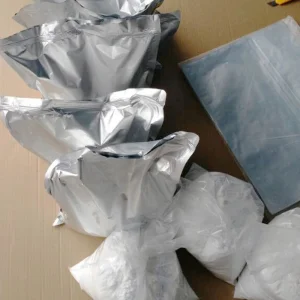
Procaine Base is sensitive to prolonged oxidative exposure and light-induced discoloration. Export goods are triple-packed: dual pharmaceutical-grade low-density polyethylene (LDPE) food-contact liners with active desiccant and nitrogen flushing, encased in heat-sealed aluminium foil envelopes and UN-certified fibre drums (25kg net).
Definitive responses to the most critical inquiries submitted by pharmaceutical developers, formulation chemists, and global trade managers.
CAS 59-46-1 designates Procaine Base (C13H20N2O2), the non-ionized, lipophilic free base form with a melting point around 61°C and limited water solubility (~1:200). CAS 51-05-8 is Procaine Hydrochloride (C13H20N2O2·HCl), a salt form created by stoichiometric reaction with hydrochloric acid. The HCl salt is highly water-soluble (1:1), making it the standard choice for parenteral aqueous injections, whereas the free base is preferred for topical systems and organic synthesis.
Procaine Base can undergo photochemical oxidation and ester cleavage if exposed to warmth and oxygen, forming trace 4-aminobenzoic acid (PABA) and diethylaminoethanol, leading to yellow discoloration. We mitigate this through vacuum deaeration and nitrogen back-flushing in light-impervious multi-ply aluminium barriers, maintaining product integrity for up to 36 months under standard warehouse storage below 25°C.
The primary monitored impurity is Impurity A: 4-Aminobenzoic acid (PABA) resulting from hydrolysis of the ester bridge. Additional related substances include Impurity B (2-(diethylamino)ethanol), Impurity C (ethyl 4-aminobenzoate / benzocaine traces), and potential halogenated derivatives. Our factory release criteria enforce total impurities below 0.20%, with no single unidentified peak exceeding 0.05%.
Yes. Every batch delivery is accompanied by an authenticated Certificate of Analysis (COA) containing exact batch numbers, real-time HPLC chromatograms, GC residual solvent data, FTIR identity confirmation, and heavy metal ICP-MS screening. On request for qualified commercial clients, full Drug Master File (DMF) technical packages, Nitrosamine assessment statements, and non-animal origin (BSE/TSE) certificates are issued.
For trial evaluation and laboratory development, sample sizes from 100g to 1kg can be dispatched within 48-72 hours via specialized chemical couriers. Commercial production scales of 25kg, 500kg, and multi-ton consignments feature an ex-factory lead time of 7 to 14 days, supported by FOB, CIF, or DDP Incoterms according to buyer preference.
In specialized therapeutic protocols (such as neural therapy pioneered by Huneke and anti-aging applications popularized by Aslan), Procaine is utilized for its membrane-stabilizing, anti-inflammatory, and microcirculatory perfusion-enhancing properties. When injected into autonomic nerve points or scar tissue, it repolarizes dysfunctional cell membranes, attenuating chronic nociceptive signaling loops.
Explore our extended synthetic portfolio including GLP-1 receptor agonists, growth hormone secretagogues, and validated active precursors for advanced formulation research.