Explore our factory-direct research peptides, specialized amino acid sequences, and fine organic synthesis chemical precursors, supplied with comprehensive analytical validation and guaranteed batch stability.
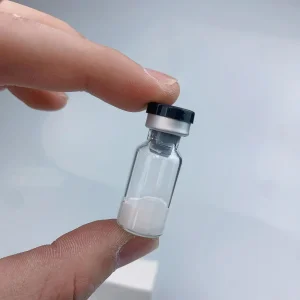
Isopropyl Alcohol (CAS 67-63-0, 2-Propanol, Isopropanol) represents one of the most versatile and indispensable secondary aliphatic alcohol solvents in global industrial chemistry. Operating at the confluence of microelectronics manufacturing, high-potency active pharmaceutical ingredient (API) synthesis, and rigorous clinical sanitization, procurement of CAS 67-63-0 requires an exhaustive balance of thermodynamic precision, trace-level analytical control, and infallible cross-border supply chain logistics.
With a chemical formula of C3H8O and a molecular weight of 60.1 g/mol, CAS 67-63-0 forms a polar protic system characterized by its ability to dissolve non-polar triglycerides, chlorinated hydrocarbons, and delicate organic crystal matrices without hydrolytic cleavage.
In high-density lithography and commercial solid-phase peptide synthesis (SPPS), residual non-volatile matter, chloride ions, or iron complexes precipitate irreparable defects and side reactions. Our fractional multi-stage distillation reduces total metallic contaminants below 10 ppt.
Our global manufacturing centers hold direct compliance authorizations across the United States Pharmacopeia (USP-NF), European Pharmacopoeia (Ph. Eur.), SEMI Grade Standards, EU REACH Annex XIV/XVII, and OSHA GHS standards, mitigating hazardous shipment hold-ups.
Enterprises do not merely procure Isopropanol; they purchase yield stability, surface tension control, reaction kinetic purity, and operational safety. Explore how our engineered CAS 67-63-0 addresses complex cross-sector mandates.
Modern semiconductor nodes (≤7nm, FinFET, and GAA architectures) mandate ultra-pure electronic IPA for post-etch residue removal and critical wafer surface drying (Marangoni drying process). Residual ions generate gate-oxide breakdowns, demanding extreme ppt-grade purity.
The Solution: SEMI Tier 4/5 compliant batches characterized by sub-0.1 μm particle counts < 30 counts/mL, cation levels (Na, Fe, Ca, Cu) < 100 ppt, and zero dissolved organic carbon contamination.
In solid-phase peptide synthesis (SPPS) and chromatographic downstream processing, CAS 67-63-0 acts as a benign, non-carcinogenic solvent for cleavage precipitation, peptide washing cycles, and recrystallization purification regimens without nitrosamine risks.
The Solution: cGMP USP/EP Multi-Compendial isopropanol verified by Gas Chromatography-Headspace (GC-HS) for residual Class 2/3 solvents, with endotoxin specifications controlled to < 0.25 EU/mL.
High-precision avionics, infrared laser optics, and satellite sensor arrays require zero-residue, low-surface-tension solvents that evaporate rapidly without leaving streak patterns or reacting with optical fluoropolymer coatings.
The Solution: Anhydrous grade CAS 67-63-0 with Non-Volatile Residue (NVR) strictly suppressed below 0.0005% w/w, certified dry to < 50 ppm moisture under pressurized inert nitrogen blankets.
Enterprise procurement teams must understand the foundational chemical synthesis routes that govern byproduct profiles, isomer formation, and ultimate trace contaminant footprints of Isopropanol.
| Manufacturing Parameter | Direct Propylene Hydration (Zeolite/Resin) | Indirect Sulfuric Acid Hydration | Acetone Catalytic Hydrogenation |
|---|---|---|---|
| Chemical Reaction | CH3CH=CH2 + H2O → (CH3)2CHOH | Propylene + H2SO4 → Alkyl Sulfates → Hydrolysis | CH3COCH3 + H2 → (CH3)2CHOH |
| Reaction Conditions | 130–180 °C, 2.5–6.0 MPa (Gas-Liquid Phase) | Low temp (20–40 °C), 10–20 MPa, Concentrated Acid | 70–130 °C, 1.0–3.0 MPa, Raney Ni or Pt/Al2O3 |
| Typical Byproducts | Diisopropyl Ether (DIPE), n-Propyl Alcohol (<100ppm) | Sulfates, Corrosive Acid Mist, DIPE, Polymers | Mesityl Oxide, Diacetone Alcohol, Unreacted Acetone |
| Purity Potential | ≥ 99.98% (Electronic Grade Ideal) | 99.5% (Industrial/Paint Grade) | ≥ 99.99% (Pharma/Ultra-Clean Grade) |
| Environmental Footprint | Low carbon, no spent acid recycling required | High environmental burden, acid regeneration needed | Minimal effluent, reliant on green hydrogen feedstocks |
Polymer-grade propylene feedstock (purity ≥ 99.5%) undergoes rigorous guard-bed desulfurization to remove mercaptans, carbonyl sulfide, and arsine before entering fixed-bed catalytic reactors packed with proprietary sulfonic acid-functionalized macroporous resin catalysts.
The crude aqueous isopropanol mixture forms an azeotrope with water (87.7 wt% IPA, boiling point 80.3 °C). Heavy ends and diisopropyl ether (DIPE) are dynamically stripped off using dual high-efficiency fractional columns operating under optimized reflux ratios.
To break the azeotrope without introducing toxic benzene or cyclohexane entrainers, our facility employs twin-column zeolite 3A/4A vapor-phase pressure swing adsorption (PSA) de-watering technology, driving water content below 100 ppm while consuming 40% less thermal energy.
Finished CAS 67-63-0 passes through fluoropolymer microfiltration membranes (0.02 μm) in a Class 100 cleanroom setting. Material is transferred into electropolished 316L stainless steel ISO tank containers or fluorinated HDPE drums sealed under ultra-pure nitrogen (N2) blankets.
Different mission-critical applications demand specialized threshold barriers for moisture, volatile organic impurities (VOIs), and elemental cations. Compare our certified manufacturing grades below.
| Analytical Parameter | Test Methodology | Industrial Grade (ASTM D770) | Pharma USP / Ph. Eur. Grade | Semiconductor Electronic Grade (SEMI C41) |
|---|---|---|---|---|
| Assay (Purity, Dry Basis) | GC-FID (Capillary Column) | ≥ 99.5% | ≥ 99.90% | ≥ 99.98% |
| Moisture (Water Content) | Karl Fischer Coulometry (ASTM E1064) | ≤ 0.20% w/w (2000 ppm) | ≤ 0.10% w/w (1000 ppm) | ≤ 0.01% w/w (100 ppm) |
| Color (Pt-Co / APHA) | Spectrophotometric (ASTM D1209) | ≤ 10 | ≤ 5 | ≤ 5 |
| Non-Volatile Residue (NVR) | Gravimetric Evaporation (105 °C) | ≤ 0.002% (20 ppm) | ≤ 0.001% (10 ppm) | ≤ 10 ppb (SEMI Tier 4) |
| Acidity (as Acetic Acid) | Potentiometric Titration | ≤ 0.002% w/w | ≤ 0.001% w/w | ≤ 0.0005% w/w |
| Trace Elemental Cations | ICP-MS (High Resolution) | Not monitored | ICH Q3D Compliant (<1 ppm) | < 100 ppt per element |
| Refractive Index (nD20) | Abbe Refractometer (ASTM D1218) | 1.376 – 1.378 | 1.376 – 1.378 | 1.3768 – 1.3775 |
| Particulate Count (≥0.1μm) | Laser Particle Counter | N/A | Class B cleanroom standard | < 25 particles / mL |
Every enterprise dispatch of CAS 67-63-0 is accompanied by a digitally signed Certificate of Analysis (COA) containing direct testing traces, eliminating procurement risk.
In line with Google's Search Quality Evaluator Guidelines, our chemical manufacturing infrastructure adheres to verifiable technical accountability, real physical plant auditing, and institutional trust.
CAS 67-63-0 is classified under UN 1219, Flammable Liquid, Hazard Class 3, Packing Group II. Transporting high volumes globally necessitates strict electrostatic discharge (ESD) mitigation, temperature profiling, and secure vessel bookings.
Designed for mega-fab semiconductor fabs and continuous API manufacturing plants requiring large, seamless volume infusions with minimum transfer contamination.
Engineered for medium-scale specialty chemical synthesis, contract blending, and secondary industrial manufacturing requiring flexible mobile distribution.
The international benchmark for laboratory distribution, precision cleanrooms, and regulated healthcare compounding facilities.
The European Green Deal, US EPA TSCA Section 6 assessments, and Scope 1/2/3 enterprise greenhouse gas accounting are transforming solvent procurement. Discover how our plant operations future-proof your regulatory standing.
Spent IPA from semiconductor wafer stripping and pharmaceutical crystallization contains organic residues and dissolved polymers. Rather than incinerating spent mother liquors, our enterprise engineering team designs modular closed-loop thin-film evaporation recovery units.
These systems re-fractionate spent material to ≥ 99.5% purity with over 90% volumetric recovery yields, reducing procurement carbon intensity by up to 58% per metric ton compared to virgin petrochemical synthesis.
In acetone catalytic hydrogenation lines, our production facilities are actively deploying PEM water electrolysis powered by on-site photovoltaic solar farms to generate high-purity green hydrogen (H2 purity ≥ 99.999%).
By decoupling hydrogenation from fossil-based steam methane reforming (SMR), we deliver certified low-carbon CAS 67-63-0 with verifiable Product Carbon Footprint (PCF) documentation in accordance with ISO 14067 standards.
Direct answers to the most critical technical, analytical, regulatory, and logistics queries fielded by our chemical engineering support desk.
While both grades feature high chromatographic assay purity (≥ 99.9%), their critical impurity thresholds target radically different risk profiles. USP/Ph. Eur. grade focuses primarily on human biological safety, enforcing strict caps on residual Class 2/3 volatile solvents (such as benzene < 2 ppm, acetone < 100 ppm), heavy metals (< 1 ppm), and bacterial endotoxins (< 0.25 EU/mL). Conversely, Semiconductor Electronic Grade (SEMI C41 Tier 1 through Tier 5) focuses on microchip yield preservation, requiring elemental cations (Na, Fe, Ca, Cu, Zn) suppressed below 100 parts-per-trillion (ppt), non-volatile residues below 10 ppb, and sub-micron particle counts strictly limited to less than 25 particles per milliliter.
Traditional industrial azeotropic distillation historically utilized ternary entrainers such as benzene, toluene, or cyclohexane to distill off water, inadvertently leaving toxic parts-per-million residues unsuitable for pharmaceutical or electronics use. Our manufacturing complex utilizes green vapor-phase Pressure Swing Adsorption (PSA) over synthetic Type 3A aluminosilicate molecular sieve beds. These crystalline zeolites have pore apertures of precisely 3 Angstroms—large enough to trap water molecules (kinetic diameter ~2.8 Å) while completely excluding the larger isopropanol molecules (kinetic diameter ~4.5 Å). This achieves moisture contents ≤ 100 ppm (0.01% w/w) with zero foreign chemical contamination.
Secondary alcohols like isopropanol are susceptible to slow autoxidation in the presence of atmospheric oxygen and ultraviolet radiation, yielding potentially explosive organic peroxides (such as diisopropyl peroxide and isopropanol hydroperoxide). We mitigate this by blanketing all drums and ISO tanks with high-purity dry nitrogen gas (purity ≥ 99.999%, dew point < -60 °C) to maintain head-space oxygen concentrations below 0.5 vol%. When stored in unopened, UV-shielded stainless steel or fluorinated containers under controlled temperatures (15–25 °C), certified peroxide values remain safely undetectable (< 1 ppm as H2O2) across a 24-month guaranteed shelf-life.
Yes. We regularly formulate, package, and document custom orders according to client specifications. Available packaging solutions include 1-liter fluorinated bottles (case of 12), 20-liter cleanroom pails, 200-liter UN-rated steel drums, 1,000-liter composite IBC totes, and multi-modal 24,000-liter ISO tanks. Custom GHS labels can be generated displaying your organization's SKU codes, corporate branding, multilingual hazard statements, and dynamic QR codes resolving directly to lot-specific analytical certificates and HPLC/ICP-MS data archives.
Our dedicated in-house global trade compliance department coordinates all documentation for international consignments. This encompasses Harmonized System (HS) Code classification (2905.12.0000 for Isopropanol), dangerous goods declarations (IMO / IMDG Code 3.2, UN 1219), original Certificates of Origin (COO, including preferential trade formats like EUR.1, Form E, and USMCA), and full consular legalization where applicable. We guarantee full alignment with national registration lists including TSCA (USA), REACH (European Union), CEPA (Canada), and IECSC (China).
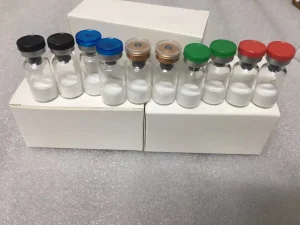
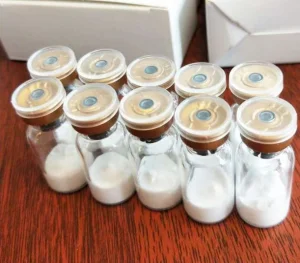
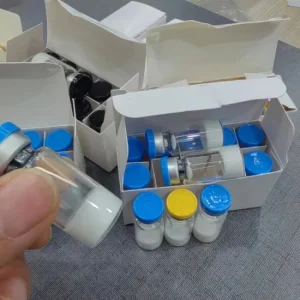
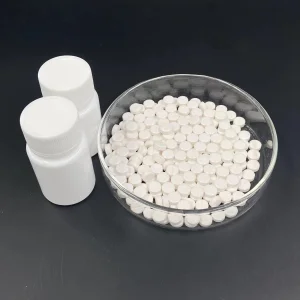
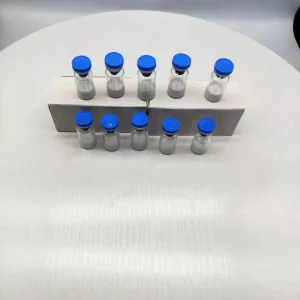
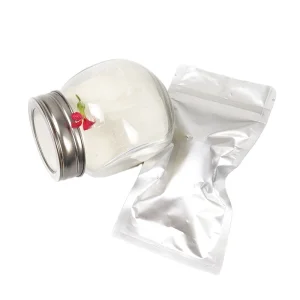
Review our comprehensive portfolio of specialty biochemicals, lyophilized peptide vials, and bulk research active pharmaceutical ingredients manufactured under strict cleanroom conditions.
Connect with our senior chemical engineering and procurement logistics desk. Request comprehensive batch analytical documentation, current ISO tank spot/contract pricing, or schedule a technical plant audit.

