Comprehensive Technical Whitepaper on Industrial Synthesis, Analytical Quality Assurance, Global Supply Chain Resiliency, and cGMP Production of Tetracaine & Tetracaine Hydrochloride API.
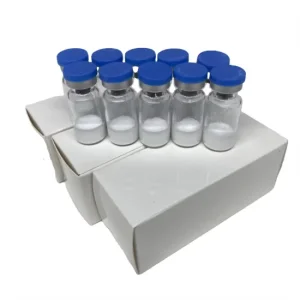
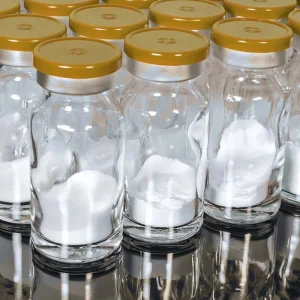
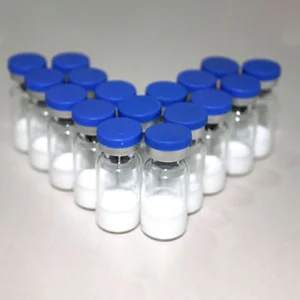
Explore our verified research peptides and active pharmaceutical raw materials supplied directly from our modern manufacturing facilities with complete batch COA and chromatographic traceability.
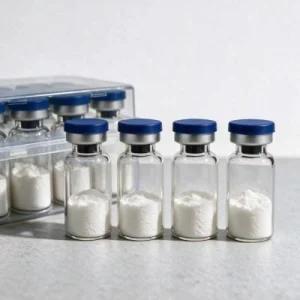
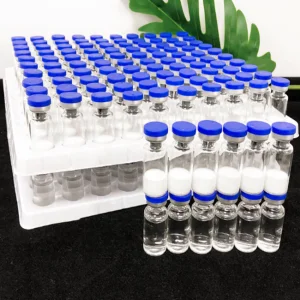
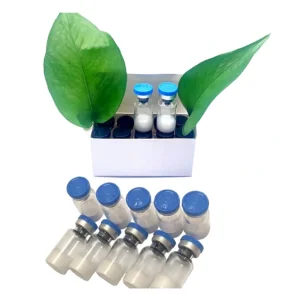

An authoritative evaluation of international demand, market dynamics, regulatory trends, and manufacturing supply capabilities for pharmaceutical procurement executives.
Tetracaine (2-(dimethylamino)ethyl 4-(butylamino)benzoate, CAS 94-24-6) and its salt form, Tetracaine Hydrochloride (CAS 136-47-0), continue to serve as essential ester-type local anesthetics across the global healthcare ecosystem. Originally recognized for its potent topical and spinal analgesic efficacy, the compound has seen a profound resurgence driven by modern minimally invasive ophthalmic surgeries, transdermal cosmetic dermatology procedures, and specialized veterinary anesthesia. As pharmaceutical manufacturers navigate stricter ICH guidelines and pharmacopeial standards (USP, EP, BP, JP), sourcing high-purity API from audit-verified facilities has become a critical strategic priority.
Global pharmaceutical supply chains have transitioned toward backward-integrated API manufacturers capable of producing precursors like 4-butylaminobenzoic acid in-house. This mitigation strategy safeguards contract formulators against severe price volatility and raw material bottlenecks in key export hubs across North America, Europe, and Asia-Pacific.
Under updated European Pharmacopoeia (EP 10.x/11.x) and USP-NF compendial specifications, tetracaine API manufacturers must quantify and control related substances—specifically Impurity A (4-(butylamino)benzoic acid) and potential alkyl ester derivatives—at thresholds below 0.10% to eliminate toxicological risks.
Tier-1 manufacturing facilities maintain active Drug Master Files (US FDA Type II DMFs) and Certificates of Suitability (CEP) issued by the EDQM. This transparent documentation framework drastically accelerates ANDA approval cycles for generic pharmaceutical sponsors globally.
In-depth technical breakdown of reaction engineering, solvent isolation, and chromatographic control protocols executed across our precision reactors.
The manufacturing process initiates with the selective N-alkylation of 4-aminobenzoic acid (PABA) or its ethyl ester precursor using 1-bromobutane or butyraldehyde under reductive amination conditions. Tight stoichiometric temperature regulation prevents di-alkylation side reactions, ensuring high intermediate conversion yields (>94%).
Direct transesterification of ethyl 4-(butylamino)benzoate with 2-(dimethylamino)ethanol is carried out in the presence of sodium alkoxide catalysts under vacuum distillation. Continuous removal of ethanol drives thermodynamic equilibrium toward Tetracaine Base with minimal polymer formation.
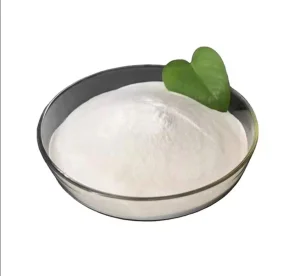
Tetracaine base is dissolved in pharmaceutical-grade isopropanol or acetone and titrated with anhydrous gaseous hydrogen chloride (HCl). Controlled cooling crystallization produces uniform monoclinic crystalline Tetracaine Hydrochloride with consistent bulk density and powder flow properties.
| Analytical Parameter | USP / EP Reference Standard | Factory In-House Release Specification | Analytical Technique |
|---|---|---|---|
| Chemical Identification | Conforms to Reference Standard | Positive (Infrared Absorption & Retention Time) | FTIR / HPLC-UV (ICH Q2A) |
| Assay (Purity on Dry Basis) | 98.5% – 101.5% | 99.5% – 100.5% | Potentiometric Titration / UHPLC |
| Impurity A (4-(Butylamino)benzoic acid) | ≤ 0.10% | ≤ 0.05% | Reverse-Phase UHPLC-PDA (280 nm) |
| Any Other Individual Impurity | ≤ 0.10% | < 0.03% (Below Quantitation Limit) | High-Resolution LC-MS/MS |
| Total Related Substances | ≤ 0.50% | ≤ 0.20% | Chromatographic Summation |
| Residual Solvents | ICH Q3C Limits | Toluene <50 ppm, Isopropanol <200 ppm | Headspace Gas Chromatography (GC-FID) |
| Heavy Metals & Elemental Impurities | ICH Q3D Compliant | Pb, As, Cd, Hg < 1 ppm each | ICP-MS Inductively Coupled Plasma |
| Loss on Drying (Moisture Content) | ≤ 0.50% | ≤ 0.25% | Karl Fischer Coulometric Titration |
Tetracaine’s high lipophilicity (logP ~2.9) and high affinity for voltage-gated sodium channels (Nav1.x) position it as the premier active ingredient across four major pharmaceutical delivery systems.
Widely utilized in cataract surgery, tonometry, corneal foreign body removal, and refractive procedures. Fast onset (<30 seconds) and extended corneal anesthesia without inducing intraocular pressure spikes.
Prescribed as a hyperbaric or isobaric intrathecal solution (1% to 2%) for prolonged subarachnoid blockades in orthopedic, urologic, and lower abdominal interventions lasting 2 to 3 hours.
Compounded into synergistic eutectic mixtures (e.g., Lidocaine/Tetracaine 70mg/70mg self-heating patches) for superficial dermatological laser ablations, venipuncture, and medical aesthetic micro-needling.
Formulated into metered-dose mucosal sprays and lozenges for oropharyngeal desensitization prior to transesophageal echocardiography (TEE), bronchoscopy, and gastroscopy procedures.
Streamlining procurement friction for multinational generic drug firms, CDMOs, and hospital compounding networks through standardized supply-chain infrastructure.
Tetracaine base and hydrochloride are susceptible to ester hydrolysis under moist, elevated-temperature environments. We dispatch all shipments inside moisture-barrier multi-foil drums with desiccant systems and temperature-monitored loggers, maintaining active stability during sea and air transit.
Formulation engineers require precise particle size distributions (PSD) for transdermal lotions and sterile suspensions. Our cleanrooms feature fluid-energy spiral jet milling, allowing customized particle sizing down to D90 < 10 μm, D50 < 5 μm without thermal degradation.
Procuring raw APIs is only the first step. Our dedicated regulatory affairs department provides ready-to-file Common Technical Document (CTD) Module 3 documentation, stability study packages (accelerated and long-term per ICH Q1A), and comprehensive validation protocols for seamless authority clearance.
Investigating sustained-release formulations, liposomal encapsulation, and microfluidic synthesis platforms to extend clinical utility and minimize systemic toxicity.
Encapsulating Tetracaine within multi-vesicular liposomes (similar to DepoFoam platforms) extends post-operative local analgesia from 2 hours up to 48 hours. Controlled release reduces peak plasma concentration (Cmax), curtailing potential central nervous system (CNS) and cardiovascular side effects.
Novel poloxamer-based gel architectures fluid at room temperature but phase-transitioning into resilient visco-elastic matrices at ocular temperatures (34°C). This retains Tetracaine on the corneal surface, eliminating the need for frequent intra-operative drop re-instillation.
Migrating from traditional stirred tank batch vessels to continuous micro-reactor flow chemistry. Microchannel synthesis enables millisecond mixing, instantaneous heat dissipation during exothermic alkylations, and steady automated yield control with lower solvent emissions.
Direct answers to the most common inquiries from qualification auditors, procurement officers, and pharmaceutical formulation scientists.
Tetracaine Base (CAS 94-24-6, MW 264.36) is an uncharged lipophilic tertiary amine solid with a melting point around 41-46°C, sparingly soluble in water but highly soluble in organic solvents, oils, and lipophilic bases—making it ideal for topical lipid creams and patches. Tetracaine Hydrochloride (CAS 136-47-0, MW 300.82) is an ionic salt with high water solubility and a melting point around 147-150°C, required for sterile ophthalmic drops, aqueous mucosal sprays, and spinal injections.
Tetracaine is approximately 10 times more potent and has a significantly longer duration of action than Procaine, and roughly 4 to 5 times the potency of Lidocaine. Because of its butylamino moiety, it exhibits higher hydrophobic binding to the internal pore of voltage-gated sodium channels, creating an extended refractory period across sensory nerve fibers.
Tetracaine is an ester-type local anesthetic subject to moisture-induced degradation into 4-(butylamino)benzoic acid and 2-dimethylaminoethanol. The API should be sealed in light-resistant, airtight containers under an inert nitrogen blanket, stored at controlled room temperature (15°C to 25°C) or cold conditions (2°C to 8°C) with relative humidity strictly controlled below 50%.
Every batch includes an individualized Certificate of Analysis (COA) specifying validated assay results, actual HPLC chromatograms, IR and MS identity curves, residual solvent data (GC), heavy metal screening (ICP-MS), and water content. Fully signed Batch Production Records (BPR), BSE/TSE statements, and Material Safety Data Sheets (SDS) are provided systematically.
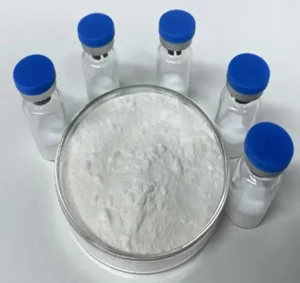
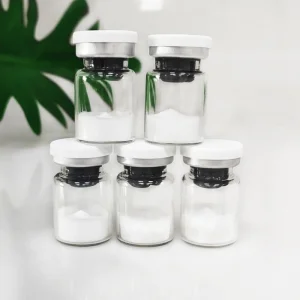
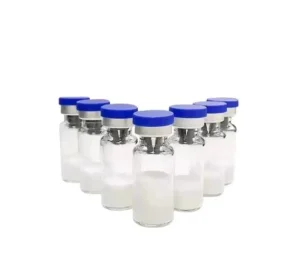
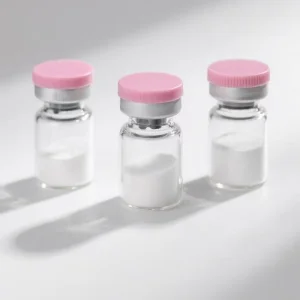
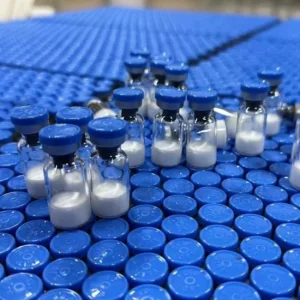
Secondary product showcase displaying our extended synthesis line-up, featuring custom peptide synthesis, specialty APIs, and bioactive analytical grade chemicals.