Strategic Sourcing of 2-Phenylacetamide: Analytical Impurity Profiles, Chinese Factory Integration, cGMP Compliance, and Resilient Global Supply Chain Execution.
Explore our certified pharmaceutical, peptide, and fine chemical portfolio manufactured under rigorous ISO/GMP quality management systems, complete with lot-specific chromatographic verification.
A rigorous examination of 2-Phenylacetamide (Benzeneacetamide): physical-chemical benchmarks, molecular characteristics, and the analytical criteria governing pharmaceutical and industrial procurement.
2-Phenylacetamide (CAS Registry Number 103-81-1, EC Number 203-147-0), also designated as α-phenylacetamide or benzeneacetamide, exhibits the molecular formula C₈H₉NO with a molecular weight of 135.16 g/mol. Structurally, it features an acetamide backbone linked directly to a phenyl ring at the alpha carbon.
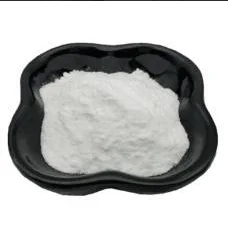
High-grade CAS 103-81-1 appears as an off-white to pure crystalline powder possessing a sharp melting window between 156 °C and 160 °C. It exhibits moderate solubility in boiling water, high solubility in ethanol and ethyl acetate, and slight solubility in cold ether, dictating specific crystallization workflows.
For therapeutic intermediate applications (e.g., penicillin fermentation precursor and antiepileptic synthesis), strict controls are mandated over potential process genotoxic impurities (PGIs). Controlled catalytic hydration of phenylacetonitrile eliminates residual cyanide content, ensuring compliance with ICH Q3A/Q3B guidelines.
| Analytical Parameter | Standard Technical Grade | Pharmaceutical Synthesis Grade | Analytical Method |
|---|---|---|---|
| Appearance | White to light-cream crystals | Pure white crystalline powder | Visual Inspection (USP <630>) |
| Assay / Purity | ≥ 98.5% | ≥ 99.50% (Area normalization) | Reverse-Phase HPLC (UV @ 215 nm) |
| Melting Range | 154.0 °C – 159.0 °C | 157.0 °C – 159.5 °C | Capillary Melting Device (USP <741>) |
| Free Phenylacetic Acid | ≤ 0.8% | ≤ 0.15% | HPLC Gradient Assay |
| Moisture (Karl Fischer) | ≤ 0.50% | ≤ 0.20% | Volumetric KF Titration |
| Sulfate Ash | ≤ 0.20% | ≤ 0.05% | Muffle Furnace @ 600 °C |
In global procurement, suppliers quoting "high purity" often rely merely on titration assays which can conflate phenylacetic acid with 2-phenylacetamide. Tier-1 enterprise buyers must mandate validated reverse-phase HPLC chromatograms paired with Liquid Chromatography-Mass Spectrometry (LC-MS) confirming molecular ion [M+H]⁺ at m/z 136.1 and 1H-NMR (400 MHz in DMSO-d6) spectra demonstrating clean 5H phenyl multiplet and 2H methylene singlet at δ 3.42 ppm.
How pharmaceutical corporations, agriscience innovators, and specialty chemical manufacturers evaluate, qualify, and continuously audit CAS 103-81-1 supply chains.
Global procurement teams prioritize vendors offering multi-metric stability rather than spot-market fluctuations. Procurement workflows seek secured long-term volume agreements (ranging from 5 to 500 MT annually) linked directly to benchmark petrochemical raw materials (toluene and ammonia/cyanide precursors).
Enterprise contracts frequently require fixed index pricing formulas with built-in 90-day price collars, protecting formulation budgets from sudden raw material price shocks while maintaining dedicated factory reactor allocation.
To onboard a new manufacturer for CAS 103-81-1, QA directors enforce a formal four-stage vendor qualification framework. Desk review of ISO 9001, ISO 14001, and ISO 45001 certificates is followed by chemical sample validation across three distinct production batches.
Subsequent stages include remote or on-site facility audits reviewing batch production records (BPRs), raw material traceability down to the upstream synthesis feedstock, process validation protocols, and emergency solvent recovery operations.
Modern regulatory mandates—including EU REACH, US TSCA, and Japan CSCL—require comprehensive toxicological dossiers and supply transparency. Contract manufacturers requiring CAS 103-81-1 as an API intermediate must obtain an Open Part DMF (Drug Master File) or comprehensive CEP documentation support.
Buyers require transparent Statements of Origin confirming absence of animal or TSE/BSE cross-contamination, elemental impurity analysis conforming to ICH Q3D, and confirmation that nitrosamine precursors are excluded throughout production.
Why China's specialized chemical production clusters in Hebei, Shandong, and Jiangsu represent the bedrock of cost-efficient, high-yield, and reliable 2-Phenylacetamide synthesis.
China maintains unmatched backward integration into primary petrochemical derivatives. The dominant synthesis route to CAS 103-81-1 involves the selective catalytic hydration of benzyl cyanide (phenylacetonitrile), which in turn relies on benzyl chloride and sodium cyanide. Domestic proximity to mega-refineries ensures continuous monomer availability without international transit delays.
This closed-loop integration shields Chinese producers from raw material supply crunches, enabling reliable continuous synthesis lines with automated feeding cycles.
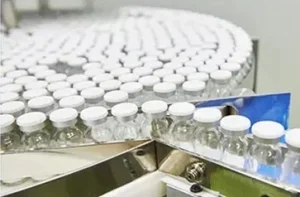
Rather than running multi-purpose batch campaigns with tedious clean-down turnarounds, tier-1 Chinese manufacturers utilize dedicated 10,000L and 20,000L glass-lined reactor trains engineered exclusively for nitrile hydration and crystallizing 2-Phenylacetamide.
This dedicated infrastructure minimizes batch-to-batch variation, eliminates cross-contamination risks, and achieves unmatched operational efficiencies that reduce per-kilogram thermal and electricity overheads by up to 28% compared to Western contract suites.
Historically, nitrile hydration produced extensive acidic effluents. Modernized Chinese facilities leverage heterogeneous manganese dioxide catalysts (MnO₂) or biological enzymatic nitrile hydratase systems operating at neutral pH and ambient temperatures, yielding near-quantitative conversions exceeding 98%.
Integrated chemical parks in locations such as Shijiazhuang, Weifang, and Yancheng feature advanced multi-stage biological wastewater treatment facilities and thermal regenerative oxidizers (RTOs), guaranteeing uninterrupted manufacturing uninterrupted by environmental curtailments.
Bridging Chinese chemical manufacturing capacity with localized technical service, door-to-door regulatory clearance, and audited packaging security.
Navigating global border control requires meticulous regulatory compliance. For EU imports, shipments are backed by Lead or Joint EU REACH registration dossiers (tonnage band 100-1000 MT/a), granting unobstructed customs clearance through Rotterdam, Antwerp, and Hamburg.
For US markets, materials are actively TSCA listed (Toxic Substances Control Act) and comply with EPA Section 8 reporting requirements. Comprehensive GHS-compliant 16-section Safety Data Sheets (SDS) are provided in 14 languages alongside harmonized tariff classification (HS Code 2924.29.9090).
Supply chain shocks, port strikes, and maritime routing reconfigurations via the Cape of Good Hope have made just-in-time (JIT) direct shipping unpredictable. Leading Chinese suppliers maintain forward bonded warehouses in Frankfurt (Germany), Antwerp (Belgium), and Los Angeles/Chicago (USA).
Domestic stockpiles ensure delivery lead times within 48 to 72 hours for critical plant operations, backed by vendor-managed inventory (VMI) frameworks that safeguard end-users against maritime freight disruptions.
2-Phenylacetamide is susceptible to moisture absorption and caking if stored improperly, causing clumping that impairs automated hopper feeding. Export shipments utilize UN-certified moisture-barrier packaging: multi-layer kraft paper bags with inner heat-sealed polyethylene lining, or 25kg / 50kg fiber drums.
For high-volume bulk users, 500kg or 1,000kg conductive Type-C / Type-D anti-static big bags (FIBC) are supplied with nitrogen purging and desiccant packs, engineered for pneumatic conveying systems without dust explosion hazards.
From industrial beta-lactam bioprocessing to neurological pharmacophores and organic fragrance synthesis: mapping the real-world utility of CAS 103-81-1 across modern manufacturing.
In classical microbiology and industrial biotechnology, 2-Phenylacetamide serves as a preferred, non-toxic phenylacetyl donor for Penicillium chrysogenum fermentation broth in Penicillin G (benzylpenicillin) production. Compared with free phenylacetic acid (PAA), 2-phenylacetamide exhibits lower cellular toxicity toward mycelial growth at higher concentrations.
The controlled slow-release metabolic breakdown of the amide group feeds the biosynthesis pathway without inducing abrupt pH drops in the bioreactor, raising antibiotic titers by 12% to 18% in high-density submerged fermentations.
CAS 103-81-1 is an indispensable core building block for central nervous system (CNS) active pharmaceutical ingredients, most notably Phenacemide (phenylacetylurea)—a clinically recognized anticonvulsant indicated for severe refractory epilepsy. Reaction with urea or ethyl chloroformate yields phenacemide and related hydantoins.
Furthermore, it serves as a key synthons in medicinal chemistry programs targeting hypnotic sedatives, analgesic peptide mimics, and non-narcotic pain therapeutics where the phenylacetamide pharmacophore provides optimum lipophilicity for blood-brain barrier penetration.
Beyond pharmaceutical facilities, 2-Phenylacetamide is consumed in substantial quantities as an aromatic fragrance stabilizer and building block for synthetic perfumery compounds, imparting delicate honey-sweet, floral-rose nuances with exceptional fixative persistence in cosmetic and detergent bases.
In crop protection formulations, it acts as an intermediate for selective systemic herbicides, fungicidal pyridazinones, and plant growth regulators where controlled hydrolytic release of phenylacetic functional groups stimulates root elongation in cereal seeds.
Examining technological innovations, macro-economic forces, and decarbonization strategies shaping the global 2-Phenylacetamide ecosystem over the coming decade.
The traditional batch synthesis of CAS 103-81-1 is rapidly migrating toward continuous tubular microchannel reactors. Flow chemistry permits pinpoint thermal dissipation during the highly exothermic hydration of benzyl cyanide, preventing runaway side reactions and thermal coloration.
This technological leap shrinks plant physical footprints by 60%, slashes process cycle times from 14 hours to less than 8 minutes, and yields crude product containing less than 0.05% degraded impurities, fundamentally lifting baseline industry quality.
Multinational pharmaceutical conglomerates are imposing binding Scope 3 greenhouse gas reduction commitments on upstream fine chemical suppliers. Chinese manufacturing campuses are deploying solar rooftop arrays, industrial heat-pump reboilers, and electric-driven continuous centrifuges to depress per-ton carbon equivalent metrics.
Suppliers possessing independently verified Product Carbon Footprint (PCF) disclosures conformant with ISO 14067 are securing preferential long-term supply status among ESG-sensitive European and North American CDMOs.
Geopolitical tensions, trade tariff renegotiations, and canal chokepoints have compelled tier-1 pharmaceutical procurement leaders to transition from single-source dependence to "China + 1" or dual-region contracted models.
Leading Chinese chemical manufacturers have responded proactively by establishing secondary manufacturing joint ventures in Southeast Asia (Vietnam, Malaysia) alongside European bonded distribution centers, ensuring contractual delivery continuity regardless of regional customs reclassifications.
Direct answers addressing quality release parameters, export documentation, tariff codes, packaging stability, and on-site factory qualification audits.
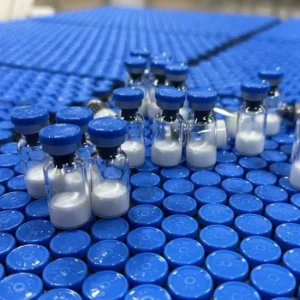
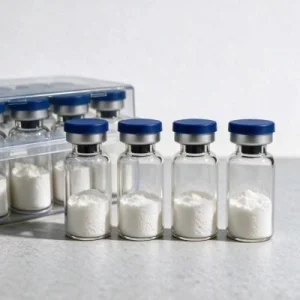
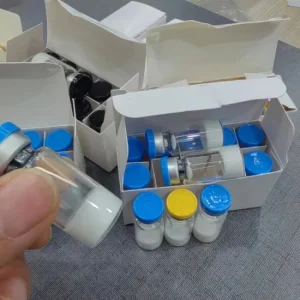
Explore additional high-demand research-grade peptides, metabolic signaling molecules, and pharmaceutical reference compounds maintained with end-to-end cold-chain and dry-chain traceability.